Login

    Sections
    Search

    • Politics
    • Economics & Finance
    • Business & Entrepreneurship
    • Art & Culture
    • Science & Technology
    • Environment & Climate Change
    • World
    • World Leaders
    • The Americas
    • Europe
    • Middle East & North Africa
    • Africa
    • Asia
    • United States
    • India
    • China
    • Russia
    • About
    • Authors
    • Publications
    • Events
    • Multimedia
    • Videos
    • Podcasts
    • Events
    • Russia
    • Publications
    • Authors
    • About
    Fair Observer

    MULTIMEDIA

    The Fall of the Ottoman Empire

    Fair Observer

    VIDEOS

    FO Talks: Changing Balance of Power in Northeast Asia

    Fair Observer

    PODCASTS

    FO Podcasts: Cockroach Chronicles — Making Sense of the CJP

    PUBLICATION

    Fair Observer Monthly: July 2026

    Support Fair Observer

    We rely on your support for our independence, diversity and quality.

    Donate
    Search
    Fair Observer Logo
    • Donate
    Fair Observer Logo
    Asia-Pacific

    FO Podcasts: Cockroach Chronicles — Making Sense of the CJP

    In this episode of FO Podcasts, Ranjani Iyer Mohanty and Barun Mohanty examine how exam irregularities, limited educational opportunities and scarce employment fueled the Cockroach Janata Party. Indian education discourages independent thought and fails to prepare young people for a changing economy. This movement offers an opportunity to turn youth anger into reform of education, employment and public institutions.
    By Barun Mohanty & Ranjani Iyer Mohanty
    Follow
    Follow
    Barun Mohanty, Ranjani Iyer Mohanty
    SHARE
    August 29, 2026 04:54 EDT
    Check out our comment feature!

    Saved Successfully.

    This article saved into your bookmarks. Click here to view your bookmarks.

    My Bookmarks

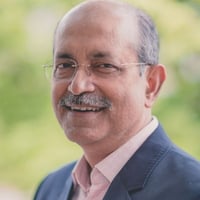
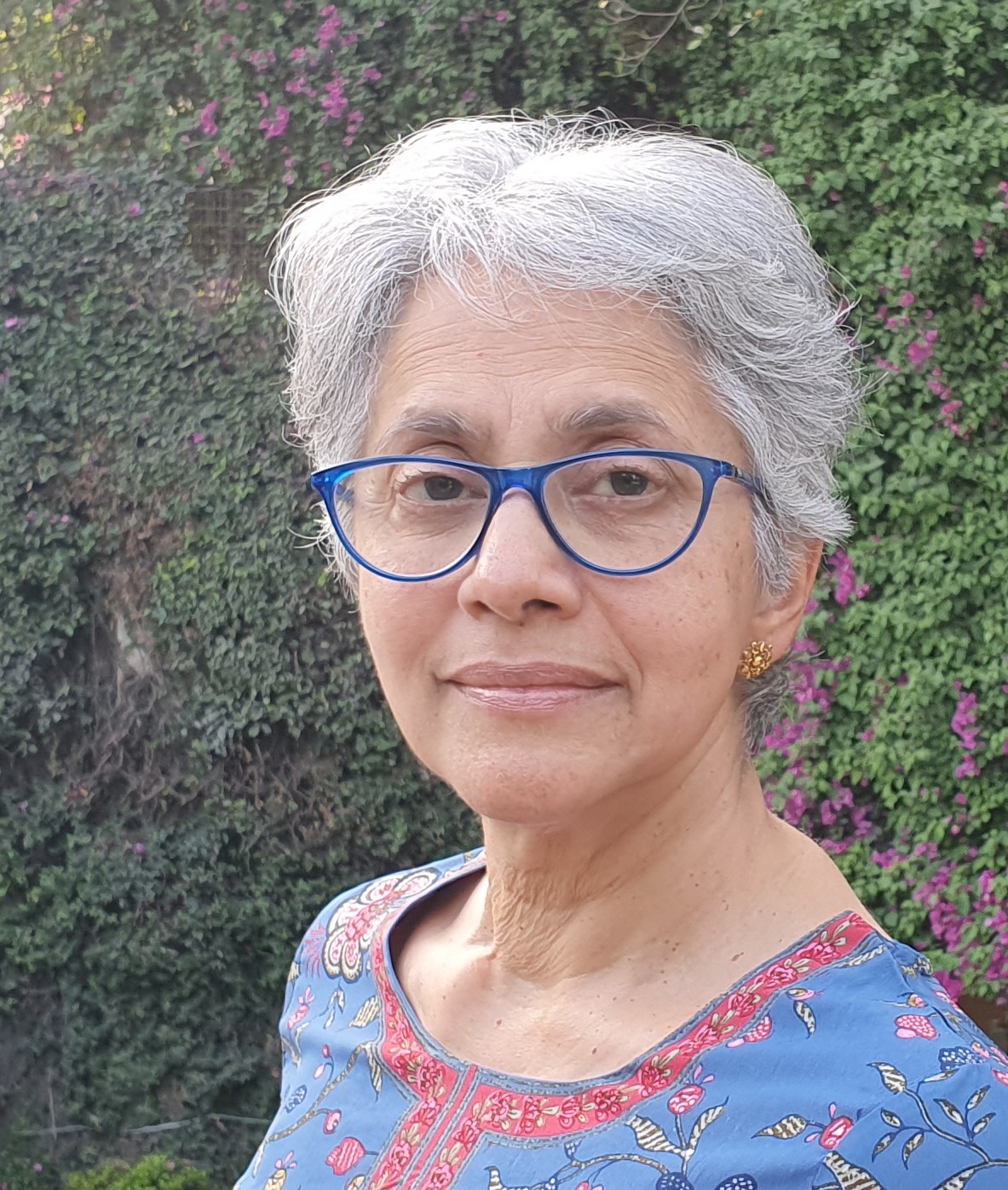
    Editor-at-Large Ranjani Iyer Mohanty and global social-impact leader Barun Mohanty examine the rise of India’s Cockroach Janta Party (CJP), a satirical youth movement born amid anger over exam irregularities and scarce employment. What produced the movement? Why has it resonated and what should follow its immediate protests? Barun says India must treat the uprising as an opportunity to reform education, job creation and public accountability rather than merely contain the present controversy.

    LISTEN ON:
    ALSO AVAILABLE ON:
    • Spotify Spotify
    • apple-podcasts Apple Podcasts
    • YouTube Podcasts
    • Amazon Amazon Music

    A joke becomes a protest movement

    The CJP emerged after remarks by Chief Justice of India Surya Kant appeared to compare unemployed young people with cockroaches. Kant later said his words had been misconstrued and were directed at people using fraudulent qualifications. Nevertheless, political communications strategist Abhijeet Dipke turned the insult into a satirical parody of the ruling Bharatiya Janata Party, and the idea rapidly attracted millions of followers.

    The movement soon channeled anger over alleged leaks and irregularities affecting high-stakes exams. Protesters demanded accountability, compensation for affected students and the resignation of Education Minister Dharmendra Pradhan. Activist and educator Sonam Wangchuk reinforced their cause through a hunger strike.

    Barun describes this convergence as a potentially defining moment. The apparent contempt contained in the “cockroach” label touched a deeper class grievance. India’s wealthy and politically connected enjoy infrastructure comparable to that of developed countries, while many lower-class citizens lack reliable water, electricity, sanitation and education. The movement therefore represents more than outrage over one comment or exam.

    Education turns scarcity into desperation

    Ranjani notes that Indian families invest enormous amounts of time, money and effort in competitive exams. Barun explains that the stakes become extreme when only a small share of applicants can enter coveted medical, engineering, management or legal programs. Success can determine whether a young person escapes poverty, while failure can close off formal employment.

    This scarcity gives every leaked paper unusual destructive power. Students accept a brutally competitive system because exams appear to offer an impartial path forward. When that system loses integrity, it damages both individual futures and faith in public institutions.

    Barun traces the problem to decades of inadequate educational capacity. Indians who possessed the money or academic record could seek degrees abroad, but tighter immigration policies and less welcoming job markets are narrowing that outlet. India must consequently educate and employ more of its own young people.

    Schools discourage the skills India needs

    The problem is not only the number of available places. Barun points out that Indian education often rewards memorization, obedience and deference rather than questioning, creativity and problem-solving. Even his experience at the prestigious Indian Institute of Technology Delhi was largely uninspiring despite the talent of its students.

    He recalls that classroom discussion rarely allowed pupils to challenge an argument or explore competing perspectives. This culture may produce disciplined exam-takers, but it does not reliably cultivate independent thinkers equipped for an economy being transformed by artificial intelligence.

    Barun therefore wants India to judge education by learning outcomes rather than spending, schemes or institutional prestige. Governments regularly announce programs without clearly reporting whether they worked. Reform requires experimentation, public measurement and a willingness to redesign failed approaches.

    Qualifications do not guarantee decent work

    Ranjani connects educational frustration with unemployment and asks whether training matches India’s economic needs. Barun responds that many young Indians cannot find work commensurate with their qualifications. Much employment remains informal, leaving workers without dependable wages, insurance, leave or legal protection.

    The gig economy absorbs some people whom schools and formal employers have failed. Delivery work may provide immediate income, but Barun says it often offers low pay and limited security. India also employs a relatively small share of its workforce in manufacturing, traditionally a major source of formal jobs for developing economies.

    Education reform alone cannot resolve this mismatch. India must attract investment, enforce workable labor laws and create conditions in which firms can expand. It must also strengthen the rule of law so that protections apply regardless of wealth, caste or political influence.

    From immediate demands to national renewal

    Barun does not dismiss the protesters’ short-term objectives. Authorities must protect examination integrity and negotiate credible remedies with affected students. Yet resolving one leak or replacing one minister would leave the underlying machinery untouched.

    He proposes a coalition involving government, business, nonprofits, educators and communities. Its task would be to rebuild education around future skills, connect training with dignified employment and publish measurable results. Some experiments will fail, but transparent evaluation would allow India to learn from them.

    We are a rare nonprofit in the world news space. Most other organizations are owned by billionaires or governments. We are bottom-up, not top-down and bring you perspectives from around the world. So, sign up now for our free newsletters to hear from our 3,000+ voices from 90+ countries.

    The CJP’s satire has exposed a serious loss of confidence among young Indians. Its long-term importance will depend on whether protest produces institutional reform rather than another temporary government scheme. For Ranjani and Barun, the movement’s central challenge is to convert humiliation into citizenship and anger into accountable action.

    The views expressed in this article/podcast are the author’s own and do not necessarily reflect Fair Observer’s editorial policy.

    LISTEN ON:
    ALSO AVAILABLE ON:
    • Spotify Spotify
    • apple-podcasts Apple Podcasts
    • YouTube Podcasts
    • Amazon Amazon Music

    Comment

    Login
    Please login to comment

    Commenting Guidelines

    Please read our commenting guidelines before commenting.


    1. Be Respectful: Please be polite to the author. Avoid hostility. The whole point of Fair Observer is openness to different perspectives from perspectives from around the world.

    2. Comment Thoughtfully: Please be relevant and constructive. We do not allow personal attacks, disinformation or trolling. We will remove hate speech or incitement.

    3. Contribute Usefully: Add something of value — a point of view, an argument, a personal experience or a relevant link if you are citing statistics and key facts.

    Please agree to the guidelines before proceeding.

    Related Reading

    FO Talks: Make Sense of India’s Youth Cockroach Protests

    In this episode of FO Talks, Atul Singh and Sam Tully examine how exam leaks, scarce jobs and failing education...
    by Sam Tully & Atul Singh, August 27, 2026
    Fair Observer

    FO Exclusive: India’s Youth Cockroach Protests Rattle Prime Minister Narendra Modi

    In this section of the July 2026 episode of FO Exclusive, Atul Singh and Glenn Carle examine how India’s youth-led...
    by Glenn Carle & Atul Singh, August 13, 2026
    Fair Observer

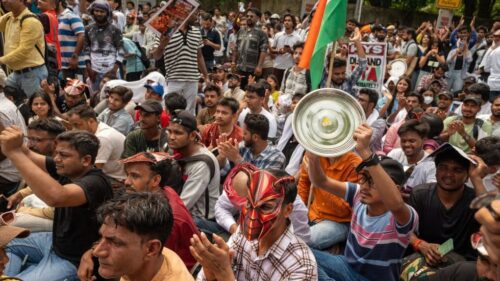
    The Duty to Mock: How India’s CJP is Reviving Accountability Through Satire

    As press freedom declines in India and questioning the government risks being labeled anti-national, the Cockroach Janata Party has mobilized...
    by Ira Tanwani, August 4, 2026
    Fair Observer

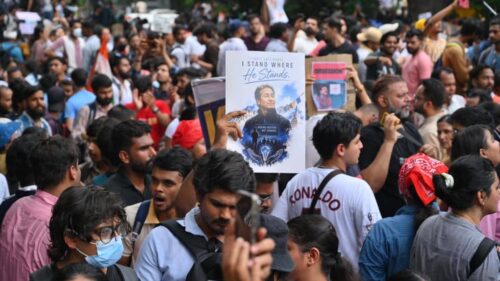
    Wangchuk, Sharmila and a Tale of Two Hunger Strikes in India

    Scientist and activist Sonam Wangchuk ended his 26-day hunger strike after Delhi Police forcibly hospitalized him. Days later, Education Minister...
    by Swapnarka Arnan, August 3, 2026
    Fair Observer

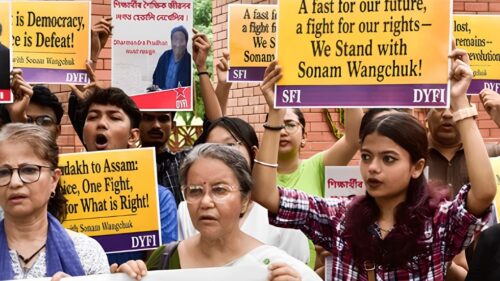
    Will the Gen Z-Fueled CJP Achieve What It Set Out To Do?

    Education reform campaigner Sonam Wangchuk’s 20-day hunger strike and forceful evacuation by Delhi police have further catalyzed the Cockroach Janta...
    by Vasavi Seethepalli, July 24, 2026
    Fair Observer

    More Episodes

    FO Podcasts: Stairways to the Skies — The Secrets of Hiking

    In this episode of FO Podcasts, Ranjani Iyer Mohanty and Christine Gabriel discuss the appeal of hiking, drawing on her...

    Christine Gabriel & Ranjani Iyer Mohanty, August 21, 2026
    Fair Observer

    FO Podcasts: What the West Ignores About China’s Digital Nationalism

    In this episode of FO Podcasts, Florian Schneider and Haruko Satoh argue that digital nationalism is a defining force shaping...

    Florian Schneider & Haruko Satoh, July 22, 2026
    Fair Observer

    The Dialectic: Japan — The Aging Land of the Rising Sun

    In this episode of The Dialectic, Atul Singh and Glenn Carle examine Japan’s transformation from a postwar economic giant into...

    Glenn Carle & Atul Singh, June 20, 2026
    Fair Observer

    FO Podcasts: Why Narcoterrorism Still Matters

    In this episode of FO Podcasts, Atul Singh and Jeffrey James Higgins examine how narcoterrorism combines organized crime, insurgency and...

    Jeffrey James Higgins & Atul Singh, May 11, 2026
    Fair Observer

    Must Listen

    FO Podcasts: The Big Paradox — Why Immigration Divides America Like Nothing Else

    In this episode of FO Podcasts, Atul Singh and Kent Jenkins Jr. examine why Americans support strict border control but...

    by Kent Jenkins Jr. & Atul Singh, April 16, 2026
    Fair Observer

    FO Podcasts: The Muslim Brotherhood Explained — Origins, Ideology and Global Influence

    In this episode of FO Podcasts, Atul Singh and Cynthia Farahat examine the Muslim Brotherhood’s origins, debating whether it evolved...

    by Cynthia Farahat & Atul Singh, April 8, 2026
    Fair Observer

    China–Taiwan Tensions — Civil War Legacies and Geopolitical Chess

    Since President Xi Jinping came to power in 2012, China has been acting more aggressively towards Taiwan. Tensions go back...

    by Glenn Carle & Atul Singh, April 3, 2026
    Fair Observer

    The Dialectic: Narendra Modi’s Vegetarian Stalinism Has Ruined the Indian Economy

    In this episode of The Dialectic, Atul Singh and Glenn Carle explain how India’s current leader has rolled back the...
    by Glenn Carle & Atul Singh, February 12, 2026
    Fair Observer

    FO° Podcasts: Maduro, the War on Drugs and Trump’s Revival of the Monroe Doctrine

    In this episode of FO° Podcasts, Atul Singh and Benjamin Delille examine US President Donald Trump’s confrontation with Venezuela, questioning...

    by Benjamin Delille & Atul Singh, January 18, 2026
    Fair Observer

    FO° Podcasts: Myanmar Votes During a Civil War: Why This Election Could Tear the Country Apart

    In this episode of FO° Podcasts, Rohan Khattar Singh and Asanga Abeyagoonasekera examine Myanmar’s December 28 elections against the backdrop...

    by Asanga Abeyagoonasekera & Rohan Khattar Singh, January 6, 2026
    Fair Observer

    FO° Podcasts: The Forbidden C-word, Class in America

    In this episode of FO° Podcasts, Atul Singh and Kent Jenkins Jr. discuss how class shapes US identity and political...

    by Kent Jenkins Jr. & Atul Singh, December 29, 2025
    Fair Observer

    The Dialectic: France: The Eternal Crisis Strikes Again. What Now?

    In this episode of The Dialectic, Atul Singh and Glenn Carle examine France’s deepening polycrisis. Rising debt, political paralysis and...

    by Glenn Carle & Atul Singh, December 13, 2025
    Fair Observer


    Fair Observer, 461 Harbor Blvd, Belmont, CA 94002, USA

    Sections

    • Politics
    • Economics & Finance
    • Business & Entrepreneurship
    • Art & Culture
    • Science & Technology
    • Environment & Climate Change
    • World Leaders
    • World
    • The Americas
    • Europe
    • Middle East & North Africa
    • Africa
    • Asia
    • United States
    • India
    • China
    • Russia
    • Events
    • Publications
    • Authors
    • About
    • Publish
    • Contact
    • Login
    Fair Observer

    MULTIMEDIA

    The Fall of the Ottoman Empire

    Fair Observer

    VIDEOS

    FO Talks: Changing Balance of Power in Northeast Asia

    Fair Observer

    PODCASTS

    FO Podcasts: Cockroach Chronicles — Making Sense of the CJP

    PUBLICATION

    Fair Observer Monthly: July 2026

    Support Fair Observer

    We rely on your support for our independence, diversity and quality.

    Donate
    © Fair Observer All rights reserved
    Designed, Developed and Maintained by Netleon IT Solutions
    Fair Observer Education Logo Fair Observer Leadership Academy Logo

    BOOKMARK

    Want to save this post?
    Click to Login

    Support independent, crowdsourced, nonprofit journalism.

    Fair Observer is a 501(c)(3) independent nonprofit. We are not owned by billionaires or controlled by advertisers. We publish nearly 3,000 authors from over 90 countries after fact-checking and editing each piece. We do not have a paywall and anyone can read us for free. With your vital donations, we can continue to do our work.

    Please make a recurring (or even one-time) donation today. Even $1 goes a long way because a million donors like you mean one million dollars. Thank you for keeping us independent, free and fair.

    One Time Monthly Yearly

    Sign into your Fair Observer Account

    • Lost your password?
    Forgot Password

    Forgot Password

    Enter your registered email address or username. You will receive a link to create a new password via email.

    Please enter your username or email address. You will receive an email message with instructions on how to reset your password.

    • Log in

    Or
    Return to Login

    Forgot Password

    We have sent a link to your registered email address to reset your password.

    Back to Login

    Become a Member & Enjoy Exclusive Benefits!

    • Access to comments feature
    • Bookmark your favorite articles
    • Exclusive invitations to FO° Talks & FO° Live
    • Access to all of our e-publications
    Explore Membership
    Return to Login

    NEWSLETTER

    Make Sense of the World

    Unique Insights from 2,500+ Contributors in 90+ Countries

    NEWSLETTER

    Make Sense of the World

    Unique Insights from 2,500+ Contributors in 90+ Countries

    Fair observer

    Make Sense of the World

    Unique Insights from 2,500+ Contributors in 90+ Countries

    We Need Your Consent
    We use cookies to give you the best possible experience. Learn more about how we use cookies or edit your cookie preferences. Privacy Policy. My Options I Accept
    Privacy & Cookies Policy

    Edit Cookie Preferences

    The Fair Observer website uses digital cookies so it can collect statistics on how many visitors come to the site, what content is viewed and for how long, and the general location of the computer network of the visitor. These statistics are collected and processed using the Google Analytics service. Fair Observer uses these aggregate statistics from website visits to help improve the content of the website and to provide regular reports to our current and future donors and funding organizations. The type of digital cookie information collected during your visit and any derived data cannot be used or combined with other information to personally identify you. Fair Observer does not use personal data collected from its website for advertising purposes or to market to you.

    As a convenience to you, Fair Observer provides buttons that link to popular social media sites, called social sharing buttons, to help you share Fair Observer content and your comments and opinions about it on these social media sites. These social sharing buttons are provided by and are part of these social media sites. They may collect and use personal data as described in their respective policies. Fair Observer does not receive personal data from your use of these social sharing buttons. It is not necessary that you use these buttons to read Fair Observer content or to share on social media.

     
    Necessary
    Always Enabled
    These cookies essential for the website to function.
    Social Media
    These cookies are used to enable sharing or following of content that you find interesting on our website. These settings apply to third-party social networking and other websites.
    Performance & Functionality
    These cookies are used to enhance the performance and functionality of our website. They provide statistics on how our website is used and help us improve by measuring errors. Certain functionalities on our website may become unavailable without these cookies.
    Analytics
    SAVE & ACCEPT

    Total Views: