
Login

    Sections
    Search

    • Politics
    • Economics & Finance
    • Business & Entrepreneurship
    • Art & Culture
    • Science & Technology
    • Environment & Climate Change
    • World
    • World Leaders
    • The Americas
    • Europe
    • Middle East & North Africa
    • Africa
    • Asia
    • United States
    • India
    • China
    • Russia
    • About
    • Authors
    • Publications
    • Events
    • Multimedia
    • Videos
    • Podcasts
    • Events
    • Russia
    • Publications
    • Authors
    • About
    Fair Observer

    MULTIMEDIA

    Easter and Passover Explained: Two Stories, One Crossing

    Fair Observer

    VIDEOS

    FO Exclusive: US–Iran Double Blockade of Hormuz Threatens Global Economy

    Fair Observer

    PODCASTS

    FO Podcasts: Why Narcoterrorism Still Matters

    PUBLICATION

    Fair Observer Monthly: April 2026

    Support Fair Observer

    We rely on your support for our independence, diversity and quality.

    Donate
    Search
    Fair Observer Logo
    • Donate
    Fair Observer Logo
    Podcasts

    FO Podcasts: Why Narcoterrorism Still Matters

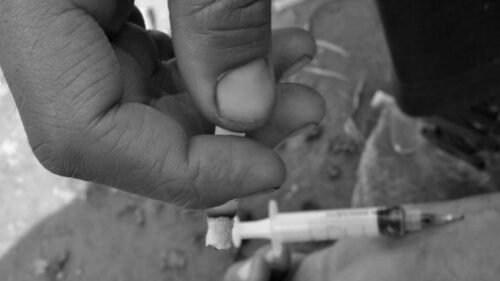
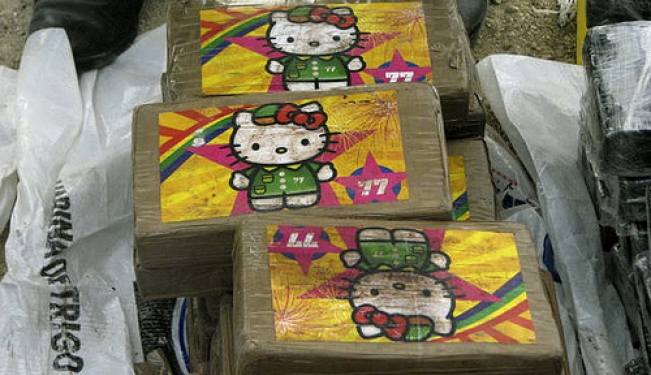
    In this episode of FO Podcasts, Atul Singh and Jeffrey James Higgins examine how narcoterrorism combines organized crime, insurgency and geopolitical conflict. They discuss the rise of synthetic opioids and how cartels in Latin America increasingly resemble paramilitary organizations capable of challenging state authority. Should narcotics be treated as a public health issue, or an insidious national security threat?
    By Jeffrey James Higgins & Atul Singh
    Follow
    Follow
    Jeffrey James Higgins, Atul Singh
    @JeffreyJHiggins
    @atulabhas
    SHARE
    May 11, 2026 06:53 EDT
    Check out our comment feature!

    Saved Successfully.

    This article saved into your bookmarks. Click here to view your bookmarks.

    My Bookmarks

    Editor-in-Chief Atul Singh speaks with former counterterrorism operative Jeffrey James Higgins about narcoterrorism, a threat that sits between organized crime, insurgency and geopolitical conflict. Higgins argues that illicit drug networks are no longer merely criminal enterprises. They fund armed groups, corrupt institutions, hollow out communities and, in some cases, operate like shadow states. As synthetic opioids such as fentanyl spread and cartels acquire paramilitary capabilities, Singh and Higgins examine whether narcotics should be treated as a public health crisis, a law enforcement problem or a national security threat.

    LISTEN ON:
    ALSO AVAILABLE ON:
    • Spotify Spotify
    • apple-podcasts Apple Podcasts
    • YouTube Podcasts
    • Amazon Amazon Music

    Drugs, terror and power

    Higgins defines narcoterrorism as “the nexus between terrorism and illicit narcotics trafficking.” He says this connection once met skepticism inside parts of the US intelligence community, but his experience in Afghanistan after 2004 convinced him that the overlap was undeniable. Taliban-linked networks, drug traffickers and armed groups often shared routes, revenue streams and operational interests.

    The logic is straightforward. Drugs generate enormous profits, and illegal organizations need money that cannot be raised openly. Afghanistan’s opium economy once supplied much of the world’s heroin, while groups such as the Taliban used narcotics revenue to sustain their political and military ambitions. Today, Higgins argues, fentanyl has transformed the landscape because it is cheaper, more potent and easier to produce than plant-based narcotics.

    He breaks narcoterrorism into several types: cartels that use political violence to protect drug profits, ideological groups that use drug money to fund their goals, individuals who are both traffickers and terrorists, and broader partnerships between criminal and militant networks. Singh adds that states can also use narcotics as tools of destabilization, citing Pakistan’s alleged role in the Indian state of Punjab and the wider debate over China’s role in the fentanyl trade.

    Fentanyl and unrestricted warfare

    Much of the conversation turns to China. Higgins argues that Beijing benefits from the flow of fentanyl and related synthetic opioids into the United States, even when it takes limited steps to appear cooperative. In his view, China has the capacity to do far more to stop precursor chemicals and fentanyl analogues from leaving its territory.

    Singh complicates the argument by placing it in historical context. He recalls Britain’s 19th-century use of Indian opium against China, which helped inaugurate China’s “century of humiliation.” Higgins accepts the historical parallel but argues that the present danger is part of a broader strategy. He links narcotics to cyberattacks, financial pressure and what he calls disintegration warfare — the effort to weaken a rival from within.

    This results in not just overdose deaths, Higgins says, but institutional decay. Narcotics weaken public health, reduce productivity, increase enforcement costs and deepen mistrust in government. Unlike a dramatic terrorist attack, drug-driven destabilization unfolds slowly. This process, in Singh’s words, can “hollow out” entire communities.

    Cartels as insurgents

    Singh then turns to Mexico and Latin America, where drug cartels have evolved far beyond smuggling networks. Higgins argues that some cartels now resemble insurgent forces. They possess military-style weapons, armored vehicles, drones, mines and the capacity to challenge police and military forces directly.

    Their violence is deliberately political. Beheadings, assassinations and bodies displayed in public are meant to intimidate judges, police, politicians and civilians. Higgins says the stability of Mexico is on a “knife’s edge,” weakened by corruption that has eaten into law enforcement, the judiciary and political life.

    For Singh, this raises a deeper question about state power. A state must monopolize legitimate violence. When cartels control neighborhoods, extort businesses, corrupt officials and enforce their own rules, they become rival authorities. Higgins agrees, warning that narcoterrorists can “unravel the tapestry built over a long period of time.”

    Public health or national security?

    Singh presses Higgins on the argument made by some retired CIA officers that drugs are primarily a demand-side and public health problem. Higgins partly agrees. Addiction often reflects cultural malaise, despair and loss of agency. He supports community-based solutions, youth engagement and problem-oriented policing.

    But he rejects the idea that narcoterrorism can be reduced to public health. Fentanyl and carfentanyl are different from marijuana or other recreational drugs, he argues, because their potency makes them uniquely lethal. Additionally, many traffickers are not merely selling narcotics; they are committing assassinations, hijackings and acts of political violence.

    Shadow states and justice

    The conversation ends with criminal justice. Higgins argues that the US over-incarcerates nonviolent offenders but under-incarcerates violent career criminals. Reform is necessary, he says, but so is incapacitation when individuals repeatedly commit violent crimes.

    We are a rare nonprofit in the world news space. Most other organizations are owned by billionaires or governments. We are bottom-up, not top-down and bring you perspectives from around the world. So, sign up now for our free newsletters to hear from our 3,000+ voices from 90+ countries.

    When the state fails to provide protection and justice, groups such as the Mafia, MS-13 or cartels step in. The danger of narcoterrorism is not just addiction or crime. It is the slow disintegration of lawful authority itself.

    [Lee Thompson-Kolar edited this piece.]

    The views expressed in this article/podcast are the author’s own and do not necessarily reflect Fair Observer’s editorial policy.

    LISTEN ON:
    ALSO AVAILABLE ON:
    • Spotify Spotify
    • apple-podcasts Apple Podcasts
    • YouTube Podcasts
    • Amazon Amazon Music

    Comment

    Login
    Please login to comment
    0 Comments
    Newest
    Oldest Most Voted
    Inline Feedbacks
    View all comments

    Commenting Guidelines

    Please read our commenting guidelines before commenting.


    1. Be Respectful: Please be polite to the author. Avoid hostility. The whole point of Fair Observer is openness to different perspectives from perspectives from around the world.

    2. Comment Thoughtfully: Please be relevant and constructive. We do not allow personal attacks, disinformation or trolling. We will remove hate speech or incitement.

    3. Contribute Usefully: Add something of value — a point of view, an argument, a personal experience or a relevant link if you are citing statistics and key facts.

    Please agree to the guidelines before proceeding.

    Related Reading

    Sinaloa Cartel, DEA and Big Pharma: a Lethal Nexus

    The United States is currently grappling with a devastating fentanyl epidemic that has claimed thousands of lives and continues to...

    by Vikram Zutshi, June 2, 2023
    Fair Observer

    No, Brazil Won’t Become a Narco State

    by Gustavo Ribeiro, March 11, 2017
    Fair Observer

    For Drug Addicts in Kabul, Life and Death Are Never Far Apart

    by Sadeq Naseri, December 21, 2014
    Fair Observer

    Mexico’s War on Drugs

    by Rogelio Garcia-Contreras, September 27, 2011
    Fair Observer

    Mexico Drug War: La Guerra Contra El Narcotraffico

    by Michael Briggs, March 23, 2011
    Fair Observer

    More Episodes

    FO Podcasts: The Big Paradox — Why Immigration Divides America Like Nothing Else

    In this episode of FO Podcasts, Atul Singh and Kent Jenkins Jr. examine why Americans support strict border control but...

    Kent Jenkins Jr. & Atul Singh, April 16, 2026
    Fair Observer

    FO Podcasts: The Muslim Brotherhood Explained — Origins, Ideology and Global Influence

    In this episode of FO Podcasts, Atul Singh and Cynthia Farahat examine the Muslim Brotherhood’s origins, debating whether it evolved...
    Cynthia Farahat & Atul Singh, April 8, 2026
    Fair Observer

    China–Taiwan Tensions — Civil War Legacies and Geopolitical Chess

    Since President Xi Jinping came to power in 2012, China has been acting more aggressively towards Taiwan. Tensions go back...
    Glenn Carle & Atul Singh, April 3, 2026
    Fair Observer

    The Dialectic: Narendra Modi’s Vegetarian Stalinism Has Ruined the Indian Economy

    In this episode of The Dialectic, Atul Singh and Glenn Carle explain how India’s current leader has rolled back the...
    Glenn Carle & Atul Singh, February 12, 2026
    Fair Observer

    Must Listen

    FO° Podcasts: Maduro, the War on Drugs and Trump’s Revival of the Monroe Doctrine

    In this episode of FO° Podcasts, Atul Singh and Benjamin Delille examine US President Donald Trump’s confrontation with Venezuela, questioning...

    by Benjamin Delille & Atul Singh, January 18, 2026
    Fair Observer

    FO° Podcasts: Myanmar Votes During a Civil War: Why This Election Could Tear the Country Apart

    In this episode of FO° Podcasts, Rohan Khattar Singh and Asanga Abeyagoonasekera examine Myanmar’s December 28 elections against the backdrop...

    by Asanga Abeyagoonasekera & Rohan Khattar Singh, January 6, 2026
    Fair Observer

    FO° Podcasts: The Forbidden C-word, Class in America

    In this episode of FO° Podcasts, Atul Singh and Kent Jenkins Jr. discuss how class shapes US identity and political...

    by Kent Jenkins Jr. & Atul Singh, December 29, 2025
    Fair Observer

    The Dialectic: France: The Eternal Crisis Strikes Again. What Now?

    In this episode of The Dialectic, Atul Singh and Glenn Carle examine France’s deepening polycrisis. Rising debt, political paralysis and...

    by Glenn Carle & Atul Singh, December 13, 2025
    Fair Observer

    The Dialectic: Can Germany Outgrow Its Postwar American Model?

    In this episode of The Dialectic, Atul Singh and Glenn Carle explore how Germany faces acute economic, political and social...

    by Glenn Carle & Atul Singh, December 2, 2025
    Fair Observer

    FO° Podcasts: The Right to Play: How Women Fought and Won the Battle for Equality in Sports

    In this episode of FO° Podcasts, Atul Singh and Lauren Greenberg explore how Title IX reshaped women’s sports and personal...

    by Lauren Greenberg & Atul Singh, November 26, 2025
    Fair Observer

    FO° Podcasts: Enemy of the Sun — How Palestinian Poetry Became a Weapon of Resistance

    In this episode of FO° Podcasts, Atul Singh and Edmund Ghareeb trace the unlikely journey of the Palestinian poetry anthology...

    by Edmund Ghareeb & Atul Singh, November 19, 2025
    Fair Observer

    FO° Podcasts: Why is the US Deporting Illegal Migrants to a Tiny African Nation Called Eswatini?

    In this episode of FO° Podcasts, Rohan Khattar Singh and Zweli Martin Dlamini examine the secret deportation deal between the...

    by Zweli Martin Dlamini & Rohan Khattar Singh, November 16, 2025
    Fair Observer


    Fair Observer, 461 Harbor Blvd, Belmont, CA 94002, USA

    Sections

    • Politics
    • Economics & Finance
    • Business & Entrepreneurship
    • Art & Culture
    • Science & Technology
    • Environment & Climate Change
    • World Leaders
    • World
    • The Americas
    • Europe
    • Middle East & North Africa
    • Africa
    • Asia
    • United States
    • India
    • China
    • Russia
    • Events
    • Publications
    • Authors
    • About
    • Publish
    • Contact
    • Login
    Fair Observer

    MULTIMEDIA

    Easter and Passover Explained: Two Stories, One Crossing

    Fair Observer

    VIDEOS

    FO Exclusive: US–Iran Double Blockade of Hormuz Threatens Global Economy

    Fair Observer

    PODCASTS

    FO Podcasts: Why Narcoterrorism Still Matters

    PUBLICATION

    Fair Observer Monthly: April 2026

    Support Fair Observer

    We rely on your support for our independence, diversity and quality.

    Donate
    © Fair Observer All rights reserved
    Designed, Developed and Maintained by Netleon IT Solutions
    Fair Observer Education Logo Fair Observer Leadership Academy Logo

    BOOKMARK

    Want to save this post?
    Click to Login

    Support independent, crowdsourced, nonprofit journalism.

    Fair Observer is a 501(c)(3) independent nonprofit. We are not owned by billionaires or controlled by advertisers. We publish nearly 3,000 authors from over 90 countries after fact-checking and editing each piece. We do not have a paywall and anyone can read us for free. With your vital donations, we can continue to do our work.

    Please make a recurring (or even one-time) donation today. Even $1 goes a long way because a million donors like you mean one million dollars. Thank you for keeping us independent, free and fair.

    One Time Monthly Yearly

    Sign into your Fair Observer Account

    • Lost your password?
    Forgot Password

    Forgot Password

    Enter your registered email address or username. You will receive a link to create a new password via email.

    Please enter your username or email address. You will receive an email message with instructions on how to reset your password.

    • Log in

    Or
    Return to Login

    Forgot Password

    We have sent a link to your registered email address to reset your password.

    Back to Login

    Become a Member & Enjoy Exclusive Benefits!

    • Access to comments feature
    • Bookmark your favorite articles
    • Exclusive invitations to FO° Talks & FO° Live
    • Access to all of our e-publications
    Explore Membership
    Return to Login

    NEWSLETTER

    Make Sense of the World

    Unique Insights from 2,500+ Contributors in 90+ Countries

    NEWSLETTER

    Make Sense of the World

    Unique Insights from 2,500+ Contributors in 90+ Countries

    Fair observer

    Make Sense of the World

    Unique Insights from 2,500+ Contributors in 90+ Countries

    We Need Your Consent
    We use cookies to give you the best possible experience. Learn more about how we use cookies or edit your cookie preferences. Privacy Policy. My Options I Accept
    Privacy & Cookies Policy

    Edit Cookie Preferences

    The Fair Observer website uses digital cookies so it can collect statistics on how many visitors come to the site, what content is viewed and for how long, and the general location of the computer network of the visitor. These statistics are collected and processed using the Google Analytics service. Fair Observer uses these aggregate statistics from website visits to help improve the content of the website and to provide regular reports to our current and future donors and funding organizations. The type of digital cookie information collected during your visit and any derived data cannot be used or combined with other information to personally identify you. Fair Observer does not use personal data collected from its website for advertising purposes or to market to you.

    As a convenience to you, Fair Observer provides buttons that link to popular social media sites, called social sharing buttons, to help you share Fair Observer content and your comments and opinions about it on these social media sites. These social sharing buttons are provided by and are part of these social media sites. They may collect and use personal data as described in their respective policies. Fair Observer does not receive personal data from your use of these social sharing buttons. It is not necessary that you use these buttons to read Fair Observer content or to share on social media.

     
    Necessary
    Always Enabled
    These cookies essential for the website to function.
    Social Media
    These cookies are used to enable sharing or following of content that you find interesting on our website. These settings apply to third-party social networking and other websites.
    Performance & Functionality
    These cookies are used to enhance the performance and functionality of our website. They provide statistics on how our website is used and help us improve by measuring errors. Certain functionalities on our website may become unavailable without these cookies.
    Analytics
    SAVE & ACCEPT

    Total Views: