

Login

    Sections
    Search

    • Politics
    • Economics & Finance
    • Business & Entrepreneurship
    • Art & Culture
    • Science & Technology
    • Environment & Climate Change
    • World
    • World Leaders
    • The Americas
    • Europe
    • Middle East & North Africa
    • Africa
    • Asia
    • United States
    • India
    • China
    • Russia
    • About
    • Authors
    • Publications
    • Events
    • Multimedia
    • Videos
    • Podcasts
    • Events
    • Russia
    • Publications
    • Authors
    • About
    Fair Observer

    MULTIMEDIA

    Easter and Passover Explained: Two Stories, One Crossing

    Fair Observer

    VIDEOS

    FO Talks: From Minneapolis to Kuwait — Welfare Model Under Pressure in the AI Era

    Fair Observer

    PODCASTS

    FO Podcasts: The Big Paradox — Why Immigration Divides America Like Nothing Else

    PUBLICATION

    Fair Observer Monthly: March 2026

    Support Fair Observer

    We rely on your support for our independence, diversity and quality.

    Donate
    Search
    Fair Observer Logo
    • Donate
    Fair Observer Logo
    Podcasts

    FO Podcasts: The Big Paradox — Why Immigration Divides America Like Nothing Else

    In this episode of FO Podcasts, Atul Singh and Kent Jenkins Jr. examine why Americans support strict border control but oppose mass deportations. While Trump’s policies sharply reduced illegal crossings, public opinion turned as enforcement targeted individuals in local communities. The discussion highlights a deeper divide between abstract fears of immigration and empathy for people encountered in everyday life.
    By Kent Jenkins Jr. & Atul Singh
    Follow
    Follow
    Kent Jenkins Jr., Atul Singh
    @atulabhas
    SHARE
    April 16, 2026 06:56 EDT
    Check out our comment feature!

    Saved Successfully.

    This article saved into your bookmarks. Click here to view your bookmarks.

    My Bookmarks

    Editor-in-Chief Atul Singh and Kent Jenkins Jr., a former political reporter from The Washington Post turned communications consultant, explore what they call the “immigration paradox” at the heart of US politics. Donald Trump returned to office in 2025 on a clear promise: to secure the southern border and carry out large-scale deportations. While his administration succeeded in sharply reducing illegal crossings, public support declined as enforcement moved from the border into American communities. The discussion traces how fears and reality collide, producing a volatile public response.

    LISTEN ON:
    ALSO AVAILABLE ON:
    • Spotify Spotify
    • apple-podcasts Apple Podcasts
    • YouTube Podcasts
    • Amazon Amazon Music

    A working policy that lost support

    Jenkins begins by outlining an apparent contradiction. Trump did what he said he would do. Border crossings dropped dramatically, with apprehensions falling by roughly 90% in early 2025 — reaching levels not seen in decades. Yet approval for his immigration policy fell just as sharply. Support declined from 59% at the start of Trump’s term to 39% within ten months.

    Observers cannot explain this reversal simply by partisan opposition or isolated incidents. Even before the highly publicized shootings of protesters in Minneapolis, Minnesota, public opinion had already shifted. Democratic messaging alone did not drive the change, either. Instead, the explanation lies deeper, in how Americans think about immigration itself.

    As Jenkins puts it, Trump’s policy became “deeply, deeply, deeply unpopular” despite its consistency and measurable results. The issue is not whether the policy worked at the border, but how people experienced it beyond it.

    Two issues, not one

    Crucially, Americans do not see immigration as a single issue. They distinguish sharply between border security and internal enforcement.

    At the border, migrants appear as a large, anonymous group — what Jenkins describes as an “undifferentiated mass.” This framing raises citizen concerns about national security, economic competition and the rule of law. Many Americans, including legal immigrants, support stricter controls in this context.

    Inside the country, however, the picture changes. Migrants are no longer distant figures but neighbors, coworkers and parents of children in local schools. They are individuals with names, families and stories. When enforcement targets these individuals, public sentiment shifts from anxiety to empathy.

    This shift became visible when Immigration and Customs Enforcement (ICE) agents deployed in cities across the United States. Arrests carried out in public spaces, often by masked officers, triggered widespread backlash. Jenkins says many Americans find these scenes “shocking and appalling,” not because the law has changed, but because its application now feels personal.

    The human mind and the “group–individual” divide

    To explain this pattern, Jenkins turns to history and social science. He highlights a 1930s study by sociologist Richard LaPiere, conducted during a period of overt anti-Chinese discrimination in the US. Although 90% of surveyed businesses claimed they would refuse service to Chinese customers, LaPiere and his Chinese companions were denied service only once in hundreds of real-world interactions.

    The gap between stated attitudes and actual behavior reveals a persistent feature of human psychology. People often express hostility toward abstract groups while responding more generously to individual members of those groups they encounter directly.

    Economist Thomas Schelling famously noted that “the death of one person is a tragedy; the death of a million is a statistic.” Psychologist Paul Slovic similarly showed that people are more likely to take moral action when they focus on a single identifiable individual rather than a large, faceless population.

    Jenkins frames this as a tension between general rules and particular cases. Laws operate at the level of categories, but human judgment often operates at the level of stories. When the two collide, sympathy for individuals can override support for broad policies.

    Political fallout and strategic uncertainty

    This paradox has brought significant political consequences. Public backlash contributed to the resignation of the Secretary of Homeland Security and forced a partial retreat from aggressive enforcement tactics in some cities. Yet the broader policy direction remains uncertain.

    Polling reflects this ambiguity. While a majority of Americans believe the immigration crackdown has gone too far, they do not see a clear alternative. Democrats have not consolidated support for their position, and Republicans retain a slight advantage on the issue. A large share of the public remains undecided, suggesting that opinions are still fluid.

    Jenkins argues that both parties have struggled to grasp the full implications of the paradox. Republican policies resonate at the border but falter in communities. Democratic responses, such as calls to abolish ICE, risk alienating voters who still prioritize enforcement in principle.

    “The jury is still out,” Jenkins concludes. Public opinion depends heavily on how immigration is framed. When presented as a matter of national security, enforcement gains support. When presented through individual cases, it provokes resistance.

    No owners, no ads, just global voices and first class editors. We’re a nonprofit that puts real journalism first. Join us — subscribe to our free newsletters — now.

    The immigration paradox reflects a deeper feature of political life: the tension between abstraction and experience. Americans can simultaneously demand order at the border and compassion at home because these impulses arise from different ways of seeing the same issue. The future of immigration policy will depend less on ideology than on which of these perspectives dominates public perception at any given moment.

    [Lee Thompson-Kolar edited this piece.]

    The views expressed in this article/podcast are the author’s own and do not necessarily reflect Fair Observer’s editorial policy.

    LISTEN ON:
    ALSO AVAILABLE ON:
    • Spotify Spotify
    • apple-podcasts Apple Podcasts
    • YouTube Podcasts
    • Amazon Amazon Music

    Comment

    Login
    Please login to comment
    0 Comments
    Newest
    Oldest Most Voted
    Inline Feedbacks
    View all comments

    Commenting Guidelines

    Please read our commenting guidelines before commenting.


    1. Be Respectful: Please be polite to the author. Avoid hostility. The whole point of Fair Observer is openness to different perspectives from perspectives from around the world.

    2. Comment Thoughtfully: Please be relevant and constructive. We do not allow personal attacks, disinformation or trolling. We will remove hate speech or incitement.

    3. Contribute Usefully: Add something of value — a point of view, an argument, a personal experience or a relevant link if you are citing statistics and key facts.

    Please agree to the guidelines before proceeding.

    Related Reading

    This Isn’t a Pretti Good Story!

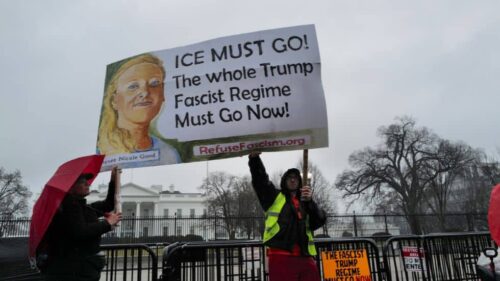
    The killings of Alex Pretti and Renée Good’s by ICE agents expose deep contradictions in American culture — particularly around...
    by Peter Isackson, January 30, 2026
    Fair Observer

    Deadly Institutional Collapse: America Watches as Inhumanity Triumphs

    Foundational federal institutions in the US are failing to uphold established legal standards and conform their conduct to institutional norms,...

    by Larry Beck, January 28, 2026
    Fair Observer

    FO° Talks: Trump Administration Targets Legal and Illegal Immigrants with ICE Raids, Here’s How

    In this episode of FO° Talks, Rohan Khattar Singh and Agustina Vergara Cid discuss her path to US citizenship and...
    by Agustina Vergara Cid & Rohan Khattar Singh, October 16, 2025
    Fair Observer

    Aren’t We All Immigrants In God’s Eyes?

    Immigrants often live a hard life, yet they play a vital role in the US economy. They also face increasing...

    by David Zhang, June 1, 2025
    Fair Observer

    FO° Talks: US Immigration Policy Under Donald Trump 2.0

    US President Donald Trump’s new administration intends to crack down heavily on immigration. He is granting more power to US...
    by Douglas Hauer & Atul Singh, February 9, 2025
    Fair Observer

    More Episodes

    FO Podcasts: The Muslim Brotherhood Explained — Origins, Ideology and Global Influence

    In this episode of FO Podcasts, Atul Singh and Cynthia Farahat examine the Muslim Brotherhood’s origins, debating whether it evolved...

    Cynthia Farahat & Atul Singh, April 8, 2026
    Fair Observer

    China–Taiwan Tensions — Civil War Legacies and Geopolitical Chess

    Since President Xi Jinping came to power in 2012, China has been acting more aggressively towards Taiwan. Tensions go back...

    Glenn Carle & Atul Singh, April 3, 2026
    Fair Observer

    The Dialectic: Narendra Modi’s Vegetarian Stalinism Has Ruined the Indian Economy

    In this episode of The Dialectic, Atul Singh and Glenn Carle explain how India’s current leader has rolled back the...

    Glenn Carle & Atul Singh, February 12, 2026
    Fair Observer

    FO° Podcasts: Maduro, the War on Drugs and Trump’s Revival of the Monroe Doctrine

    In this episode of FO° Podcasts, Atul Singh and Benjamin Delille examine US President Donald Trump’s confrontation with Venezuela, questioning...

    Benjamin Delille & Atul Singh, January 18, 2026
    Fair Observer

    Must Listen

    FO° Podcasts: Myanmar Votes During a Civil War: Why This Election Could Tear the Country Apart

    In this episode of FO° Podcasts, Rohan Khattar Singh and Asanga Abeyagoonasekera examine Myanmar’s December 28 elections against the backdrop...

    by Asanga Abeyagoonasekera & Rohan Khattar Singh, January 6, 2026
    Fair Observer

    FO° Podcasts: The Forbidden C-word, Class in America

    In this episode of FO° Podcasts, Atul Singh and Kent Jenkins Jr. discuss how class shapes US identity and political...

    by Kent Jenkins Jr. & Atul Singh, December 29, 2025
    Fair Observer

    The Dialectic: France: The Eternal Crisis Strikes Again. What Now?

    In this episode of The Dialectic, Atul Singh and Glenn Carle examine France’s deepening polycrisis. Rising debt, political paralysis and...

    by Glenn Carle & Atul Singh, December 13, 2025
    Fair Observer

    The Dialectic: Can Germany Outgrow Its Postwar American Model?

    In this episode of The Dialectic, Atul Singh and Glenn Carle explore how Germany faces acute economic, political and social...

    by Glenn Carle & Atul Singh, December 2, 2025
    Fair Observer

    FO° Podcasts: The Right to Play: How Women Fought and Won the Battle for Equality in Sports

    In this episode of FO° Podcasts, Atul Singh and Lauren Greenberg explore how Title IX reshaped women’s sports and personal...

    by Lauren Greenberg & Atul Singh, November 26, 2025
    Fair Observer

    FO° Podcasts: Enemy of the Sun — How Palestinian Poetry Became a Weapon of Resistance

    In this episode of FO° Podcasts, Atul Singh and Edmund Ghareeb trace the unlikely journey of the Palestinian poetry anthology...

    by Edmund Ghareeb & Atul Singh, November 19, 2025
    Fair Observer

    FO° Podcasts: Why is the US Deporting Illegal Migrants to a Tiny African Nation Called Eswatini?

    In this episode of FO° Podcasts, Rohan Khattar Singh and Zweli Martin Dlamini examine the secret deportation deal between the...

    by Zweli Martin Dlamini & Rohan Khattar Singh, November 16, 2025
    Fair Observer

    The Dialectic: Can Germany and France Make Europe Great Again?

    In this episode of The Dialectic, Atul Singh and Glenn Carle examine Europe’s rise from Renaissance brilliance to post-World War...

    by Glenn Carle & Atul Singh, October 17, 2025
    Fair Observer


    Fair Observer, 461 Harbor Blvd, Belmont, CA 94002, USA

    Sections

    • Politics
    • Economics & Finance
    • Business & Entrepreneurship
    • Art & Culture
    • Science & Technology
    • Environment & Climate Change
    • World Leaders
    • World
    • The Americas
    • Europe
    • Middle East & North Africa
    • Africa
    • Asia
    • United States
    • India
    • China
    • Russia
    • Events
    • Publications
    • Authors
    • About
    • Publish
    • Contact
    • Login
    Fair Observer

    MULTIMEDIA

    Easter and Passover Explained: Two Stories, One Crossing

    Fair Observer

    VIDEOS

    FO Talks: From Minneapolis to Kuwait — Welfare Model Under Pressure in the AI Era

    Fair Observer

    PODCASTS

    FO Podcasts: The Big Paradox — Why Immigration Divides America Like Nothing Else

    PUBLICATION

    Fair Observer Monthly: March 2026

    Support Fair Observer

    We rely on your support for our independence, diversity and quality.

    Donate
    © Fair Observer All rights reserved
    Designed, Developed and Maintained by Netleon IT Solutions
    Fair Observer Education Logo Fair Observer Leadership Academy Logo

    BOOKMARK

    Want to save this post?
    Click to Login

    Support independent, crowdsourced, nonprofit journalism.

    Fair Observer is a 501(c)(3) independent nonprofit. We are not owned by billionaires or controlled by advertisers. We publish nearly 3,000 authors from over 90 countries after fact-checking and editing each piece. We do not have a paywall and anyone can read us for free. With your vital donations, we can continue to do our work.

    Please make a recurring (or even one-time) donation today. Even $1 goes a long way because a million donors like you mean one million dollars. Thank you for keeping us independent, free and fair.

    One Time Monthly Yearly

    Sign into your Fair Observer Account

    • Lost your password?
    Forgot Password

    Forgot Password

    Enter your registered email address or username. You will receive a link to create a new password via email.

    Please enter your username or email address. You will receive an email message with instructions on how to reset your password.

    • Log in

    Or
    Return to Login

    Forgot Password

    We have sent a link to your registered email address to reset your password.

    Back to Login

    Become a Member & Enjoy Exclusive Benefits!

    • Access to comments feature
    • Bookmark your favorite articles
    • Exclusive invitations to FO° Talks & FO° Live
    • Access to all of our e-publications
    Explore Membership
    Return to Login

    NEWSLETTER

    Make Sense of the World

    Unique Insights from 2,500+ Contributors in 90+ Countries

    NEWSLETTER

    Make Sense of the World

    Unique Insights from 2,500+ Contributors in 90+ Countries

    Fair observer

    Make Sense of the World

    Unique Insights from 2,500+ Contributors in 90+ Countries

    We Need Your Consent
    We use cookies to give you the best possible experience. Learn more about how we use cookies or edit your cookie preferences. Privacy Policy. My Options I Accept
    Privacy & Cookies Policy

    Edit Cookie Preferences

    The Fair Observer website uses digital cookies so it can collect statistics on how many visitors come to the site, what content is viewed and for how long, and the general location of the computer network of the visitor. These statistics are collected and processed using the Google Analytics service. Fair Observer uses these aggregate statistics from website visits to help improve the content of the website and to provide regular reports to our current and future donors and funding organizations. The type of digital cookie information collected during your visit and any derived data cannot be used or combined with other information to personally identify you. Fair Observer does not use personal data collected from its website for advertising purposes or to market to you.

    As a convenience to you, Fair Observer provides buttons that link to popular social media sites, called social sharing buttons, to help you share Fair Observer content and your comments and opinions about it on these social media sites. These social sharing buttons are provided by and are part of these social media sites. They may collect and use personal data as described in their respective policies. Fair Observer does not receive personal data from your use of these social sharing buttons. It is not necessary that you use these buttons to read Fair Observer content or to share on social media.

     
    Necessary
    Always Enabled
    These cookies essential for the website to function.
    Social Media
    These cookies are used to enable sharing or following of content that you find interesting on our website. These settings apply to third-party social networking and other websites.
    Performance & Functionality
    These cookies are used to enhance the performance and functionality of our website. They provide statistics on how our website is used and help us improve by measuring errors. Certain functionalities on our website may become unavailable without these cookies.
    Analytics
    SAVE & ACCEPT

    Total Views: