





In this episode of The Dialectic, Editor-in-Chief Atul Singh and FOI Senior Partner Glenn Carle, a retired CIA officer who now advises companies, governments and organizations on geopolitical risk, analyze the postwar trajectory of Japan, the land of the rising sun. Japan has evolved economically, demographically, politically and militarily since World War II. For decades after 1945, Japan was a passive international actor. Since the rise of Junichiro Koizumi to power in 2001, Japan has become a more assertive “middle power.” Of course, this massive transformation of the country has also caused massive challenges.
 Spotify
 Amazon Music
How the Japanese economy has changed
Over the last three decades, Japan’s debt-to-GDP ratio has increased massively. In 1991, this figure sat at around 65%. By 2025–2026, that figure has risen to 248%. This is the biggest debt burden in the developed world. This debt spike is partly a result of the 2007–2008 global financial crisis and the 2020 Covid pandemic. Mostly, however, it is because Japan has run consistent government budget deficits.
Luckily for Japan, however, 88% of the debt is owed to the Japanese people, not to foreign investors. It is denominated in yen, and interest rates are low or zero. So, unlike a country that has borrowed from outside in dollars, Japan does not face the same risk of financial crises. Still, this massive debt is a burden, and it has slowed down Japan’s growth rate.
This is a significant shift from Japan’s postwar economic miracle. From the 1950s to 1973, Japan sustained rapid growth, often exceeding 10% annually. Growth only slowed after the 1973 oil crisis, becoming more sporadic during the 1980s before settling into stagnation (known as the “Lost Decades”) after Japan’s asset bubble burst in 1990.
Since the bubble burst, the purchasing power of the yen has declined steadily. The yen has depreciated significantly. In April 1995, $1 was worth ¥83.6895, while by May 5, 2026, $1 was equivalent to ¥157.74.
Economists still puzzle over the question of what caused Japan’s decline. The “economic miracle” of the land of the rising sun feels a long way away in the country with the highest debt-to-GDP ratio in the developed world. Atul believes that Japan’s economic policies of the 1980s fueled an unsustainable bubble. Tokyo focused on the marketability of assets, eased access to credit and encouraged speculation, prolonging and exacerbating the bubble.
At the peak of Japan’s economic bubble, around 1989 or 1990, economists estimated the theoretical land value of the Tokyo Imperial Palace grounds to be greater than the value of all real estate in the entire state of California. This represented one of the largest asset bubbles in history. Tokyo real estate was priced over 350 times higher than equivalent space in Manhattan.
There were real fears in America that Japan was a real threat to the US. The 1993 movie Rising Sun captured these fears. Many argued that the US had to adapt and adopt Japanese methods. A real estate developer called Donald Trump spoke out against Japan for stealing American jobs and ruining the country’s economy.
Neither the central bank nor the finance ministry acted in time to contain the bubble. By August 1990, the Nikkei stock index had plummeted to half its peak by the time of the fifth monetary tightening by the Bank of Japan. By late 1991, other asset prices began to fall. Even though asset prices had visibly collapsed by early 1992, the economy’s decline continued for well over a decade.
Japanese postwar politics moves to the right gradually
Not only has Japan changed economically, but it has also changed politically. Japan and Germany were the two great losers of World War II. Both had their militarism and even nationalism beaten out of them. The US turned both countries into loyal allies and changed their culture. Both turned away from far-right political parties to focus on economic and social advancement.
Complete defeat in World War II rejected, suppressed or placed into question all the cultural guideposts for Japanese society. America set out to remake the Japanese political system in its image explicitly and achieved dramatic success. The American occupier suppressed the Japanese nationalist right because it was responsible for a brutal war and a complete defeat.
Yet Japanese society remained conservative. In 1955, Japan’s two conservative parties, the Liberal Party and the Japan Democratic Party, merged to form the Liberal Democratic Party (LDP), a center-right, united front against the Japan Socialist Party. The key LDP argument was that it represented Japan while the socialist report to Moscow. General Douglas MacArthur wanted to ensure Japan did not turn communist. So, it made peace with Japan’s ruling elite, which formed and dominated the LDP. Unsurprisingly, the LDP went on to become the ruling party of Japan, retaining power uninterruptedly for decades. It presided over the economic miracle and won election after election. The LDP only lost power briefly when the Japanese asset bubble burst and damaged its sheen.
In 2001, Junichiro Koizumi, a member of the Japanese political elite, won the LDP presidency and then became prime minister. He was a reformer who revived the fortunes of the LDP. Koizumi was focused on reducing Japan’s government debt, privatizing Japan Post in the process. He was also an advocate of a more muscular foreign policy and won international attention for sending Japan’s Self-Defense Forces to Iraq after George W. Bush’s invasion of the country in 2003. This was the first time Tokyo had deployed troops outside Japan since World War II. Koizumi was also a strong nationalist who visited the controversial Yasukuni Shrine, fueling diplomatic tensions with neighboring China and South Korea.
Koizumi resigned as prime minister in 2006 and was succeeded by Shinzo Abe. Although Abe lost power after a year, he made a comeback later and went on to become the longest-serving Japanese prime minister. He tried to counter Japan’s stagnation through Abenomics, a combination of monetary easing, fiscal stimulus and structural reforms, which had mixed results. More importantly, Abe steered Japan to a more nationalist and muscular foreign policy.
In 2007, Abe initiated the Quadrilateral Security Dialogue (QUAD), involving the US, Australia, India and Japan, to contain the rise of China. Abe was also a member of Nippon Kaigi, a far-right organization that downplays Japanese atrocities in textbooks and denies use of Korean or Chinese comfort women for Japanese troops during World War II. In a nutshell, Abe was the key figure in the public emergence of Japanese nationalism.
Today, his disciple Sanae Takaichi has become the first female prime minister of Japan. Just as Abe was more nationalist than Koizumi, Takaichi is more nationalist than Abe. Unlike the patricians Koizumi and Abe, Takaichi is of humble middle-class origin. In keeping with the Japanese conservative tradition, Takaichi also opposes immigration. She also wants to beef up Japan’s military.
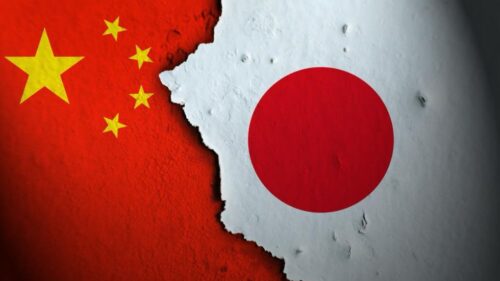
As China has become more nationalistic and threatening in recent years, Japan has become more independent and assertive. The fetters once put on by Americans after World War II are now coming loose. In Atul’s words, “Both Germany and Japan, in some ways, are normalizing and reverting back to historical mean.”
Demography has changed dramatically
While politics might have changed gradually, Japan’s demography has changed dramatically. The Japanese fertility rate dropped to 1.15 in 2024, far below the 2.1, well below replacement level. The 65+ form around 30% of the population. The working age population between 15 and 64 is about 59%. The youth, those below 14, are only 11%. The median age is 49.4 to 50.2 (second highest after Monaco), life expectancy 81 for men and 87–88 for women. The highest total dependency ratio is 70.2, i.e. there are 100 workers for 70 dependents, which include the old and the young. This ratio is the highest in the world.
During the postwar boom of 1950, there were over 12 workers for every retiree. This massive workforce kept the tax burden low and productivity high. Japanese demography fueled the rapid industrialization of the 1950s and 1960s. Note that Japanese workers were educated and skilled unlike their counterparts in India or Pakistan. As Japan grew richer, birth rates fell and life expectancy rose.
By 1970, the worker-to-pensioner ratio was 9.8-to-1. By 1990, this ratio was 5.8-to-1, which declined to 2.8-to-1 by 2010. Today, this ratio is 2-to-1. There is no precedent for the dramatic aging of the Japanese population and slower growth is to some degree a result of lower birth rates. Older people do not work or consume as much as young people.
Japan is now a “super-aging” society. Japan’s current population is estimated to be 122 million in 2026. Projections indicate that it will plunge to 105 million by 2050. Japan has been a socially conservative society and has been reluctant to let large numbers of foreigners immigrate to their island nation.
China’s rise and America going home forces Japan to act
China has become increasingly aggressive and nationalistic even as the US has become more isolationist. Trump walked out of the Trans-Pacific Partnership (TPP), leaving the field open to China in the region. Beijing came up with the Regional Comprehensive Economic Partnership (RCEP), which many Asian countries signed after the collapse of the TPP. In the US/Israel–Iran War, American redeployment of troops and military kit from Japan and South Korea to the Middle East has worried both Tokyo and Seoul.
Consequently, Japan is adapting to changed circumstances. Japan has moved to replace, to the extent possible, American international economic leadership in Asia. Tokyo has replaced the TPP and countered the RCEP with the Comprehensive and Progressive Agreement for Trans-Pacific Partnership (CPTPP), also known as TPP-11. Japan has also directed tens of billions of dollars to African development in an effort to counter China’s Belt and Road Initiative and other African investments.
In the changed strategic environment. Japan has doubled its defense budget. Chinese aggression in the South and East China Seas and around the Senkaku Islands (known to China as the Diaoyu Islands) off the shore of Taiwan makes Japan uncomfortable. They also worry about a 2021 circumnavigation of Japan by a Chinese–Russian fleet. These threats have come at a time when North Korea continues to develop and test nuclear missiles.
Japan now finds itself in a position where it cannot just rely on a defensive posture but has to project force. At the end of December, 2025, the Japanese cabinet approved a $640 million defense budget, which includes the purchase of 300 US Tomahawk missiles and the development of a rapid reaction force similar to the US Marines. This force is capable of projecting power beyond simply defending the home islands. Japan has also engaged in strong bilateral discussions with Vietnam, the Philippines and Australia, and continues to engage with the US.
What lies ahead for Japan
Despite a more robust foreign policy and increased defense capabilities, Japan lacks the size to take on either the US or China. Over the next few years, Japan will continue to slide slowly to middle-rank power status.
Going forward, Japan will seek to fill the gaps left by America’s isolationist policies with variable coalitions to counterbalance China, though this has significant limits. The QUAD hasn’t met Japanese expectations. Thus, Japan has been deepening relationships with South Korea and Taiwan. Japan’s grand strategy will be to contain and deter China. Fighting or boycotting China would lead to economic armageddon.
China’s fixation with historic Japanese militarism is the result of Xi Jinping’s obsession. Atul points out that no Japanese army can march all the way to India as it did in World War II. The Japanese simply do not have the numbers. Over time, Japan, South Korea and China will have similar challenges of aging societies and a detente makes most sense.
In the coming years, Japan’s economy will suffer from aging pains. The nation has three possibilities to counter a declining and aging population: significantly increase immigration to keep its population numbers up, invest massively in robotics to automate work or accept economic stagnation despite technological leadership. Japan is debating the first option, but so far has chosen not to allow massive immigration. It has embraced the second wholeheartedly. The third is inevitable.
Japan will have to face an existential choice in the next 25 years: accept China’s strategic and economic orbit; maintain a counteralliance with the US and other regional actors; or create a replacement, to the extent possible, for Pax Americana in Asia. This will involve not just an entente with other Asian states but also a detente with China based on the economic benefits of a peaceful China–Japan relationship. A more multipolar and uncertain Pax Asiana is likely to succeed Pax Americana in Asia.
[Lee Thompson-Kolar and Cheyenne Torres wrote this summary.]
The views expressed in this article/podcast are the author’s own and do not necessarily reflect Fair Observer’s editorial policy.
The Dialectic: Narendra Modi’s Vegetarian Stalinism Has Ruined the Indian Economy
In this episode of The Dialectic, Atul Singh and Glenn Carle explain how India’s current leader has rolled back the...

China-Japan Tensions Rise to Highest Levels Since World War II
Japanese Prime Minister Sanae Takaichi’s comments on Taiwan in response to a parliamentary question have triggered a furious response from...
The Dialectic: France: The Eternal Crisis Strikes Again. What Now?
In this episode of The Dialectic, Atul Singh and Glenn Carle examine France’s deepening polycrisis. Rising debt, political paralysis and...

The Dialectic: Can Germany Outgrow Its Postwar American Model?
In this episode of The Dialectic, Atul Singh and Glenn Carle explore how Germany faces acute economic, political and social...

The Dialectic: Can Germany and France Make Europe Great Again?
In this episode of The Dialectic, Atul Singh and Glenn Carle examine Europe’s rise from Renaissance brilliance to post-World War...
Project 2025 and Donald Trump’s Dangerous Dismantling of the US Federal Government
In this episode of The Dialectic, Atul Singh and Glenn Carle dissect US President Donald Trump’s destruction of federal institutions....
Is China’s Belt and Road Initiative Strategic Genius, Arrogant Overreach or Something Else?
The Belt and Road Initiative is China’s bold and risky response to internal tensions and external pressure, but it is...
FO Podcasts: Canada’s Untold Role in Modern Conflicts
In this episode of FO Podcasts, Ranjani Iyer Mohanty and Muhannad Ayyash examine Canadian policy toward the Israel–Palestinian conflict through...

FO Podcasts: Making Sense of Trump’s Financial Controversies
In this episode of FO Podcasts, Casey Hermann and John Feffer examine Donald Trump’s alleged financial gains during his second...

FO Podcasts: Cockroach Chronicles — Making Sense of the CJP
In this episode of FO Podcasts, Ranjani Iyer Mohanty and Barun Mohanty examine how exam irregularities, limited educational opportunities and...

FO Podcasts: Stairways to the Skies — The Secrets of Hiking
In this episode of FO Podcasts, Ranjani Iyer Mohanty and Christine Gabriel discuss the appeal of hiking, drawing on her...

FO Podcasts: What the West Ignores About China’s Digital Nationalism
In this episode of FO Podcasts, Florian Schneider and Haruko Satoh argue that digital nationalism is a defining force shaping...

FO Podcasts: Why Narcoterrorism Still Matters
In this episode of FO Podcasts, Atul Singh and Jeffrey James Higgins examine how narcoterrorism combines organized crime, insurgency and...

FO Podcasts: The Big Paradox — Why Immigration Divides America Like Nothing Else
In this episode of FO Podcasts, Atul Singh and Kent Jenkins Jr. examine why Americans support strict border control but...

FO Podcasts: The Muslim Brotherhood Explained — Origins, Ideology and Global Influence
In this episode of FO Podcasts, Atul Singh and Cynthia Farahat examine the Muslim Brotherhood’s origins, debating whether it evolved...

China–Taiwan Tensions — Civil War Legacies and Geopolitical Chess
Since President Xi Jinping came to power in 2012, China has been acting more aggressively towards Taiwan. Tensions go back...

The Dialectic: Narendra Modi’s Vegetarian Stalinism Has Ruined the Indian Economy
In this episode of The Dialectic, Atul Singh and Glenn Carle explain how India’s current leader has rolled back the...

FO° Podcasts: Maduro, the War on Drugs and Trump’s Revival of the Monroe Doctrine
In this episode of FO° Podcasts, Atul Singh and Benjamin Delille examine US President Donald Trump’s confrontation with Venezuela, questioning...

FO° Podcasts: Myanmar Votes During a Civil War: Why This Election Could Tear the Country Apart
In this episode of FO° Podcasts, Rohan Khattar Singh and Asanga Abeyagoonasekera examine Myanmar’s December 28 elections against the backdrop...





Comment