


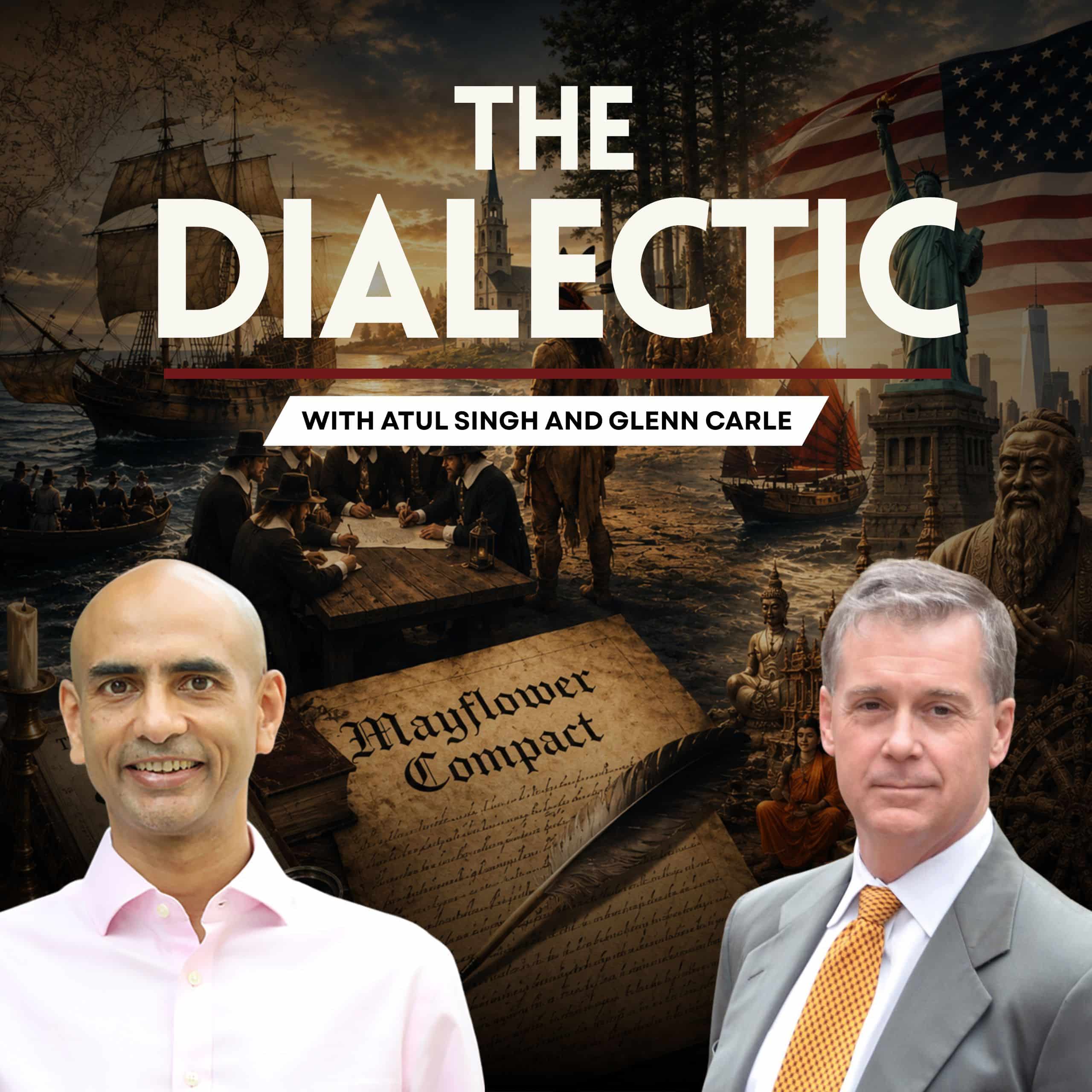
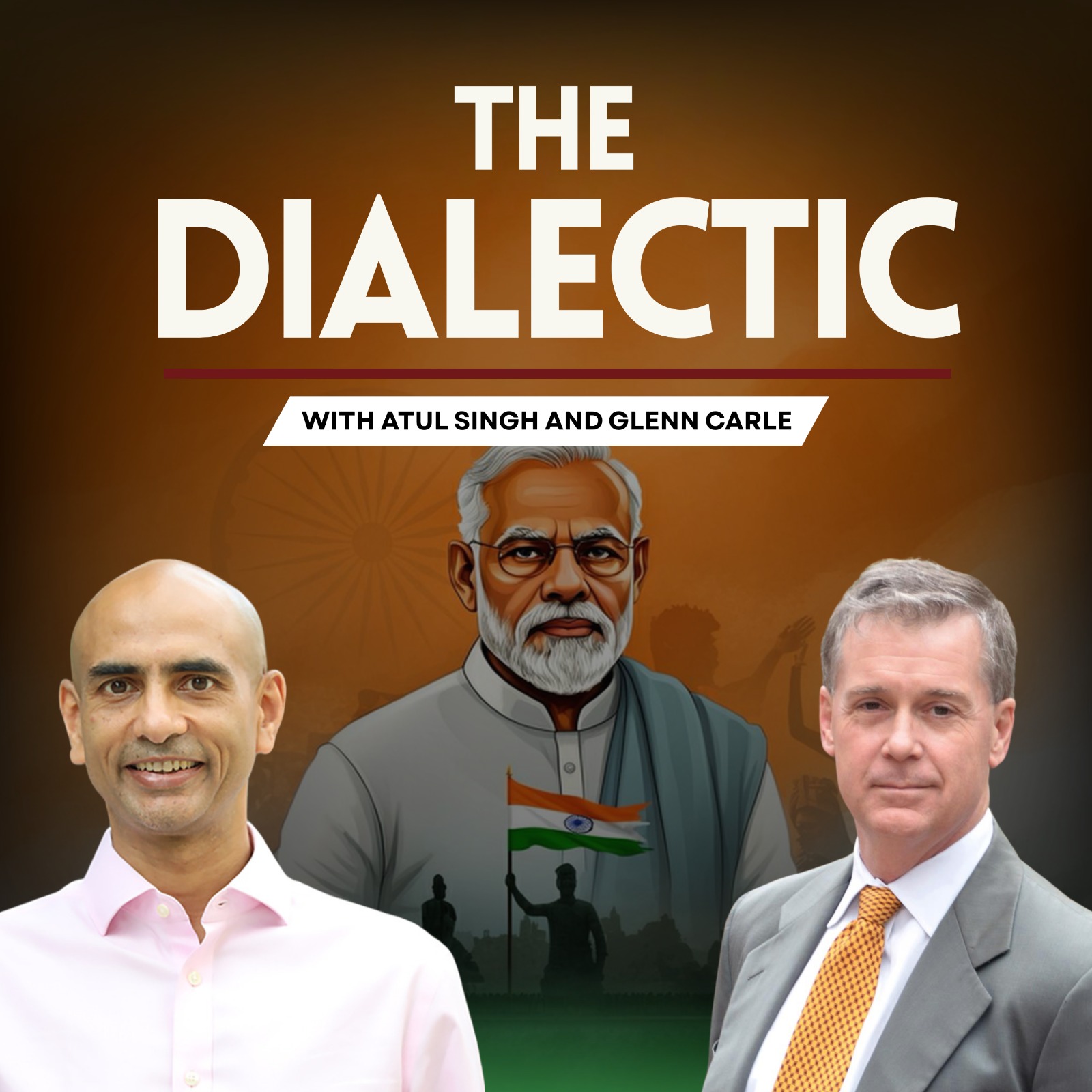
Editor-in-Chief Atul Singh and FOI Senior Partner Glenn Carle, a retired CIA officer who now advises companies, governments and organizations on geopolitical risk, examine how small English settlements in the Americas evolved into an independent republic in little more than 150 years. The American Revolution, they argue, emerged from the interaction of culture, war, imperial rivalry, new ideas and political organization. Indeed, the United States was not born from a single cause but from the convergence of several distinct transformations.
 Spotify
 Amazon Music
America emerged through conflict with Native nations
Glenn begins with a subject that has largely disappeared from popular memory: the decisive role Native Americans played in shaping early colonial society. The English settlers who arrived aboard the Mayflower in 1620 did not immediately dominate New England. Their survival depended on alliances with Native communities whose own political landscape had been transformed by epidemics that had devastated indigenous populations before the Pilgrims’ arrival.
For decades, relations between English settlers and Native peoples remained pragmatic. The Wampanoag accepted the newcomers because they needed allies against rival tribes, while the English adopted indigenous agricultural practices and other forms of local knowledge simply to survive. In this period, the colonists lacked both the numbers and the power to impose their own culture.
Everything changed with King Philip’s War (1675–1678). Glenn describes it as one of the bloodiest wars in American history relative to population, yet one that is almost entirely absent from modern historical consciousness. Its destruction changed attitudes on both sides. Native communities suffered catastrophic losses, while English settlers increasingly viewed indigenous peoples as permanent enemies.
Atul observes that the conflict also changed how colonists viewed themselves. Constant warfare required local militias and independent decision making. Although the settlers remained culturally English, they increasingly developed political habits dissimilar to their counterparts in Britain. The experience of defending their own communities fostered a growing sense of collective identity that would later underpin resistance to imperial authority.
Britain’s victories planted the seeds of separation
The next turning point came not from internal colonial development but from Britain’s long struggle with France for supremacy in North America. For nearly a century and a half, the colonies relied upon Britain for military protection against French forces and their Native allies. The imperial relationship therefore rested on mutual necessity.
That strategic logic disappeared after Britain’s victory in the Seven Years’ War (1756–1763), also known as the French and Indian War. The capture of Quebec in 1759 and the Treaty of Paris in 1763 removed France as a serious threat to Britain’s American colonies. Glenn contends that this fundamentally altered colonial thinking. Once external danger receded, colonists naturally began asking why they still needed Britain’s supervision.
Ironically, Britain attempted to strengthen imperial control at precisely the moment when its strategic importance was declining. Seeking to recover the enormous costs of war, London tightened commercial regulation and imposed new taxes. These measures aimed partly to help finance colonial defense, but they instead deepened resentment.
Atul notes that imperial economic policy resembled patterns seen throughout later colonial history. Restrictions on manufacturing and trade prevented the colonies from developing economically on their own terms. Economic grievances reinforced a growing conviction that Britain’s interests increasingly diverged from those of its American subjects.
English ideas produced an anti-authoritarian society
Both speakers stress that the American Revolution cannot be understood without appreciating developments inside England itself. The English Civil War (1642–1651), the Glorious Revolution (1688) and the late 17th- and 18th-century Enlightenment profoundly influenced colonial political culture.
Glenn rejects interpretations portraying the Revolution primarily as a religious movement descended from Puritan theology. By the 18th century, he says, political philosophy had largely overtaken religious disputes. Thinkers like John Locke articulated concepts of natural rights, limited government and the diffusion of political power, while Thomas Paine’s famous pamphlet, Common Sense, translated those Enlightenment ideas into a compelling argument for ordinary colonists.
These ideas succeeded because they encountered a population already accustomed to considerable self-rule. Distance from London, the legacy of the Mayflower Compact and generations of local governance had encouraged habits of political independence. The colonists increasingly saw authority as something that required consent rather than unquestioning obedience.
Atul considers anti-authoritarianism one of the defining characteristics of American identity. Unlike English farmers living within a well-established hierarchy, many colonists had begun to expect personal autonomy. Enlightenment philosophy gave intellectual expression to instincts that had already been forming.
A distinctly American culture took shape
Alongside political developments, the colonies developed a culture increasingly distinct from that of Britain. Even language reflected this divergence. American English preserved many features of 17th-century pronunciation that later disappeared from Britain, illustrating how physical distance allowed colonial society to evolve independently. More significant, however, was the emergence of a different understanding of social relationships.
Rather than accepting inherited hierarchy as natural, colonists increasingly embraced the belief that individuals possessed equal worth regardless of social rank. Glenn illustrates this through a scene from the 1992 film, The Last of the Mohicans, in which an American militiaman rejects the very idea of being anyone’s subject. Although fictional, he argues, the exchange captures an important historical reality.
Colonial identity developed as European settlers adapted to uniquely American circumstances while remaining connected to English intellectual traditions. It created a society that increasingly defined itself through local initiative and suspicion of centralized authority.
Revolution required organization as well as ideas
The final stage of the story concerns agency. Drawing upon his intelligence background, Glenn digs deep into an organization known as the Sons of Liberty. The group functioned much like a modern covert action network, organizing protests and inciting incidents that would discredit British authority.
Glenn cites the Boston Massacre as a revealing example. Although five colonists died in the confrontation, revolutionary activists intentionally escalated tensions before transforming the event into powerful political propaganda through Paul Revere’s famous engraving. These carefully managed campaigns helped mobilize public opinion far beyond Boston.
Glenn sees the American Revolution as not only a war between Britain and America, but a civil war dividing Patriots and Loyalists. Families split, loyalties shifted and many individuals found themselves caught between competing visions of legitimate authority.
George Washington and Benjamin Franklin’s experiences illustrate this complexity. Both initially identified strongly with Britain before concluding that imperial arrogance and dismissive attitudes toward colonial leaders made continued loyalty impossible. Britain was not necessarily tyrannical, but it proved too inflexible to recognize how profoundly colonial society had changed.
[Lee Thompson-Kolar edited this piece.]
The views expressed in this article/podcast are the author’s own and do not necessarily reflect Fair Observer’s editorial policy.














Join the conversation
Share your perspective
Log in to share your thoughts and take part in the discussion.