

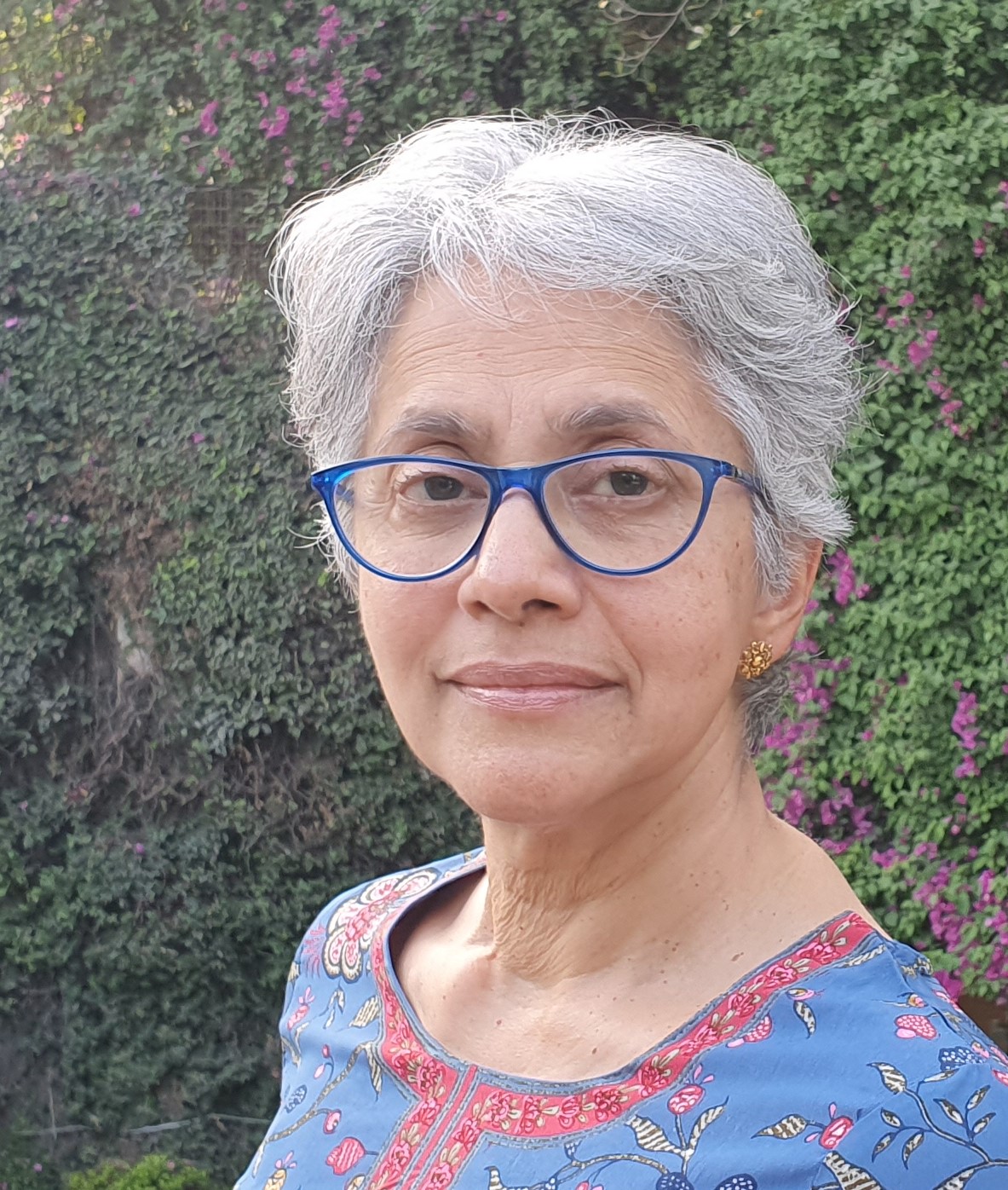


Editor-at-Large Ranjani Iyer Mohanty speaks with Dr. Muhannad Ayyash, professor of sociology at Mount Royal University, about Canadian policy toward Israel and Palestine. Drawing on his coedited book, Canada as a Settler Colony on the Question of Palestine, Ayyash examines how colonial foundations, electoral calculations and geopolitical alliances shape that policy. Mohanty and Ayyash also discuss the Iran war, Canadian journalism and campus protests, asking why Canada’s humanitarian self-image so often conflicts with its actions.
 Spotify
 Amazon Music
Settler colonialism challenges indigenous sovereignty
Ayyash defines settler colonialism as a structure of power whose forms vary across societies and historical periods. Its common feature, he argues, is the rejection of indigenous sovereignty. Settlers seek to establish themselves as the sole legitimate authority over territory already inhabited by another people.
“They cannot tolerate the idea of an indigenous claim to sovereignty,” he says. Different systems pursue that objective through different mechanisms, including displacement and other forms of violence.
For Ayyash, this framework explains both Palestinian dispossession and the foundations of Canada. Narratives presenting inhabited territories as empty obscure the people already living there and justify their removal. Shared colonial foundations help explain solidarity between Canada and Israel, often without politicians consciously acknowledging that connection.
He consequently challenges descriptions of their alliance as simply a defense of democracy and human rights. Those descriptions conceal histories of violence and continuing struggles over sovereignty.
Recognition without material pressure
Mohanty asks how Canada reconciles its defense of Israel with its recognition of Palestinian statehood and conditions concerning elections, Hamas and demilitarization. Ayyash distinguishes domestic political messaging from international policy.
He interprets the Liberal Party’s balancing act as an electoral calculation aimed at retaining Muslim, Arab, Jewish and traditional liberal voters. He doubts Conservatives would pursue the same approach and sees the New Democratic Party’s newer leadership as less interested in appeasing supporters of Israel.
Internationally, however, Canada’s underlying alignment remains largely intact. Recognition of Palestine offers a symbolic gesture while trade and military connections continue. He points to reporting on loopholes in Canadian arms restrictions as evidence that announced measures fall short.
Ayyash advocates a comprehensive trade embargo, including a genuine arms embargo, supported by European partners. Canada cannot transform the situation alone, but it could help organize pressure that imposes material costs on Israel.
Strategic interests and the Iran war
Ayyash places Canada’s position within a broader US-led geopolitical system. Within this framework, American support for Israel serves interests involving energy markets, regional military dominance and potential confrontation with China.
His account of lobbying is more specific than the suggestion that lobby groups simply dictate policy. He contends that pro-Israel organizations reinforce one strategic route among several possible alternatives, presenting Israel as indispensable and discouraging challenges to unconditional support.
He also criticizes Western moral narratives that invoke the Holocaust while overlooking Palestinian dispossession. Such narratives allow governments to portray their policies as ethical despite the violence those policies enable.
Turning to Iran, Ayyash believes that Netanyahu persuaded Trump to expect a rapid, low-cost victory. He also identifies American officials who favored war for their own strategic reasons. Canadian caution may be a concern about instability and consequences rather than a principled rejection of intervention. Rising economic costs could prompt greater scrutiny of unconditional support for Israel.
Media failures and a chilling effect
Mohanty questions why Canadian coverage gives insufficient attention to continuing Palestinian suffering. Ayyash accuses mainstream outlets of relying on official statements, protecting access to politicians and avoiding pressure from pro-Israel organizations. He urges audiences to seek alternative reporting.
In Ayyash’s experience, university students are largely receptive to scholarship on Palestine. Teaching should present evidence while leaving students free to determine their political positions. This receptiveness reflects a growing generational gap between public attitudes toward Palestine and the policies institutions maintain.
Against that backdrop, the removal of campus encampments, political condemnations and institutional hostility create what Ayyash calls a “chill effect.” Fear of professional or personal consequences encourages self-censorship among students, academics and others. Precedents used against Palestine solidarity protests could also restrict demonstrations over tuition or other issues.
Palestinian rights require sustained public pressure
Ayyash closes by describing worsening conditions in Gaza and continuing dispossession in the West Bank. He characterizes the violence as an ongoing effort to make Palestinian life and sovereignty impossible.
His response is sustained grassroots organizing through the Boycott, Divestment, Sanctions campaign, electoral pressure and demands for stronger journalism. Politicians and institutions must be compelled to consider public demands.
The stakes extend beyond Palestine. Ayyash warns that states learn from violence other states commit with impunity and may adopt similar techniques against their own populations. Defending Palestinian rights therefore also means defending the possibility that truth, justice and public participation can constrain power.
[Lee Thompson-Kolar edited this piece.]
The views expressed in this article/podcast are the author’s own and do not necessarily reflect Fair Observer’s editorial policy.
Canada at War: Trade and Trump’s Tariffs
Canada faces a stark dilemma as the US, under President Donald Trump’s volatile leadership, imposes tariffs and demands concessions that...
FO Talks: Can Canada Learn from the Iran War and Develop a Self-Reliant Military Industry?
In this episode of FO Talks, Rohan Khattar Singh and Christopher Coates argue that modern warfare reveals an imbalance between...
Walking the Middle Way, Together
Canada’s Prime Minister Mark Carney called for a coalition of middle powers to counterbalance aggressive superpowers and restore global stability....
Why Is Canada Involved in the Russia–Ukraine War?
Canada consistently offers strong support for Ukraine, citing democracy and sovereignty in response to Russia’s invasion. Since February 2022, Canada...
Canada Must Strengthen Independence Amid US Annexation Threats and Global Shifts
In light of current and repeated threats from Trump to annex Canada, this article urges Canada to grow up and...
FO Podcasts: Is Canada Looking to Form an Alliance With Europe?
In this episode of FO Podcasts, Ranjani Iyer Mohanty and David McKinnon examine how a deeper Canada–EU partnership could strengthen...
FO Podcasts: Making Sense of Trump’s Financial Controversies
In this episode of FO Podcasts, Casey Hermann and John Feffer examine Donald Trump’s alleged financial gains during his second...

FO Podcasts: Cockroach Chronicles — Making Sense of the CJP
In this episode of FO Podcasts, Ranjani Iyer Mohanty and Barun Mohanty examine how exam irregularities, limited educational opportunities and...

FO Podcasts: Stairways to the Skies — The Secrets of Hiking
In this episode of FO Podcasts, Ranjani Iyer Mohanty and Christine Gabriel discuss the appeal of hiking, drawing on her...

FO Podcasts: What the West Ignores About China’s Digital Nationalism
In this episode of FO Podcasts, Florian Schneider and Haruko Satoh argue that digital nationalism is a defining force shaping...
The Dialectic: Japan — The Aging Land of the Rising Sun
In this episode of The Dialectic, Atul Singh and Glenn Carle examine Japan’s transformation from a postwar economic giant into...
FO Podcasts: Why Narcoterrorism Still Matters
In this episode of FO Podcasts, Atul Singh and Jeffrey James Higgins examine how narcoterrorism combines organized crime, insurgency and...
FO Podcasts: The Big Paradox — Why Immigration Divides America Like Nothing Else
In this episode of FO Podcasts, Atul Singh and Kent Jenkins Jr. examine why Americans support strict border control but...
FO Podcasts: The Muslim Brotherhood Explained — Origins, Ideology and Global Influence
In this episode of FO Podcasts, Atul Singh and Cynthia Farahat examine the Muslim Brotherhood’s origins, debating whether it evolved...
China–Taiwan Tensions — Civil War Legacies and Geopolitical Chess
Since President Xi Jinping came to power in 2012, China has been acting more aggressively towards Taiwan. Tensions go back...
The Dialectic: Narendra Modi’s Vegetarian Stalinism Has Ruined the Indian Economy
In this episode of The Dialectic, Atul Singh and Glenn Carle explain how India’s current leader has rolled back the...
FO° Podcasts: Maduro, the War on Drugs and Trump’s Revival of the Monroe Doctrine
In this episode of FO° Podcasts, Atul Singh and Benjamin Delille examine US President Donald Trump’s confrontation with Venezuela, questioning...





Comment