




Imagine yourself the quiet owner of a nice two-story home on a large lot in a leafy neighborhood, living next door to a fine, helpful neighbor who would give you a cup of sugar or shovel your driveway in winter if you were ill. Many over-the-fence conversations about the weather and the World Series. One day you wake up to find that the kindly occupant has left and a biker gang has moved in. Now what? Do you move? Do you offer muffins as a gesture of generosity? Do you approach your neighbor about the revving engines at two in the morning? Do you keep your head down and hope they will soon move away?
This is Canada’s conundrum.
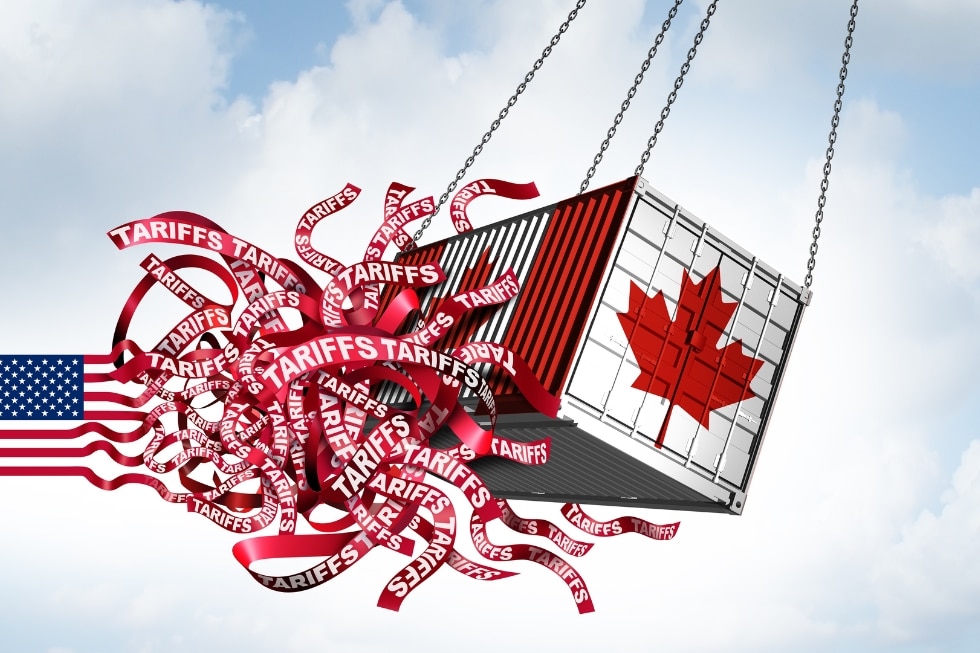
Failed trade talks between Canada and the US make clear the consequences of generations of Canadian dependence on its larger neighbor. Faced with the volatile, belligerent, and fundamentally unreliable Trump regime, the Canadian government must now think outside the terms of continental friendship and cooperation. Canada has always been a North American country, carefully navigating its relationship with a global military superpower, a cultural titan and a commercial juggernaut — the US. Canada has been a friendly, benign, supportive neighbor, but has frequently lapsed into free-riding on the American dime. We let our military atrophy and failed to maintain our NATO commitments. We do not defend our northern flank. And we have domestic agricultural policies whose design, not merely whose effect, is to allocate resources on nonmarket, anticompetitive principles. And now, as America turns from friend to foe, we are stuck.
US President Donald Trump is in good measure correct in claiming that Canada has taken advantage of the US. But Mr. Trump’s relationship with the truth is casual and happenstance. He is, first of all, blind to the burdens of global hegemony. There is a price to pay for leadership, and American governments have understood this for generations. Second, Mr. Trump’s leadership style is impulsive, incurably transactional, unguided by evidence, hopelessly short-term in orientation, and above all dictated by the need for dominance and recognition. Wags say that he lies for a living. At the least, we can no longer trust what he says.
Trump’s tariff war and the politics of bullying
For years it was the political left that favored protection. In the 1970s, Canadian prime minister Pierre Trudeau reviewed foreign investments and tried to Canadianize the energy industry, which was largely run by American multinationals. Meanwhile, the Republicans in the US were committed free traders, pitching the outsourcing of manufacturing to low-cost countries to make consumer goods affordable for Americans.
Now the Trump Republican Party (GOP) is committed to the mercantilist theory of domestic self-sufficiency, using tariffs to raise much-needed revenue for the US Treasury, block the importation of inexpensive and sophisticated goods, and stimulate the onshoring of lost manufacturing capacity. If there is a north star in Donald Trump’s political thinking, it is the merits of the tariff.
One more feature of Trump’s persona is pertinent. He is a bully. And bullies are at bottom cowards. Bullies punch down at smaller, weaker, more vulnerable people. Lacking courage, they are afraid of the strong. If Mr. Trump really wanted to address American de-industrialization, he would go after China. As commentator Michael Lind has recently written, “by 2023, China’s share of global manufacturing output surged to 28%, up from just 9% in 2004 — making it larger than the combined output of the United States, Japan, and Germany.” China’s gain is America’s loss.
The Chinese are smarter, more patient, more dogged, more strategic and now more economically powerful than the US. China is too strong for a bully. Easier to pick on a friend, ally and neighbor whose approach to the United States has fundamentally been about collaboration rather than competition — win-win, rather than zero-sum.
A free trade relationship unravels
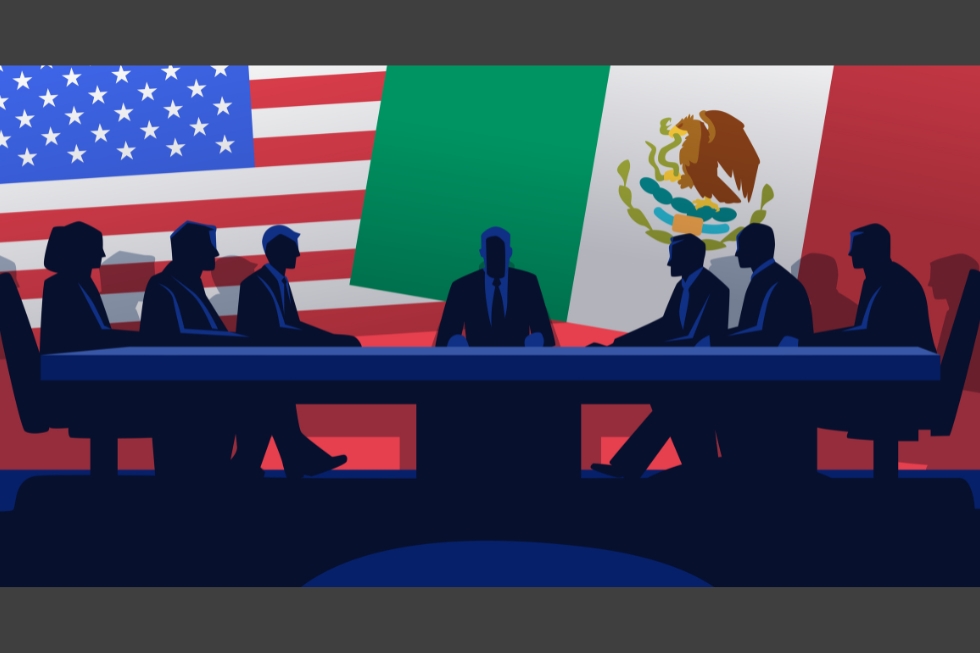
Canada has had a free trade agreement with the US since 1989. Mexico joined in 1992. Since then, opposition to free trade in Canada has largely melted away. Trump’s arrival disrupted common understandings. Everything was now to be renegotiated.
Two years ago, our free trade arrangements were renegotiated. But President Trump is a deal-maker, not a deal-keeper. He recently announced new tariffs on select Canadian imports, drawing Canada into new negotiations. These ended on August 21 with no deal. The Trump tariffs are to go ahead.
Why the deal failed remains unclear. But there are hints. The Canadians say that last-minute demands were unacceptable. The Americans wanted access to Canadian resources and wanted Canada to commit to restrictions on how it can negotiate agreements with other countries. The Americans also wanted Canada to rescind demands that the big American streaming platforms prioritize Canadian content, and, in Quebec’s case, French-language content. The Canadians say that these demands infringe on Canadian sovereignty and are thus unacceptable. The Americans also wanted to crack Canadian supply management systems for the production and consumption of agricultural products like dairy and fowl. In Quebec especially, this is an absolute non-starter.
So the Canadians walked away from a deal that they think would involve a ton of concessions for the prospect of reduced tariffs. Canadians in huge numbers applaud our prime minister’s decision. There is indeed wisdom in walking away. After all, Mr. Trump’s record shows that any deal is subject to unilateral change or abrogation. As Canadian Prime Minister Mark Carney put it, Trump signs in pencil. Perhaps the real question is why the government agreed to negotiations in the first place.
Canada’s costly stand against Washington
In reaction to new American tariffs, Canada has announced dollar-for-dollar retaliatory measures. The US has responded with more tariffs to come on Canadian goods going to the US. Canadians tend to be defiant and morally righteous in reaction to the Orange King’s petulance. But Canada is a tenth the size of the US and highly exposed to American trade patterns. Our willingness to suffer for our principles is not especially deep.
Clearly, the Canadian government hopes that the tariff war will harm American commercial interests and consumers ahead of this fall’s mid-term elections. Trump and the GOP are low in the polls, and American voters are restive. Inflation, gas prices, the cost of living and repulsion at Immigration and Customs Enforcement operations have eroded support for the GOP. Independents who helped elect Trump in 2024 have largely abandoned him. So perhaps the trade war will clip the GOP’s wings.
In the meantime, Canadians, like so many others, count the days to November 7, 2028 — and hope the conundrum will somehow resolve itself.
[Kaitlyn Diana edited this piece.]
The views expressed in this article are the author’s own and do not necessarily reflect Fair Observer’s editorial policy.






Join the conversation
Share your perspective
Log in to share your thoughts and take part in the discussion.