Login

    Sections
    Search

    • Politics
    • Economics & Finance
    • Business & Entrepreneurship
    • Art & Culture
    • Science & Technology
    • Environment & Climate Change
    • World
    • World Leaders
    • The Americas
    • Europe
    • Middle East & North Africa
    • Africa
    • Asia
    • United States
    • India
    • China
    • Russia
    • About
    • Authors
    • Publications
    • Events
    • Multimedia
    • Videos
    • Podcasts
    • Events
    • Russia
    • Publications
    • Authors
    • About
    Fair Observer

    MULTIMEDIA

    The Indian Subcontinent’s Hindu-Muslim Divide

    Fair Observer

    VIDEOS

    FO Talks: Decoding Mark Carney’s Davos Speech Amid Rising Global Strategic Competition

    Fair Observer

    PODCASTS

    The Dialectic: Narendra Modi’s Vegetarian Stalinism Has Ruined the Indian Economy

    PUBLICATION

    Fair Observer Monthly: January 2026

    Support Fair Observer

    We rely on your support for our independence, diversity and quality.

    Donate
    Search
    Fair Observer Logo
    • Donate
    Fair Observer Logo
    Europe

    The Dialectic: Can Germany and France Make Europe Great Again?

    In this episode of The Dialectic, Atul Singh and Glenn Carle examine Europe’s rise from Renaissance brilliance to post-World War II decline, and discuss whether France and Germany can revive Europe’s greatness. They trace the continent’s achievements, as well as both efforts at integration and internal fractures, arguing that only a crisis can unite Europe. Such a crisis, geopolitical, economic, political and cultural, may already have started.
    By Glenn Carle & Atul Singh
    Follow
    Follow
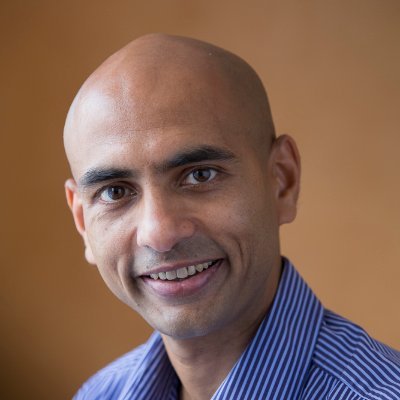
    Glenn Carle, Atul Singh
    @atulabhas
    SHARE
    October 17, 2025 08:46 EDT
    Check out our comment feature!

    Saved Successfully.

    This article saved into your bookmarks. Click here to view your bookmarks.

    My Bookmarks

    Editor-in-Chief Atul Singh (the Rajput) and retired CIA Officer Glenn Carle (the WASP) discuss whether Europe, led by Germany and France, can regain its former greatness. Together, they trace the continent’s rise, decline and uncertain future. Their conversation blends politics, economics, philosophy, history and geopolitics, reminding listeners that the European story is as much about ideas and values as about armies or alliances.

    LISTEN ON:
    ALSO AVAILABLE ON:
    • Spotify Spotify
    • apple-podcasts Apple Podcasts
    • YouTube Podcasts
    • Amazon Amazon Music

    The rise of Europe

    Atul and Glenn note that for five centuries, Europe was the unrivaled center of global progress — the proverbial “cock of the walk.” The Renaissance and Reformation created a civilization of reason, doubt and individualism, launching an age of discovery and dynamism. From Portuguese Prince Henry the Navigator sending voyages to explore sea routes, to Polish astronomer Nicolaus Copernicus’s conception of a new heliocentric universe, Dutch anatomist Andreas Vesalius’s dissections leading to the discovery of a new body, Italian artist Leonardo da Vinci’s personification of a new Renaissance man and German theologian Martin Luther’s new Christianity, Europe redefined humanity and remade the world.

    Like India, China and Egypt earlier, Europe achieved greatness that included both spectacular achievements and much suffering. Europe gave birth to individualism, inquiry and innovation, leading to the Industrial Revolution and a modern scientific worldview.

    European decline

    The great changes in Europe also unleashed nationalism and conflict. Martin Luther’s 95 theses in 1517 led to the Thirty Years’ War (1618–48) that caused the death of 25–40% of the population of the areas that now comprise modern-day Germany. The French Revolution led to the Napoleonic Wars. In the 20th century, Europe self-destructed thanks to the “tragedy of World War I” and the “suicide of World War II”.

    By 1945, the US produced half of global output and emerged as the global top dog. NATO’s design — to keep “the Americans in, the Russians out and the Germans down” — locked Europe in general, and Germany in particular, into subservience and dependency. Decolonization and the Soviet shadow eroded Europe’s confidence, even as prosperity rose under the new European welfare states. Living standards for the people rose higher than ever before, even as Europe shrank on the global stage. This is a tragedy of success: The same civilization that had given the world humanism and science became exhausted by its own wars and moral contradictions.

    Restoration through union

    Europe began rebuilding through integration. The European Coal and Steel Community of 1951 evolved into the European Economic Community, the customs union and later the Maastricht Treaty, uniting former enemies in a shared economic and later political project. French visionaries Jean Monnet and Jacques Delors imagined a new European entity that would achieve prosperity through cooperation. The single market, the euro and post-1991 enlargement were part of this grand European project. Without integration, you would not have the prosperity you see in Europe today. The European experiment, though bureaucratic and incomplete, revived Europe’s material strength and moral confidence.

    Despite the great benefits of the EU, there are downsides too. The EU remains constrained by the requirement for unanimity, overregulation and a “democratic deficit” that saps vitality. Italian economist Mario Draghi’s 2024 report on competitiveness diagnoses Europe’s deep malaise: European economies have struggled to innovate, create jobs and compete with both the US and China. Europe’s structure is too bureaucratic to act decisively on economics, industry, defense or migration.

    In a nutshell, economic and political competence has not been matched by strategic capacity, leaving the continent vulnerable to shocks from Russia, China and an increasingly unreliable US. The very success of the welfare state has bred complacency, creating a paradox where prosperity dulls ambition and consensus replaces vision. Today, Europe suffers from the curse of affluence.

    Can Germany and France make Europe great again?

    Two competing models define Europe’s future. France’s vision seeks “strategic autonomy,” a federal Europe with its own military and industrial backbone. Meanwhile, Germany’s approach favors a confederation of sovereign states and continued reliance on Washington. Both nations, however, face internal strains: In Germany, over 20% of residents are foreign-born, and this has led to the growing popularity of the far-right Alternative for Germany, which is now polling higher than the ruling coalition.

    Germany’s now diverse society lacks the cohesion of yore. For example, the Turkish immigrant population often sympathizes with those in Gaza over those in Ukraine. No less than two-thirds of this population also votes for the Islamist Turkish President Recep Tayyip Erdoğan. France has similar problems when it comes to immigrants and worse issues when it comes to politics. The Fifth Republic is struggling to pass a budget even as prime ministers come and go. Germany and France now struggle to maintain internal cohesion, a weakness mirrored across Europe.

    With a strong memory of Nazi rule, Germans are nervous about the zeitgeist in the US. President Donald Trump and Defense Secretary Pete Hegseth have addressed generals, raising alarm not only in the US but also in Germany. Fears of a deal between Trump and Russian President Vladimir Putin have spooked Berlin, reminding Germans of their vulnerability. Such a deal would leave the Germans high and dry, both politically and economically. Note that the Germans gave up on cheap Russian gas because of American pressure. As the transatlantic bond frays, Europe will either learn to stand alone or risk marginalization in a world defined by American retrenchment and Chinese power.

    Europe divided, can it stay united?

    Demography and debt compound all the above tensions in Europe. An aging, indebted continent faces a sovereign debt crisis. Immigration is inflaming passions across the continent as well. On the one hand, the far-right is on the rise. On the other hand, many minorities are turning to radical or political Islam. This loss of internal cohesion is dangerous not only for democracy but for the future of European societies.

    When large numbers of migrants come to any society, it is difficult to absorb them without friction. That has been the lesson of history. In the case of Europe, highly religious immigrants struggle for assimilation in a secular Westphalian society. They do not come from cultures with the same historic separation between church and state. This weakens nationalism that has defined Europe since 1648. It is clear that immigration is Europe’s moral and political crucible — the test of whether Enlightenment values can survive contact with 21st-century realities.

    There is also the issue of inequality. To be fair, this issue is not as significant in Europe as in the US. Yet it is also straining a sense of cohesion in a continent that evolved to have a fair degree of social equality after World War II.

    Yet one can be cautiously optimistic in the long run. History tells us that only crisis brings renewal. From the Reformation to the world wars, upheaval has forced transformation in Europe. Today’s dangers — Russia’s invasion of Ukraine, a possible US retreat and China’s rise — may again provoke change. French economist Thomas Piketty posits that great crises like world wars, depressions and revolutions can produce renewal. A new European order might emerge through shared defense, decisive governance and economic reforms, or it could collapse into paralysis. If Europe fails to act, it risks becoming a museum of its past rather than a maker of the future.

    No owners, no ads, just global voices and first class editors. We’re a nonprofit that puts real journalism first. Join us — subscribe to our free newsletters — now.

    [Lee Thompson-Kolar edited this piece.]

    The views expressed in this article/podcast are the author’s own and do not necessarily reflect Fair Observer’s editorial policy.

    LISTEN ON:
    ALSO AVAILABLE ON:
    • Spotify Spotify
    • apple-podcasts Apple Podcasts
    • YouTube Podcasts
    • Amazon Amazon Music

    Comment

    Login
    Please login to comment
    4 Comments
    Newest
    Oldest Most Voted
    Inline Feedbacks
    View all comments
    Peter Isackson
    Admin
    Peter Isackson
    3 months ago

    As for France and Germany making Europe great again, as a French citizen and designated expert by the European Union, I certainly have an interest in seeing that happen. But it’s a pipe dream. All European leadership has been sucked into the black hole of defending a defunct world order run from Washington, Wall Street and Silicon Valley. The latest folly is Europe’s desire to save itself by duplicating the US military industrial complex, which is equivalent to destroying the last vestige of its cultural identity. Vassals don’t have to think. But this is even worse. Thinking has long been suppressed in the US as irrelevant, impertinent and unproductive, a trend Trump has accelerated. But the Donald didn’t invent it. Europe’s leaders have followed suit. Anti-intellectualism reigns across the West.

    Last edited 3 months ago by Peter Isackson
    0
    Peter Isackson
    Admin
    Peter Isackson
    3 months ago

    Thank you Atul and Glenn, my very dear friends. It’s always delightful to be reminded that there are still proponents of that aberration of thinking that’s been appropriately called the Whig version of history. I’m speaking of the worldview that places post-medieval Europe at the center of the universe. Now that 85% of humanity, essentially in non-anglophone cultures, no longer believes in it, I was beginning to doubt that it still had some life in it. But that outmoded worldview has its own historical importance. It’s what used to be taught in our schools as “the truth.” The fact that schools in the US and Europe no longer succeed in inculcating the Whig view of history in today’s youngsters is due not to a heightened interest in the subtleties of history itself,but rather because of our enlightened nations’ voluntary neglect of history altogether in favor of STEM (science, technology, engineering and math), the only subjects worth being educated about. I second nearly everything Anton says, but would add that the Arabs Chinese and Indians were creating modern science centuries before 1543 (Al Biriuni beat Copernicus by 400 years). The sole difference is that their aim was not to use it to conquer the world and extract its resources!

    Last edited 3 months ago by Peter Isackson
    0
    Anton Schauble
    Admin
    Anton Schauble
    4 months ago

    It’s a little silly to say that the Copernican revolution was all about realizing “man is not the center of the universe” in the same breath as saying that the essence of European modernity is the turn to the individual. Which was it? Is man the most important thing in the universe or not? Any student of the intellectual history knows that it was the Middle Ages that were cosmocentric, and the modern age that is anthropocentric, anyway — not the other way around.

    This sort of neo-Protestant, triumphalist narrative might be popular in England and New England, where you gentlemen hail from intellectually, but it ill suits people claiming to take “the pagan view of history.” The pagan view of history is the cyclical view. It was Christianity that introduced to Europe the linear conception of history — a view for which you’ve illogically given credit to Copernicus.

    Again, it makes little sense to note (however rightly) that Lutheranism was about much more than just religion right before blaming religion for the savagery of the Thirty Years War. Was it about religion or not? And was a war that saw His Most Christian Majesty on the same team as Gustav II Adolphus really about religion?

    1
    Anton Schauble
    Admin
    Anton Schauble
    4 months ago
    Reply to  Anton Schauble

    The truth is that the rise of Europe is all about the rise of science, and the rise of science would have happened with or without Luther and, for that matter, with or without Descartes. Greco-Roman learning was never completely dead, even though it had to survive a thousand years of internecine war (which the Protestant Reformation and Enlightenment nationalism only added to). When Greco-Roman learning re-blossomed in the Renaissance, the birth of science was only a matter of time.

    In the meanwhile, it was medieval Catholics who figured out the laws of optics and algebra and chemistry and — for what it’s worth — who laid out the conceptual and contractual basis of capitalism, which would turn modern science into the unstoppable productive engine it would eventually become. And though it’s fashionable to give credit for the scientific method to Francis Bacon, that honor really belongs to Roger Bacon — a Franciscan priest.

    I get it, religion-bashing is fun, and I’m sure it wins you points with the posh crowd. But I and, I’m sure, plenty of other loyal Fair Observer readers and listeners don’t tune in for lazy anti-Catholic tropes that have more to do with repeating clichés than taking an honest, intellectual look at history.

    1

    Commenting Guidelines

    Please read our commenting guidelines before commenting.


    1. Be Respectful: Please be polite to the author. Avoid hostility. The whole point of Fair Observer is openness to different perspectives from perspectives from around the world.

    2. Comment Thoughtfully: Please be relevant and constructive. We do not allow personal attacks, disinformation or trolling. We will remove hate speech or incitement.

    3. Contribute Usefully: Add something of value — a point of view, an argument, a personal experience or a relevant link if you are citing statistics and key facts.

    Please agree to the guidelines before proceeding.

    Related Reading

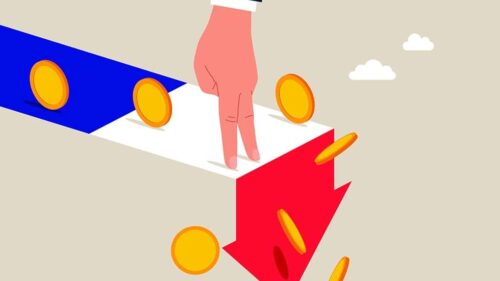
    The French Connection: Fitch Downgrades France’s Credit Rating

    Rating agency Fitch cut France’s sovereign debt grade after years of missed fiscal targets and rising deficits under President Emmanuel...
    by Alex Gloy, September 28, 2025
    Fair Observer

    Lasting Peace in Europe Requires the Creation of a European State

    The reluctance of EU member states to cede national sovereignty has left the EU unable to fulfill its promise of...
    by Arthur Kroen, August 14, 2025
    Fair Observer

    The EU and the US May Be at Odds, but Is the Animosity Real?

    US officials in President Donald Trump’s second administration have publicly mocked European allies while privately pushing a transatlantic strategy that...
    by Shane Neagle, July 11, 2025
    Fair Observer

    FO° Talks: Trump and Co. Sell Europe Up the River. Now What?

    The growing geopolitical challenges Europe faces highlight how US policies undermine European unity. Internal divisions and rising nationalism threaten the...
    by Sebastian Schäffer & Atul Singh, March 18, 2025
    Fair Observer

    The World This Week: Another French Revolution

    by Atul Singh, April 30, 2017
    Fair Observer

    More Episodes

    The Dialectic: Narendra Modi’s Vegetarian Stalinism Has Ruined the Indian Economy

    In this episode of The Dialectic, Atul Singh and Glenn Carle explain how India’s current leader has rolled back the...
    Glenn Carle & Atul Singh, February 12, 2026
    Fair Observer

    FO° Podcasts: Maduro, the War on Drugs and Trump’s Revival of the Monroe Doctrine

    In this episode of FO° Podcasts, Atul Singh and Benjamin Delille examine US President Donald Trump’s confrontation with Venezuela, questioning...

    Benjamin Delille & Atul Singh, January 18, 2026
    Fair Observer

    FO° Podcasts: Myanmar Votes During a Civil War: Why This Election Could Tear the Country Apart

    In this episode of FO° Podcasts, Rohan Khattar Singh and Asanga Abeyagoonasekera examine Myanmar’s December 28 elections against the backdrop...

    Asanga Abeyagoonasekera & Rohan Khattar Singh, January 6, 2026
    Fair Observer

    FO° Podcasts: The Forbidden C-word, Class in America

    In this episode of FO° Podcasts, Atul Singh and Kent Jenkins Jr. discuss how class shapes US identity and political...

    Kent Jenkins Jr. & Atul Singh, December 29, 2025
    Fair Observer

    Must Listen

    The Dialectic: France: The Eternal Crisis Strikes Again. What Now?

    In this episode of The Dialectic, Atul Singh and Glenn Carle examine France’s deepening polycrisis. Rising debt, political paralysis and...

    by Glenn Carle & Atul Singh, December 13, 2025
    Fair Observer

    The Dialectic: Can Germany Outgrow Its Postwar American Model?

    In this episode of The Dialectic, Atul Singh and Glenn Carle explore how Germany faces acute economic, political and social...

    by Glenn Carle & Atul Singh, December 2, 2025
    Fair Observer

    FO° Podcasts: The Right to Play: How Women Fought and Won the Battle for Equality in Sports

    In this episode of FO° Podcasts, Atul Singh and Lauren Greenberg explore how Title IX reshaped women’s sports and personal...

    by Lauren Greenberg & Atul Singh, November 26, 2025
    Fair Observer

    FO° Podcasts: Enemy of the Sun — How Palestinian Poetry Became a Weapon of Resistance

    In this episode of FO° Podcasts, Atul Singh and Edmund Ghareeb trace the unlikely journey of the Palestinian poetry anthology...

    by Edmund Ghareeb & Atul Singh, November 19, 2025
    Fair Observer

    FO° Podcasts: Why is the US Deporting Illegal Migrants to a Tiny African Nation Called Eswatini?

    In this episode of FO° Podcasts, Rohan Khattar Singh and Zweli Martin Dlamini examine the secret deportation deal between the...

    by Zweli Martin Dlamini & Rohan Khattar Singh, November 16, 2025
    Fair Observer

    Project 2025 and Donald Trump’s Dangerous Dismantling of the US Federal Government

    In this episode of The Dialectic, Atul Singh and Glenn Carle dissect US President Donald Trump’s destruction of federal institutions....

    by Glenn Carle & Atul Singh, September 9, 2025
    Fair Observer

    FO° Podcasts: Why Has Trump Deployed Thousands of National Guard Troops in Washington, DC?

    In this episode of FO° Podcasts, Atul Singh and Ankit Jain examine US President Donald Trump’s interventions in Washington, DC....

    by Ankit Jain & Atul Singh, September 8, 2025
    Fair Observer

    FO° Podcast: The Story of Millions of Syrian Refugees and Why They Can Never Return Home

    In this episode of FO° Podcasts, Atul Singh and William McChesney examine why millions of Syrian refugees remain in exile...

    by William McChesney & Atul Singh, August 30, 2025
    Fair Observer


    Fair Observer, 461 Harbor Blvd, Belmont, CA 94002, USA

    Sections

    • Politics
    • Economics & Finance
    • Business & Entrepreneurship
    • Art & Culture
    • Science & Technology
    • Environment & Climate Change
    • World Leaders
    • World
    • The Americas
    • Europe
    • Middle East & North Africa
    • Africa
    • Asia
    • United States
    • India
    • China
    • Russia
    • Events
    • Publications
    • Authors
    • About
    • Publish
    • Contact
    • Login
    Fair Observer

    MULTIMEDIA

    The Indian Subcontinent’s Hindu-Muslim Divide

    Fair Observer

    VIDEOS

    FO Talks: Decoding Mark Carney’s Davos Speech Amid Rising Global Strategic Competition

    Fair Observer

    PODCASTS

    The Dialectic: Narendra Modi’s Vegetarian Stalinism Has Ruined the Indian Economy

    PUBLICATION

    Fair Observer Monthly: January 2026

    Support Fair Observer

    We rely on your support for our independence, diversity and quality.

    Donate
    © Fair Observer All rights reserved
    Designed, Developed and Maintained by Netleon IT Solutions
    Fair Observer Education Logo Fair Observer Leadership Academy Logo

    BOOKMARK

    Want to save this post?
    Click to Login

    Support independent, crowdsourced, nonprofit journalism.

    Fair Observer is a 501(c)(3) independent nonprofit. We are not owned by billionaires or controlled by advertisers. We publish nearly 3,000 authors from over 90 countries after fact-checking and editing each piece. We do not have a paywall and anyone can read us for free. With your vital donations, we can continue to do our work.

    Please make a recurring (or even one-time) donation today. Even $1 goes a long way because a million donors like you mean one million dollars. Thank you for keeping us independent, free and fair.

    One Time Monthly Yearly

    Sign into your Fair Observer Account

    • Lost your password?
    Forgot Password

    Forgot Password

    Enter your registered email address or username. You will receive a link to create a new password via email.

    Please enter your username or email address. You will receive an email message with instructions on how to reset your password.

    • Log in

    Or
    Return to Login

    Forgot Password

    We have sent a link to your registered email address to reset your password.

    Back to Login

    Become a Member & Enjoy Exclusive Benefits!

    • Access to comments feature
    • Bookmark your favorite articles
    • Exclusive invitations to FO° Talks & FO° Live
    • Access to all of our e-publications
    Explore Membership
    Return to Login

    NEWSLETTER

    Make Sense of the World

    Unique Insights from 2,500+ Contributors in 90+ Countries

    NEWSLETTER

    Make Sense of the World

    Unique Insights from 2,500+ Contributors in 90+ Countries

    Fair observer

    Make Sense of the World

    Unique Insights from 2,500+ Contributors in 90+ Countries

    We Need Your Consent
    We use cookies to give you the best possible experience. Learn more about how we use cookies or edit your cookie preferences. Privacy Policy. My Options I Accept
    Privacy & Cookies Policy

    Edit Cookie Preferences

    The Fair Observer website uses digital cookies so it can collect statistics on how many visitors come to the site, what content is viewed and for how long, and the general location of the computer network of the visitor. These statistics are collected and processed using the Google Analytics service. Fair Observer uses these aggregate statistics from website visits to help improve the content of the website and to provide regular reports to our current and future donors and funding organizations. The type of digital cookie information collected during your visit and any derived data cannot be used or combined with other information to personally identify you. Fair Observer does not use personal data collected from its website for advertising purposes or to market to you.

    As a convenience to you, Fair Observer provides buttons that link to popular social media sites, called social sharing buttons, to help you share Fair Observer content and your comments and opinions about it on these social media sites. These social sharing buttons are provided by and are part of these social media sites. They may collect and use personal data as described in their respective policies. Fair Observer does not receive personal data from your use of these social sharing buttons. It is not necessary that you use these buttons to read Fair Observer content or to share on social media.

     
    Necessary
    Always Enabled
    These cookies essential for the website to function.
    Social Media
    These cookies are used to enable sharing or following of content that you find interesting on our website. These settings apply to third-party social networking and other websites.
    Performance & Functionality
    These cookies are used to enhance the performance and functionality of our website. They provide statistics on how our website is used and help us improve by measuring errors. Certain functionalities on our website may become unavailable without these cookies.
    Analytics
    SAVE & ACCEPT

    Total Views: