



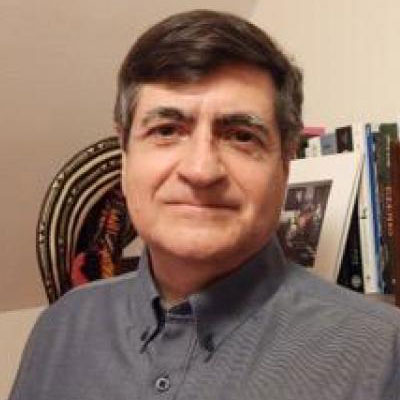
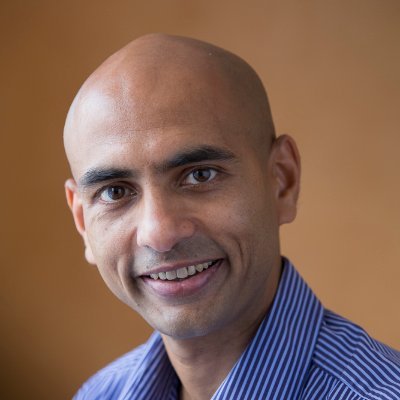
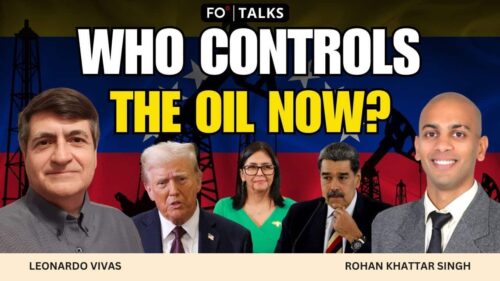
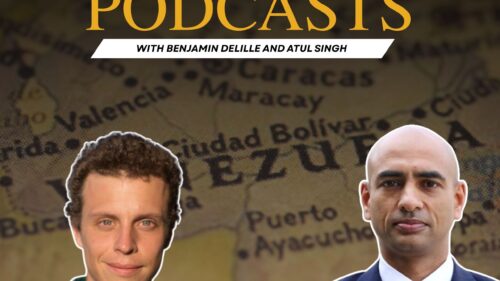
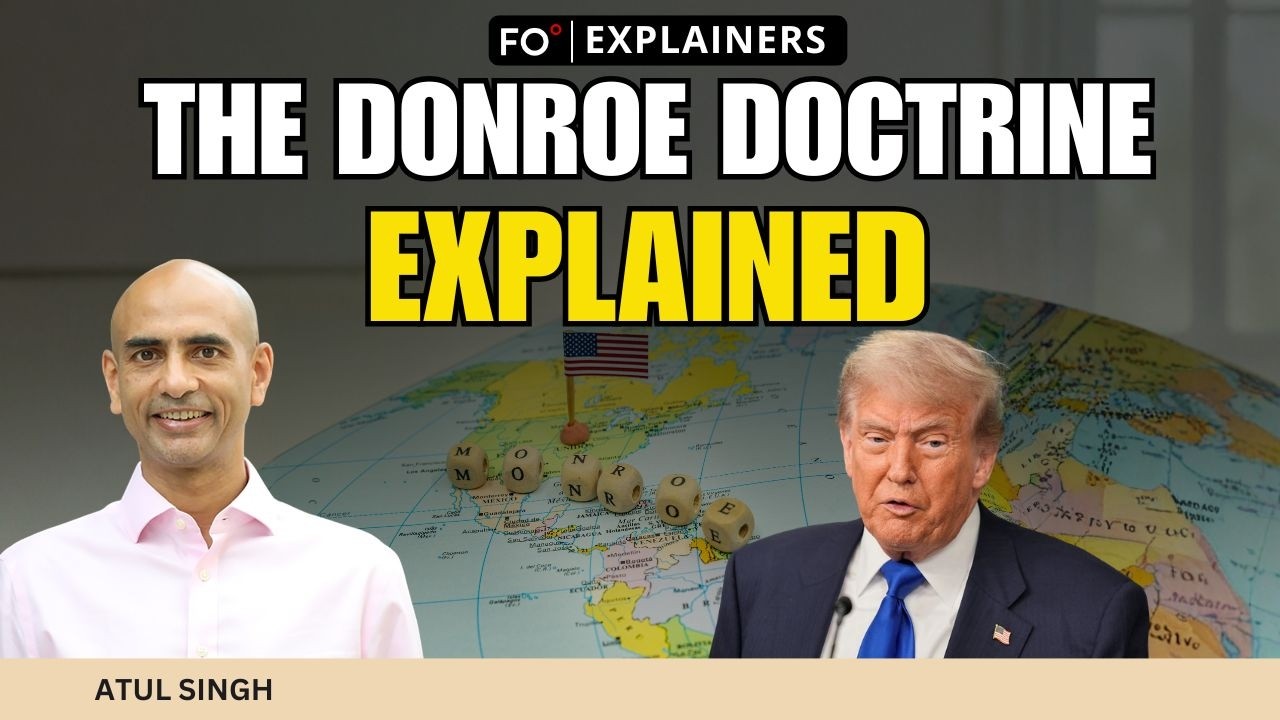
Editor-in-Chief Atul Singh and Professor Leonardo Vivas of Lesley University discuss Operation Absolute Resolve, US President Donald Trump’s January 3 operation to seize Venezuelan President Nicolás Maduro and fly him to New York for trial. The extraction was a turning point with consequences far beyond Venezuela’s capital of Caracas: a test case for the so-called “Donroe Doctrine,” an experiment in regime alteration and a sign that the post-World War II order is giving way to a harder, more transactional world.
The operation and its message
Singh opens with the scale and symbolism of the operation. US forces did not launch an invasion; they conducted a high-tempo extraction that removed the head of state and left a reassembled government behind. Vivas describes it as “a move very well executed by the military,” noting that the mobilization involved thousands of personnel, naval assets and preparatory strikes near the Colombian border tied to alleged narcotics infrastructure.
The human cost is central to his account. There were no American casualties, but roughly 100 deaths inside Venezuela, including members of the Cuban security detail that had guarded Maduro. That detail shows what changed immediately: not just a leader, but a protective ecosystem in which Cuba’s footprint is deeply embedded. Cuba is the clearest early loser, both in personnel and in the loss of privileged access to Venezuelan oil.
Singh frames the event as a win-win for Washington and for elements of the Venezuelan elite who see Maduro as a liability. Vivas broadly agrees, arguing the extraction succeeds because parts of the regime decide survival without Maduro is preferable to loyalty with him.
Regime alteration and the Donroe Doctrine
Singh situates Venezuela inside a wider hemispheric strategy. He argues the Trump administration is operationalizing a new corollary to the Monroe Doctrine — the Donroe Doctrine — aimed at limiting Chinese, Russian, Iranian and Cuban leverage in the Western Hemisphere. Venezuela becomes the proof-of-concept: Remove the linchpin, then renegotiate influence through energy, security cooperation and market access.
Vivas says the new leadership, which is centered on Venezuelan Vice President Delcy Rodríguez and Venezuelan National Assembly President Jorge Rodríguez, is positioned as an interim instrument of that strategy. Washington, he suggests, wants the regime dismantled from within to avoid the chaos that followed occupation in Iraq or Afghanistan. Yet he stresses the fragility of the arrangement. The Rodríguez network carries a history of corruption, and Venezuela’s institutional decay makes quick stabilization unlikely.
He expects China’s commodity hunger to keep Latin American trade links alive, even if Beijing’s political leverage is reduced in strategic sectors. The Donroe Doctrine seems to be about controlling key levers: oil, ports, minerals and chokepoints like the Panama Canal.
The petrol reset meets Venezuela’s reality
Singh presses the claim circulating in Washington that Venezuela’s reserves — often cited at 303 billion barrels — could fuel a “petrol reset,” lowering US pump prices while reviving Venezuela’s economy. Vivas does not dismiss the arithmetic but insists the constraints are structural.
The oil is largely heavy crude that requires specialized refining capacity and costly diluents. Years of underinvestment have hollowed out production and maintenance. Refineries have collapsed, infrastructure has degraded and trained personnel have fled after political purges and crony appointments.
Credibility is the decisive barrier. Venezuela’s history of expropriation without compensation makes investors cautious, even after Maduro. Vivas underscores the point with one word used by a major industry figure: “uninvestable.” His skepticism is about institutions and trust. A state that does not reliably publish inflation or basic economic data cannot easily restructure debt or persuade companies that contracts will endure.
Venezuela’s opposition forces
Singh and Vivas turn to Venezuela’s democratic opposition and former Deputy of the Venezuelan National Assembly María Corina Machado’s role. Vivas notes the depth of electoral rejection of Chavismo, a left-wing, anti-imperialist political ideology based on the policies of former Venezuelan President Hugo Chávez. He points to the opposition’s claim of a decisive 2024 victory through its surrogate candidate, Edmundo González. Singh highlights Machado’s outreach in Washington.
Vivas sketches two possible paths. In the best case, the Rodríguez leadership does the “dirty work” of loosening control over courts and security services, then reaches a point where a genuine transition becomes possible. In the darker case, the new rulers offer limited concessions to consolidate themselves while preserving the system’s core.
He sees early signs of “breathing room,” including incremental releases of political prisoners and small shifts in public speech. But these are openings to be organized around, not proof of democratization. The decisive variable remains the Venezuelan public and whether pressure can be sustained as the regime’s internal balance shifts.
Sovereignty after the rules-based order
Finally, Singh raises former UK diplomat Rory Stewart’s argument that the extraction violates national sovereignty. Vivas elevates popular sovereignty over state sovereignty in cases of dictatorship. “Sovereignty of a dictatorship … has little value,” he states. In practice, power politics imposes limits; nuclear-armed states are not comparable targets.
The debate widens into a diagnosis of institutional collapse. Vivas points to paralysis at the Organization of American States, the UN Security Council and the International Criminal Court, arguing that when enforcement fails, strongmen fill the vacuum. As he puts it, “The international system ran out of gas.”
Singh and Vivas end at a shared conclusion: Venezuela is a template for how the United States might pursue influence without occupation, how energy could become a strategic lever and how sovereignty itself is being renegotiated in a more fragmented world.
[Lee Thompson-Kolar edited this piece.]
The views expressed in this article/video are the author’s own and do not necessarily reflect Fair Observer’s editorial policy.























Comment