Login

    Sections
    Search

    • Politics
    • Economics & Finance
    • Business & Entrepreneurship
    • Art & Culture
    • Science & Technology
    • Environment & Climate Change
    • World
    • World Leaders
    • The Americas
    • Europe
    • Middle East & North Africa
    • Africa
    • Asia
    • United States
    • India
    • China
    • Russia
    • About
    • Authors
    • Publications
    • Events
    • Multimedia
    • Videos
    • Podcasts
    • Events
    • Russia
    • Publications
    • Authors
    • About
    Fair Observer

    MULTIMEDIA

    FIFA World Cup: The Greatest Show on Earth

    Fair Observer

    VIDEOS

    FO Talks: Andy Burnham — Britain’s New Captain in Tumultuous Times

    Fair Observer

    PODCASTS

    FO Podcasts: What the West Ignores About China’s Digital Nationalism

    PUBLICATION

    Fair Observer Monthly: June 2026

    Support Fair Observer

    We rely on your support for our independence, diversity and quality.

    Donate
    Search
    Fair Observer Logo
    • Donate
    Fair Observer Logo
    Asia-Pacific

    FO Podcasts: What the West Ignores About China’s Digital Nationalism

    In this episode of FO Podcasts, Florian Schneider and Haruko Satoh argue that digital nationalism is a defining force shaping modern China. They examine how visa policy, social media algorithms, youth unemployment and patriotic education reinforce one another while revealing tensions within China. Digital politics is essential for understanding how nationalism and online platforms transform societies worldwide.
    By Florian Schneider & Haruko Satoh
    Follow
    Follow
    Florian Schneider, Haruko Satoh
    SHARE
    July 22, 2026 07:29 EDT
    Check out our comment feature!

    Saved Successfully.

    This article saved into your bookmarks. Click here to view your bookmarks.

    My Bookmarks

    Haruko Satoh, an eminent geopolitical analyst at the Osaka School of International Public Policy in Japan, speaks with Florian Schneider, the Chair Professor of Modern China at Leiden University in Germany. They examine how digital nationalism has become a defining feature of contemporary China while exposing tensions within Chinese society. Their discussion explores China’s evolving visa policies, online discourse, industrial strategy and diplomacy, arguing that understanding China requires looking beyond state policy to the social dynamics unfolding in digital spaces.

    LISTEN ON:
    ALSO AVAILABLE ON:
    • Spotify Spotify
    • apple-podcasts Apple Podcasts
    • YouTube Podcasts
    • Amazon Amazon Music

    China opens its doors while competing for talent

    Schneider explains that China has recently relaxed visa rules in two distinct ways: visa-free entry for many European visitors and the new K visa. The former aims to project China as an open and reliable international partner, while the latter seeks to attract highly qualified graduates in science, technology, engineering and mathematics without requiring prior employment. The initiative targets strategic industries including artificial intelligence, green technology and electric vehicles as Beijing seeks to strengthen its technological leadership.

    Schneider says these policies also benefit from shifts in US immigration policy. As he puts it: “For the Chinese government, of course, the Trump administration is in many ways a godsend… because it’s… clearly rolling out xenophobic policies.” Yet he notes that the program faces obstacles because China’s slowing economy makes relocating less attractive than policymakers may have anticipated.

    Economic frustration fuels digital nationalism

    Schneider and Satoh contrast China’s effort to attract foreign talent with worsening employment prospects for many young Chinese graduates. Schneider explains that the promise of upward mobility has weakened, contributing to the “lying flat” movement as many young people disengage from intense competition. Against this backdrop, some online users portray foreign recruits as competitors rather than contributors.

    Rather than viewing this solely as state propaganda, Schneider suggests that online nationalism often expresses deeper social anxieties. National security language provides a politically acceptable way for citizens to discuss fears about unemployment, declining economic prospects and class insecurity without directly criticizing political leaders. Digital nationalism therefore reflects both government messaging and genuine grassroots frustrations.

    Algorithms amplify politically safe debate

    Schneider and Satoh examine how Chinese social media platforms such as Weibo, Douyin and Xiaohongshu shape public discussion. While these platforms are privately operated, companies design their algorithms to maximize engagement while remaining consistent with Communist Party guidelines. According to Schneider, “the regulation has effectively been outsourced from the government to these corporations,” encouraging companies to err on the side of caution through extensive moderation.

    But how does this model compare with Western social media? Although China exercises much stronger political oversight, Schneider contends that many commercial incentives remain remarkably similar, including the pursuit of engagement, advertising revenue and increasingly polarized online debate. Beijing also intervenes more directly when digital platforms promote harmful trends, such as self-harm or eating disorders. This illustrates the state’s paternalistic approach to regulating online behavior.

    Nationalism shapes both society and diplomacy

    Schneider and Satoh explore how decades of patriotic education have embedded nationalist narratives within Chinese political culture. Japan continues to occupy a central role in these narratives, with historical events such as the Nanjing Massacre frequently resurfacing in online debates and periodically requiring official intervention to contain public outrage.

    Schneider argues that digital nationalism has developed into a force that policymakers themselves must increasingly accommodate. Rather than simply directing public opinion, the government also responds to nationalist sentiment circulating online. “You cannot have nationalism without some form of outsider hatred or antagonism,” he contends. Distinctions between patriotism and hostility toward outsiders become difficult to sustain once nationalist politics dominates public discourse.

    The speakers also examine China’s “Wolf Warrior” diplomacy. Many diplomats adopt confrontational rhetoric, not necessarily because of centralized instructions, but because such behavior resonates with domestic audiences and advances their careers within a political environment that rewards nationalist messaging.

    Competing visions of China’s global rise

    To end the discussion, Satoh and Schneider assess the optics of the recent summit between Chinese President Xi Jinping and US President Donald Trump. They say many Asian observers interpreted the meeting very differently from audiences in Washington, seeing ceremonial protocol as reinforcing China’s growing confidence rather than demonstrating American strength.

    Read more, think deeper and become smarter, perhaps even wiser, one article at a time. Sign up for our free newsletters now.

    More broadly, Schneider suggests that international perceptions of American decline have strengthened China’s confidence in its own long-term ambitions. Simultaneously, both speakers warn that rising nationalism, expanding military competition and shrinking diplomatic engagement are reinforcing global polarization. Schneider concludes that studying China’s digital politics offers lessons extending well beyond China itself. They reveal how algorithms, online communities and nationalist narratives increasingly shape political life across the world.

    [Lee Thompson-Kolar edited this piece.]

    The views expressed in this article/podcast are the author’s own and do not necessarily reflect Fair Observer’s editorial policy.

    LISTEN ON:
    ALSO AVAILABLE ON:
    • Spotify Spotify
    • apple-podcasts Apple Podcasts
    • YouTube Podcasts
    • Amazon Amazon Music

    Comment

    Login
    Please login to comment
    0 Comments
    Newest
    Oldest Most Voted

    Commenting Guidelines

    Please read our commenting guidelines before commenting.


    1. Be Respectful: Please be polite to the author. Avoid hostility. The whole point of Fair Observer is openness to different perspectives from perspectives from around the world.

    2. Comment Thoughtfully: Please be relevant and constructive. We do not allow personal attacks, disinformation or trolling. We will remove hate speech or incitement.

    3. Contribute Usefully: Add something of value — a point of view, an argument, a personal experience or a relevant link if you are citing statistics and key facts.

    Please agree to the guidelines before proceeding.

    Related Reading

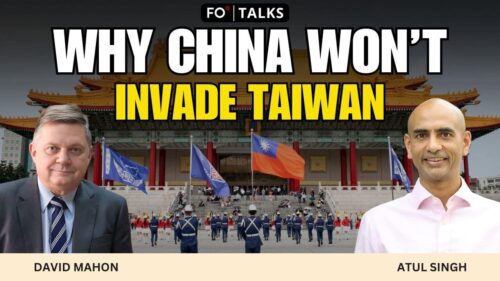
    FO Talks: Decoding Donald Trump’s Visit to China and Xi Jinping’s Thucydides Trap Remark

    In this episode of FO Talks, Atul Singh and David Mahon discuss the May 2026 Trump–Xi summit and the shifting...
    by David Mahon & Atul Singh, May 29, 2026
    Fair Observer

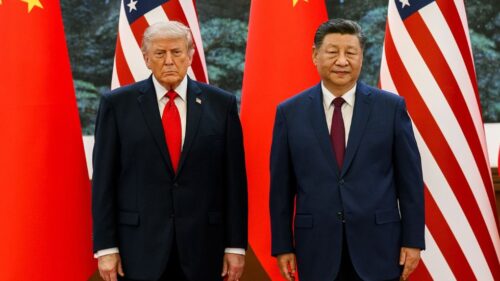
    Xi-Trump Summit in Beijing Was Great Theater, Little Substance

    The recent US–China summit in Beijing, though symbolically significant as the first meeting between the two leaders on Chinese soil...
    by David Mahon, May 22, 2026
    Fair Observer

    China Watch: The Rise of a New Global Order Amidst the Persian Gulf War

    China’s strategic restraint in the recent war in Iran contrasts with US aggression, positioning it as a stabilizing global force...
    by David Mahon, May 5, 2026
    Fair Observer

    Xi Jinping’s China: The Coup That Never Was

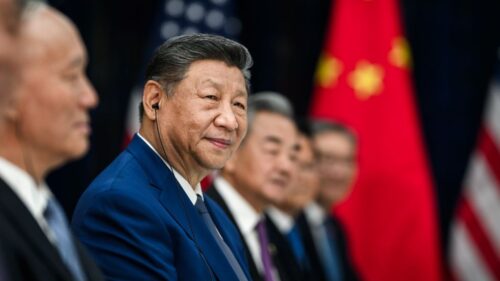
    The arrest of General Zhang Youxia highlights internal power dynamics within China’s military under President Xi Jinping’s leadership. Despite Western...
    by David Mahon, February 12, 2026
    Fair Observer

    China Watch: China’s Rise and the New Multipolar Global Order

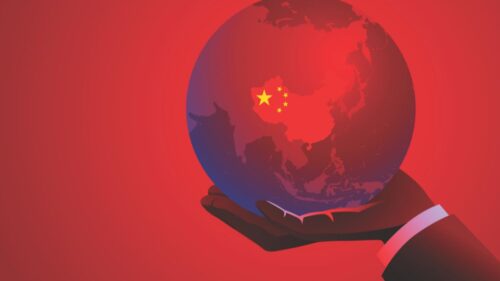
    China’s rise is reshaping the global economic order, fostering new regional alliances like BRICS and the Shanghai Cooperation Organisation while...
    by David Mahon, January 26, 2026
    Fair Observer

    More Episodes

    The Dialectic: Japan — The Aging Land of the Rising Sun

    In this episode of The Dialectic, Atul Singh and Glenn Carle examine Japan’s transformation from a postwar economic giant into...

    Glenn Carle & Atul Singh, June 20, 2026
    Fair Observer

    FO Podcasts: Why Narcoterrorism Still Matters

    In this episode of FO Podcasts, Atul Singh and Jeffrey James Higgins examine how narcoterrorism combines organized crime, insurgency and...
    Jeffrey James Higgins & Atul Singh, May 11, 2026
    Fair Observer

    FO Podcasts: The Big Paradox — Why Immigration Divides America Like Nothing Else

    In this episode of FO Podcasts, Atul Singh and Kent Jenkins Jr. examine why Americans support strict border control but...
    Kent Jenkins Jr. & Atul Singh, April 16, 2026
    Fair Observer

    FO Podcasts: The Muslim Brotherhood Explained — Origins, Ideology and Global Influence

    In this episode of FO Podcasts, Atul Singh and Cynthia Farahat examine the Muslim Brotherhood’s origins, debating whether it evolved...
    Cynthia Farahat & Atul Singh, April 8, 2026
    Fair Observer

    Must Listen

    China–Taiwan Tensions — Civil War Legacies and Geopolitical Chess

    Since President Xi Jinping came to power in 2012, China has been acting more aggressively towards Taiwan. Tensions go back...
    by Glenn Carle & Atul Singh, April 3, 2026
    Fair Observer

    The Dialectic: Narendra Modi’s Vegetarian Stalinism Has Ruined the Indian Economy

    In this episode of The Dialectic, Atul Singh and Glenn Carle explain how India’s current leader has rolled back the...
    by Glenn Carle & Atul Singh, February 12, 2026
    Fair Observer

    FO° Podcasts: Maduro, the War on Drugs and Trump’s Revival of the Monroe Doctrine

    In this episode of FO° Podcasts, Atul Singh and Benjamin Delille examine US President Donald Trump’s confrontation with Venezuela, questioning...

    by Benjamin Delille & Atul Singh, January 18, 2026
    Fair Observer

    FO° Podcasts: Myanmar Votes During a Civil War: Why This Election Could Tear the Country Apart

    In this episode of FO° Podcasts, Rohan Khattar Singh and Asanga Abeyagoonasekera examine Myanmar’s December 28 elections against the backdrop...

    by Asanga Abeyagoonasekera & Rohan Khattar Singh, January 6, 2026
    Fair Observer

    FO° Podcasts: The Forbidden C-word, Class in America

    In this episode of FO° Podcasts, Atul Singh and Kent Jenkins Jr. discuss how class shapes US identity and political...

    by Kent Jenkins Jr. & Atul Singh, December 29, 2025
    Fair Observer

    The Dialectic: France: The Eternal Crisis Strikes Again. What Now?

    In this episode of The Dialectic, Atul Singh and Glenn Carle examine France’s deepening polycrisis. Rising debt, political paralysis and...

    by Glenn Carle & Atul Singh, December 13, 2025
    Fair Observer

    The Dialectic: Can Germany Outgrow Its Postwar American Model?

    In this episode of The Dialectic, Atul Singh and Glenn Carle explore how Germany faces acute economic, political and social...

    by Glenn Carle & Atul Singh, December 2, 2025
    Fair Observer

    FO° Podcasts: The Right to Play: How Women Fought and Won the Battle for Equality in Sports

    In this episode of FO° Podcasts, Atul Singh and Lauren Greenberg explore how Title IX reshaped women’s sports and personal...

    by Lauren Greenberg & Atul Singh, November 26, 2025
    Fair Observer


    Fair Observer, 461 Harbor Blvd, Belmont, CA 94002, USA

    Sections

    • Politics
    • Economics & Finance
    • Business & Entrepreneurship
    • Art & Culture
    • Science & Technology
    • Environment & Climate Change
    • World Leaders
    • World
    • The Americas
    • Europe
    • Middle East & North Africa
    • Africa
    • Asia
    • United States
    • India
    • China
    • Russia
    • Events
    • Publications
    • Authors
    • About
    • Publish
    • Contact
    • Login
    Fair Observer

    MULTIMEDIA

    FIFA World Cup: The Greatest Show on Earth

    Fair Observer

    VIDEOS

    FO Talks: Andy Burnham — Britain’s New Captain in Tumultuous Times

    Fair Observer

    PODCASTS

    FO Podcasts: What the West Ignores About China’s Digital Nationalism

    PUBLICATION

    Fair Observer Monthly: June 2026

    Support Fair Observer

    We rely on your support for our independence, diversity and quality.

    Donate
    © Fair Observer All rights reserved
    Designed, Developed and Maintained by Netleon IT Solutions
    Fair Observer Education Logo Fair Observer Leadership Academy Logo

    BOOKMARK

    Want to save this post?
    Click to Login

    Support independent, crowdsourced, nonprofit journalism.

    Fair Observer is a 501(c)(3) independent nonprofit. We are not owned by billionaires or controlled by advertisers. We publish nearly 3,000 authors from over 90 countries after fact-checking and editing each piece. We do not have a paywall and anyone can read us for free. With your vital donations, we can continue to do our work.

    Please make a recurring (or even one-time) donation today. Even $1 goes a long way because a million donors like you mean one million dollars. Thank you for keeping us independent, free and fair.

    One Time Monthly Yearly

    Sign into your Fair Observer Account

    • Lost your password?
    Forgot Password

    Forgot Password

    Enter your registered email address or username. You will receive a link to create a new password via email.

    Please enter your username or email address. You will receive an email message with instructions on how to reset your password.

    • Log in

    Or
    Return to Login

    Forgot Password

    We have sent a link to your registered email address to reset your password.

    Back to Login

    Become a Member & Enjoy Exclusive Benefits!

    • Access to comments feature
    • Bookmark your favorite articles
    • Exclusive invitations to FO° Talks & FO° Live
    • Access to all of our e-publications
    Explore Membership
    Return to Login

    NEWSLETTER

    Make Sense of the World

    Unique Insights from 2,500+ Contributors in 90+ Countries

    NEWSLETTER

    Make Sense of the World

    Unique Insights from 2,500+ Contributors in 90+ Countries

    Fair observer

    Make Sense of the World

    Unique Insights from 2,500+ Contributors in 90+ Countries

    We Need Your Consent
    We use cookies to give you the best possible experience. Learn more about how we use cookies or edit your cookie preferences. Privacy Policy. My Options I Accept
    Privacy & Cookies Policy

    Edit Cookie Preferences

    The Fair Observer website uses digital cookies so it can collect statistics on how many visitors come to the site, what content is viewed and for how long, and the general location of the computer network of the visitor. These statistics are collected and processed using the Google Analytics service. Fair Observer uses these aggregate statistics from website visits to help improve the content of the website and to provide regular reports to our current and future donors and funding organizations. The type of digital cookie information collected during your visit and any derived data cannot be used or combined with other information to personally identify you. Fair Observer does not use personal data collected from its website for advertising purposes or to market to you.

    As a convenience to you, Fair Observer provides buttons that link to popular social media sites, called social sharing buttons, to help you share Fair Observer content and your comments and opinions about it on these social media sites. These social sharing buttons are provided by and are part of these social media sites. They may collect and use personal data as described in their respective policies. Fair Observer does not receive personal data from your use of these social sharing buttons. It is not necessary that you use these buttons to read Fair Observer content or to share on social media.

     
    Necessary
    Always Enabled
    These cookies essential for the website to function.
    Social Media
    These cookies are used to enable sharing or following of content that you find interesting on our website. These settings apply to third-party social networking and other websites.
    Performance & Functionality
    These cookies are used to enhance the performance and functionality of our website. They provide statistics on how our website is used and help us improve by measuring errors. Certain functionalities on our website may become unavailable without these cookies.
    Analytics
    SAVE & ACCEPT

    Total Views: