
Login

Sections
Search

  • Politics
  • Economics & Finance
  • Business & Entrepreneurship
  • Art & Culture
  • Science & Technology
  • Environment & Climate Change
  • World
  • World Leaders
  • The Americas
  • Europe
  • Middle East & North Africa
  • Africa
  • Asia
  • United States
  • India
  • China
  • Russia
  • About
  • Authors
  • Publications
  • Events
  • Multimedia
  • Videos
  • Podcasts
  • Events
  • Russia
  • Publications
  • Authors
  • About
Fair Observer

MULTIMEDIA

The Fall of the Ottoman Empire

Fair Observer

VIDEOS

FO Talks: Building a Civilization That Works for All

Fair Observer

PODCASTS

FO Podcasts: Is Canada Looking to Form an Alliance With Europe?

PUBLICATION

Fair Observer Monthly: September 2026

Support Fair Observer

We rely on your support for our independence, diversity and quality.

Donate
Search
Fair Observer Logo
  • Donate
Fair Observer Logo
Podcasts

What You Need to Know About Cryptocurrencies

To most people, cryptocurrencies are an abstract and complicated financial system. So what exactly are they, who uses them, and why? Former British MP Oonagh McDonald, who was awarded the Commander of the British Empire (CBE) for her contributions to financial regulation and business, makes sense of cryptocurrencies in 2023.
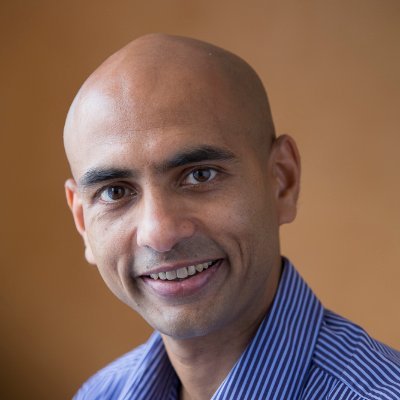
By Oonagh McDonald & Atul Singh
Follow
Follow
Oonagh McDonald, Atul Singh
@atulabhas
SHARE
August 31, 2023 23:08 EDT
Check out our comment feature!

Saved Successfully.

This article saved into your bookmarks. Click here to view your bookmarks.

My Bookmarks

Cryptocurrency is a virtual asset. Although it functions like currency, it is nothing more than a digital entity that can be transmitted from person to person electronically. Some cryptocurrencies are tokens that represent other assets, like US dollars, but Bitcoin, the most famous, is not a token of anything except itself.

For cryptocurrencies like Bitcoin, the data is not stored on any individual’s computer but is dispersed throughout a network. What the individual possesses is a passcode, and if the passcode is lost, the money becomes irretrievable. Some people have lost very large sums of money in this way. Furthermore, if a thief gains access to the passcode, they can easily steal the money. This happens very often.

Loss and theft are just one kind of risk for Bitcoin users. A still greater risk is volatility. A currency is meant to perform two functions: it is a store of value over time and a means of exchange between economic actors. Bitcoin is not a reliable store of value over time, because its value varies very rapidly and unpredictably from day to day and month to month. A sum of bitcoin may rapidly be worth much less than what one has purchased it for. 

Neither is Bitcoin a very useful medium of exchange, because most retailers will not accept it. Because of its anonymity, Bitcoin is instead commonly used for illicit purchases, such as narcotics or banned pornography. So, its lack of acceptance and its volatility risk make Bitcoin a very poor currency.

Bitcoin’s volatility attracts speculators hoping to profit off of the wide swings in prices, but the volatility hasn’t stopped people from trying to use Bitcoin as a currency, either. This is especially true for those who live in countries where the official currency itself is not very stable. El Salvador’s unconventional and authoritarian young president Nayib Bukele has even made Bitcoin an official currency — a move which, in McDonald’s view, has been an unmitigated disaster. The digital currency is not accessible to most Salvadorans and has likely only served to enrich a small number of people.

How does cryptocurrency work?

The technology that makes Bitcoin and cryptocurrencies possible is a “blockchain,” which is a networked set of computers that each keep a record, or “ledger,” of transactions made on the network. The computers verify the authenticity of each other’s ledgers.

In order to do this, the computers need to play a sort of digital guessing game, or “proof of work,” to deliver the correct codes to each other and authenticate transactions. This operation takes a lot of processing power, but it prevents hackers from altering the ledger, as it would not be feasible for them to perform the proof of work themselves to alter all of the computers on the blockchain.

Such self-checking networks are useful in more applications than cryptocurrency alone. They could for example be used for banks to compare notes with each other and prevent fraud.

Poor regulation and fraud galore

When cryptocurrency was becoming popular over the last decade, the surge in public interest arose much more quickly than a response from regulators. This created a “wild west” environment in which fraudsters proliferated. One very common phenomenon was the creation of a new cryptocurrency, or “altcoin,” which would quickly attract attention and a lot of buyers. Many of these altcoins were backed by nothing except hope. Before long, the creators would pocket the money and have delivered nothing but a worthless asset in exchange.

To remedy this problem, “stablecoins” backed by official currencies proliferated. These too have a fair share of problems: unpredictable exchange fees, lack of transparency and insufficient currency reserves to serve as the backing for the coins. Thus, underneath the façade of stability, stablecoins are highly unreliable.

There really is no practical reason to use cryptocurrencies rather than banks to transfer money; they are less trustworthy, slower and often cost more to make transactions. Much of their dedicated following has an ideological rather than financial purpose; libertarians who crave anonymity and shun government currency are often fanatics for cryptocurrency. Many more have simply been attracted by the flurry of attention, creating a bubble which is unsupported by fundamentals and ready to burst. The cryptocurrency market has already lost over half of its peak value, tumbling from $3 trillion to $1.2 trillion.

McDonald predicts the continued erosion of the market. Cryptocurrency’s early advantages will disappear with time as its popularity deflates and ways are found to circumvent the privacy that the technology initially offered. What is more interesting for the future, however, are the ways in which blockchain technology may be made useful in other applications. Secure, shared records could be beneficial for a wide variety of tasks.

[Anton Schauble wrote the first draft of this piece.]

The views expressed in this article/podcast are the author’s own and do not necessarily reflect Fair Observer’s editorial policy.

LISTEN ON:
ALSO AVAILABLE ON:
  • Spotify Spotify
  • apple-podcasts Apple Podcasts
  • Amazon Amazon Music

Comment

Login
Please login to comment

Commenting Guidelines

Please read our commenting guidelines before commenting.


1. Be Respectful: Please be polite to the author. Avoid hostility. The whole point of Fair Observer is openness to different perspectives from perspectives from around the world.

2. Comment Thoughtfully: Please be relevant and constructive. We do not allow personal attacks, disinformation or trolling. We will remove hate speech or incitement.

3. Contribute Usefully: Add something of value — a point of view, an argument, a personal experience or a relevant link if you are citing statistics and key facts.

Please agree to the guidelines before proceeding.

More Episodes

FO Podcasts: Is Canada Looking to Form an Alliance With Europe?

In this episode of FO Podcasts, Ranjani Iyer Mohanty and David McKinnon examine how a deeper Canada–EU partnership could strengthen...

David McKinnon & Ranjani Iyer Mohanty, November 2, 2026
Fair Observer

FO Podcasts: Canada’s Untold Role in Modern Conflicts

In this episode of FO Podcasts, Ranjani Iyer Mohanty and Muhannad Ayyash examine Canadian policy toward the Israel–Palestinian conflict through...

Muhannad Ayyash & Ranjani Iyer Mohanty, October 4, 2026
Fair Observer

FO Podcasts: Making Sense of Trump’s Financial Controversies

In this episode of FO Podcasts, Casey Hermann and John Feffer examine Donald Trump’s alleged financial gains during his second...

John Feffer & Casey Herrmann, August 31, 2026
Fair Observer

FO Podcasts: Cockroach Chronicles — Making Sense of the CJP

In this episode of FO Podcasts, Ranjani Iyer Mohanty and Barun Mohanty examine how exam irregularities, limited educational opportunities and...

Barun Mohanty & Ranjani Iyer Mohanty, August 29, 2026
Fair Observer

Must Listen

FO Podcasts: Stairways to the Skies — The Secrets of Hiking

In this episode of FO Podcasts, Ranjani Iyer Mohanty and Christine Gabriel discuss the appeal of hiking, drawing on her...

by Christine Gabriel & Ranjani Iyer Mohanty, August 21, 2026
Fair Observer

FO Podcasts: What the West Ignores About China’s Digital Nationalism

In this episode of FO Podcasts, Florian Schneider and Haruko Satoh argue that digital nationalism is a defining force shaping...

by Florian Schneider & Haruko Satoh, July 22, 2026
Fair Observer

The Dialectic: Japan — The Aging Land of the Rising Sun

In this episode of The Dialectic, Atul Singh and Glenn Carle examine Japan’s transformation from a postwar economic giant into...

by Glenn Carle & Atul Singh, June 20, 2026
Fair Observer

FO Podcasts: Why Narcoterrorism Still Matters

In this episode of FO Podcasts, Atul Singh and Jeffrey James Higgins examine how narcoterrorism combines organized crime, insurgency and...

by Jeffrey James Higgins & Atul Singh, May 11, 2026
Fair Observer

FO Podcasts: The Big Paradox — Why Immigration Divides America Like Nothing Else

In this episode of FO Podcasts, Atul Singh and Kent Jenkins Jr. examine why Americans support strict border control but...

by Kent Jenkins Jr. & Atul Singh, April 16, 2026
Fair Observer

FO Podcasts: The Muslim Brotherhood Explained — Origins, Ideology and Global Influence

In this episode of FO Podcasts, Atul Singh and Cynthia Farahat examine the Muslim Brotherhood’s origins, debating whether it evolved...

by Cynthia Farahat & Atul Singh, April 8, 2026
Fair Observer

China–Taiwan Tensions — Civil War Legacies and Geopolitical Chess

Since President Xi Jinping came to power in 2012, China has been acting more aggressively towards Taiwan. Tensions go back...

by Glenn Carle & Atul Singh, April 3, 2026
Fair Observer

The Dialectic: Narendra Modi’s Vegetarian Stalinism Has Ruined the Indian Economy

In this episode of The Dialectic, Atul Singh and Glenn Carle explain how India’s current leader has rolled back the...

by Glenn Carle & Atul Singh, February 12, 2026
Fair Observer


Fair Observer, 461 Harbor Blvd, Belmont, CA 94002, USA

Sections

  • Politics
  • Economics & Finance
  • Business & Entrepreneurship
  • Art & Culture
  • Science & Technology
  • Environment & Climate Change
  • World Leaders
  • World
  • The Americas
  • Europe
  • Middle East & North Africa
  • Africa
  • Asia
  • United States
  • India
  • China
  • Russia
  • Events
  • Publications
  • Authors
  • About
  • Publish
  • Contact
  • Login
Fair Observer

MULTIMEDIA

The Fall of the Ottoman Empire

Fair Observer

VIDEOS

FO Talks: Building a Civilization That Works for All

Fair Observer

PODCASTS

FO Podcasts: Is Canada Looking to Form an Alliance With Europe?

PUBLICATION

Fair Observer Monthly: September 2026

Support Fair Observer

We rely on your support for our independence, diversity and quality.

Donate
© Fair Observer All rights reserved
Designed, Developed and Maintained by Netleon IT Solutions
Fair Observer Education Logo Fair Observer Leadership Academy Logo

BOOKMARK

Want to save this post?
Click to Login

Support independent, crowdsourced, nonprofit journalism.

Fair Observer is a 501(c)(3) independent nonprofit. We are not owned by billionaires or controlled by advertisers. We publish nearly 3,000 authors from over 90 countries after fact-checking and editing each piece. We do not have a paywall and anyone can read us for free. With your vital donations, we can continue to do our work.

Please make a recurring (or even one-time) donation today. Even $1 goes a long way because a million donors like you mean one million dollars. Thank you for keeping us independent, free and fair.

One Time Monthly Yearly

Sign into your Fair Observer Account

  • Lost your password?
Forgot Password

Forgot Password

Enter your registered email address or username. You will receive a link to create a new password via email.

Please enter your username or email address. You will receive an email message with instructions on how to reset your password.

  • Log in

Or
Return to Login

Forgot Password

We have sent a link to your registered email address to reset your password.

Back to Login

Become a Member & Enjoy Exclusive Benefits!

  • Access to comments feature
  • Bookmark your favorite articles
  • Exclusive invitations to FO° Talks & FO° Live
  • Access to all of our e-publications
Explore Membership
Return to Login

NEWSLETTER

Make Sense of the World

Unique Insights from 2,500+ Contributors in 90+ Countries

NEWSLETTER

Make Sense of the World

Unique Insights from 2,500+ Contributors in 90+ Countries

Fair observer

Make Sense of the World

Unique Insights from 2,500+ Contributors in 90+ Countries

We Need Your Consent
We use cookies to give you the best possible experience. Learn more about how we use cookies or edit your cookie preferences. Privacy Policy. My Options I Accept
Privacy & Cookies Policy

Edit Cookie Preferences

The Fair Observer website uses digital cookies so it can collect statistics on how many visitors come to the site, what content is viewed and for how long, and the general location of the computer network of the visitor. These statistics are collected and processed using the Google Analytics service. Fair Observer uses these aggregate statistics from website visits to help improve the content of the website and to provide regular reports to our current and future donors and funding organizations. The type of digital cookie information collected during your visit and any derived data cannot be used or combined with other information to personally identify you. Fair Observer does not use personal data collected from its website for advertising purposes or to market to you.

As a convenience to you, Fair Observer provides buttons that link to popular social media sites, called social sharing buttons, to help you share Fair Observer content and your comments and opinions about it on these social media sites. These social sharing buttons are provided by and are part of these social media sites. They may collect and use personal data as described in their respective policies. Fair Observer does not receive personal data from your use of these social sharing buttons. It is not necessary that you use these buttons to read Fair Observer content or to share on social media.

 
Necessary
Always Enabled
These cookies essential for the website to function.
Social Media
These cookies are used to enable sharing or following of content that you find interesting on our website. These settings apply to third-party social networking and other websites.
Performance & Functionality
These cookies are used to enhance the performance and functionality of our website. They provide statistics on how our website is used and help us improve by measuring errors. Certain functionalities on our website may become unavailable without these cookies.
Analytics
SAVE & ACCEPT

Total Views: