





Fair Observer’s Video Producer Rohan Khattar Singh speaks with Simon Cleobury, Head of Arms Control and Disarmament at the Geneva Centre for Security Policy, about renewed tensions surrounding the Falkland Islands, known in Argentina as Las Malvinas. Following reports that the Trump administration may reconsider Washington’s diplomatic backing for the United Kingdom, the dispute has reentered global debate amid growing strains between US President Donald Trump and UK Prime Minister Keir Starmer over the US war in Iran. Cleobury explains why the islands remain one of the world’s most enduring sovereignty disputes and examines whether Trump’s transactional approach to alliances could destabilize the long-standing US–UK “Special Relationship.”
A dispute rooted in empire and war
Khattar Singh opens by asking why the Falkland Islands remain contested nearly two centuries after Argentina first claimed sovereignty. Cleobury traces the dispute back to the 17th century, noting that the English first landed on the islands in 1690, while the French established the first settlement in 1764 and introduced the name “Malovines,” from which “Las Malvinas” is derived.
After Argentina gained independence from Spain in 1816, Buenos Aires declared sovereignty over the islands in 1820. Britain reasserted control in 1833 and has governed the territory ever since. Cleobury explains that the dispute gained international prominence after World War II, culminating in a 1965 United Nations resolution encouraging peaceful negotiations between London and Buenos Aires.
The conflict escalated dramatically in 1982 when Argentina’s military government invaded the islands. Margaret Thatcher’s government responded by dispatching a naval task force that retook the territory after a ten-week war. Although Britain emerged victorious militarily, the sovereignty dispute itself remained unresolved.
Trump, Iran and diplomatic leverage
According to reports, leaked Pentagon memos suggest the Trump administration is considering diplomatic support for Argentina. Allegedly, the move is linked to White House frustration with Starmer’s reluctance to fully support Washington during the war in Iran.
Cleobury says such a shift would alarm Britain because US diplomatic backing has historically been central to the UK’s international position on the Falklands. He also notes that American military assistance during the 1982 war was widely viewed as crucial to Britain’s success.
Simultaneously, Cleobury doubts the administration will fundamentally abandon London. “I personally don’t think that the US is going to change its position here,” he says, pointing to subsequent efforts by Secretary of State Marco Rubio and King Charles III to calm tensions after the leak became public.
Still, Cleobury believes the Falklands issue has value for Trump as a pressure point. He argues that the White House is less interested in the islands themselves than in using them as leverage against NATO allies unwilling to fully align with US military objectives in Iran. Starmer’s domestic vulnerability, particularly after criticism surrounding the 2025 Chagos Islands agreement with Mauritius, makes the issue politically sensitive for the British government.
The Monroe Doctrine and Trump’s strategy
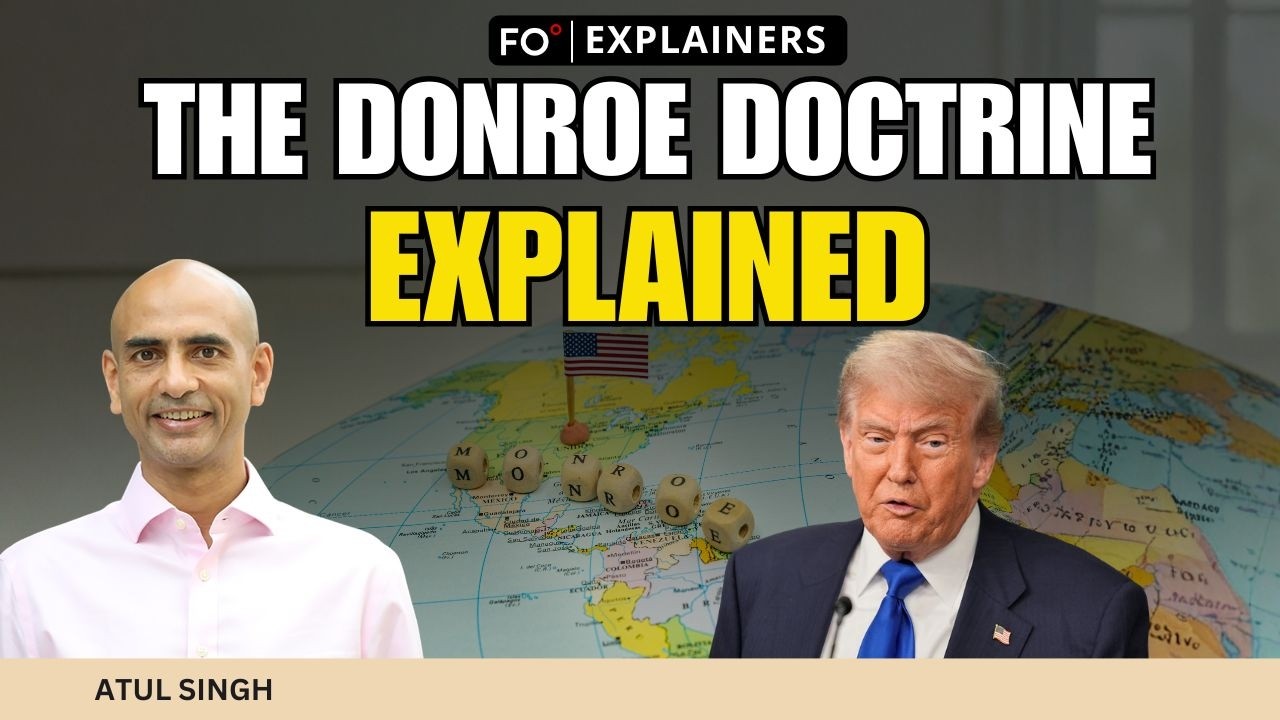
Khattar Singh raises the possibility that the administration’s thinking reflects a broader effort to revive an expanded version of the Monroe Doctrine, with Washington asserting dominance over the Western Hemisphere.
Cleobury acknowledges that siding more openly with Argentina could improve US standing in parts of Latin America. However, he argues that any gains would likely be outweighed by damage to relations with Britain. “I still take the view that any diplomatic gains with countries of the region wouldn’t outweigh the diplomatic fallout with the UK,” he explains.
He also points to contradictions within the administration’s broader territorial policies. Trump has simultaneously criticized Britain over the Chagos Islands while defending continued UK sovereignty there because of the strategic importance of the Diego Garcia military base. The Falklands do not carry the same military value for Washington.
The discussion highlights how Trump’s foreign policy often blends geopolitical calculation with personal relationships. Khattar Singh suggests Argentine President Javier Milei’s close ties with Trump could strengthen Buenos Aires’ leverage in Washington.
Cleobury agrees that personal rapport matters greatly to Trump but insists the US–UK alliance extends beyond individual leaders. “The relationship between the UK and US, which is often referred to as a special relationship, is fundamentally a very strong relationship,” he says.
The islanders and an unresolved deadlock
Toward the end of the discussion, Khattar Singh emphasizes a frequently overlooked dimension of the dispute: the wishes of the islanders themselves. In a 2013 referendum, 99.8% of Falkland Islanders voted to remain a British Overseas Territory.
Cleobury says Britain’s position rests heavily on the principle of self-determination, but Argentina rejects the referendum as illegitimate because it views British control as a colonial occupation rooted in historical injustice.
That leaves the dispute effectively deadlocked. Cleobury argues that sovereignty questions are ultimately indivisible and that proposals such as joint administration are unlikely to satisfy either side. Even under significant diplomatic pressure, he does not believe Britain would relinquish sovereignty over the islands.
As a result, the Falklands are likely to remain a persistent geopolitical flashpoint.
[Lee Thompson-Kolar edited this piece.]
The views expressed in this article/video are the author’s own and do not necessarily reflect Fair Observer’s editorial policy.







































Comment