





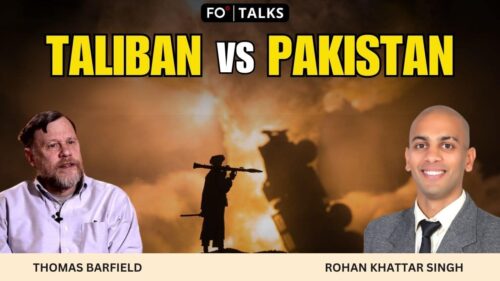
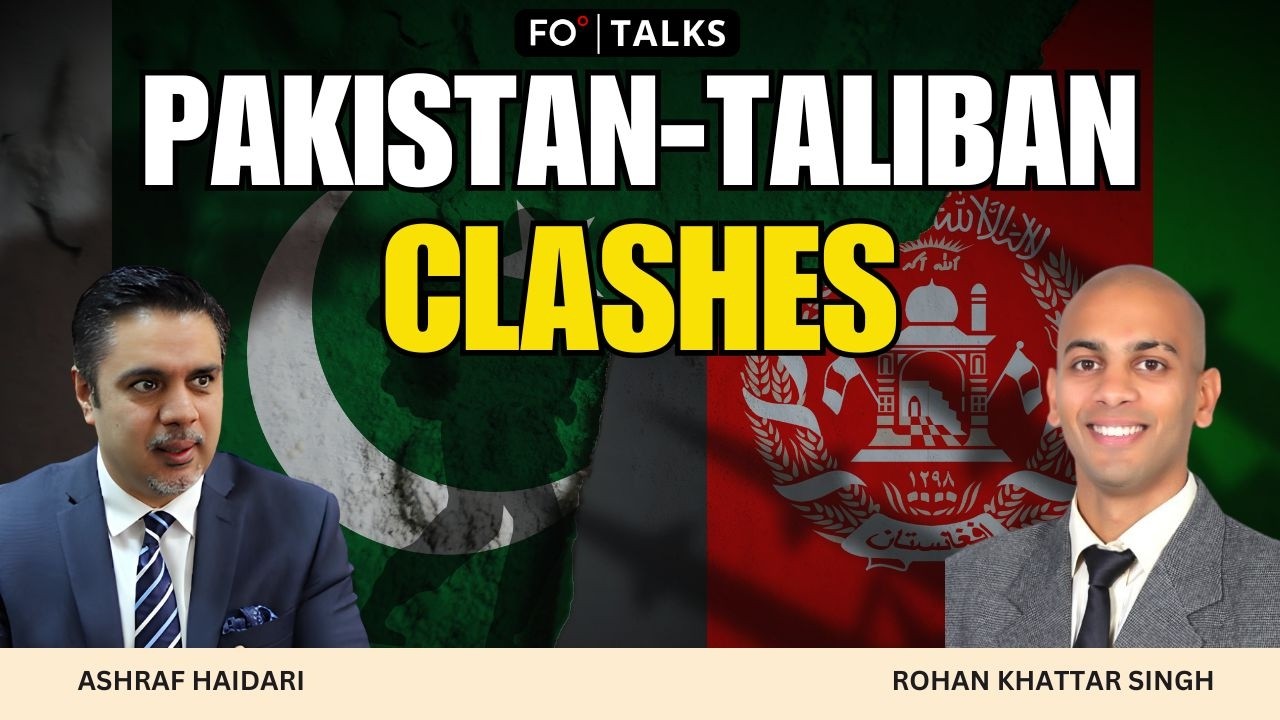
Fair Observer’s Video Producer Rohan Khattar Singh speaks with Ambassador Ashraf Haidari, a former Afghan diplomat and the president of Displaced International, about the escalating hostilities between Pakistan and the Taliban, and the devastating consequences for Afghan civilians.
Airstrikes and contested truths
Khattar Singh opens by mentioning a recent and highly controversial Pakistani airstrike on the Omit camp in Kabul, a rehabilitation center that reportedly housed more than 1,000 drug addiction patients. According to initial reports, the strike killed nearly 400 people. Pakistan maintains that the site was a Taliban drone factory, while the Taliban insist it was a civilian medical facility.
Haidari firmly rejects Islamabad’s version, calling it “a flat lie” and arguing that the Taliban lack the technological capacity to operate such a facility. He reframes the broader pattern of strikes as part of a campaign that disproportionately harms civilians rather than Taliban leadership. In his account, Pakistan’s actions reflect a deeper strategic logic: weakening Afghanistan as a whole rather than targeting specific militant actors.
This divergence in narratives highlights a recurring feature of the conflict. Competing claims obscure accountability, while Afghan civilians bear the immediate cost. Images of grieving families and destroyed infrastructure have circulated, but they have not translated into sustained international scrutiny.
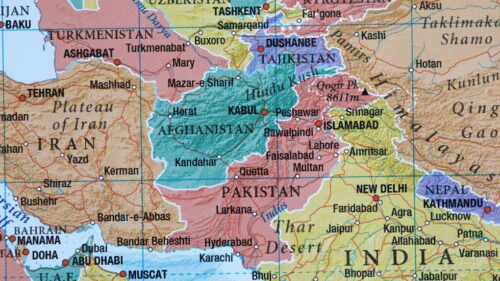
A battlefield for regional rivalry
The discussion then widens to the geopolitical dynamics shaping the conflict. Haidari describes Afghanistan as a space where regional powers pursue competing interests through indirect means. He characterizes the Taliban as a “strategic project up for rent,” suggesting that different factions within the movement are influenced by external actors.
Khattar Singh notes the historical irony: Pakistan originally cultivated the Taliban to secure strategic depth. Yet that relationship has become more complicated. Haidari explains that the group is no longer monolithic. Internal divisions, combined with shifting alliances, have opened the door for other players, particularly India, to establish influence.
Pakistan’s airstrikes can be seen as an attempt to reassert control. Haidari argues that India has found ways to pressure Pakistan indirectly, including through militant groups operating from Afghan territory. This triangular dynamic of Pakistan, India and the Taliban creates a volatile environment in which Afghanistan becomes a proxy arena.
The result, as Haidari puts it, is a “lose-lose for the Afghan people,” but a strategic gain for external powers. Each actor extracts some advantage, while the underlying instability persists.
Silence and selective outrage
Khattar Singh points out that the airstrikes occurred during Ramadan, yet drew limited condemnation from Muslim-majority countries. Haidari contrasts this silence with the frequent statements issued by organizations such as the Organization of Islamic Cooperation on other conflicts.
He interprets this disparity as evidence of selective attention shaped by political priorities. Even when aid arrives, as in India’s delivery of medical supplies, Haidari views it through a geopolitical lens. Assistance may alleviate immediate suffering, but it does not address the structural drivers of the conflict.
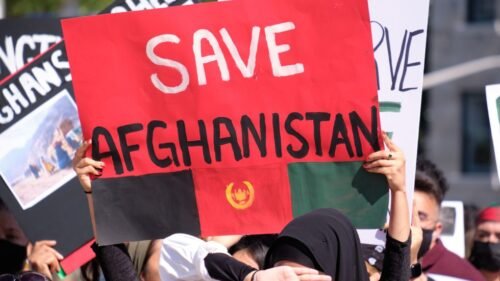
For Afghans, this silence reinforces a sense of abandonment. The country’s crises compete with larger global events, including the Iran war, leaving Afghanistan largely absent from headlines and diplomatic agendas.
A deepening humanitarian crisis
Beyond the geopolitical maneuvering lies a deteriorating humanitarian situation. Haidari describes Taliban rule as enforcing a system of “gender apartheid,” restricting women and girls from education, employment and public life. These policies have far-reaching social and economic consequences.
Health indicators have also worsened. Mortality rates among infants and young children have risen, reversing gains made during the previous two decades. Haidari contends that more Afghans are now dying under current conditions than during the years of active conflict before 2021.
Simultaneously, the country faces economic isolation. Sanctions and lack of recognition limit formal trade and financial flows, while reports of external cash shipments create what Haidari calls an “artificial macroeconomic stability.” The result is a fragile system that masks deeper structural collapse.
Leadership vacuum and an uncertain future
The conversation concludes with a focus on governance and accountability. Haidari views the current situation as the outcome of both external decisions and internal failures. He describes the US withdrawal as enabling the Taliban’s return to power and leaving a political vacuum that has yet to be filled.
Inside Afghanistan, opposition forces remain fragmented and ineffective. Without a coherent alternative, the Taliban face limited pressure to change. Haidari argues that meaningful reform would require strong external incentives, both rewards and penalties, capable of altering the group’s calculations.
He also challenges attempts to frame the Taliban as representative of Afghanistan’s Pashtun population, emphasizing that many Pashtuns have been among the movement’s primary victims. This distinction underscores the complexity of Afghan society, which cannot be reduced to simple ethnic or political narratives.
Afghanistan remains a “managed island of instability,” in Haidari’s words, shaped by external competition and internal weakness. For now, the Afghan people continue to endure a conflict driven by forces largely beyond their control.
[Lee Thompson-Kolar edited this piece.]
The views expressed in this article/video are the author’s own and do not necessarily reflect Fair Observer’s editorial policy.




























Comment