




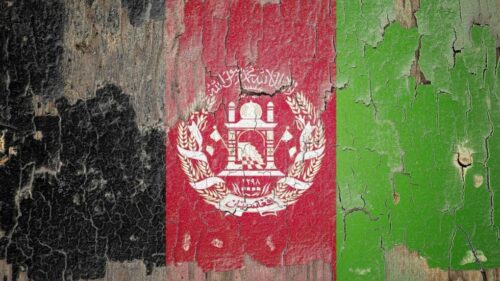
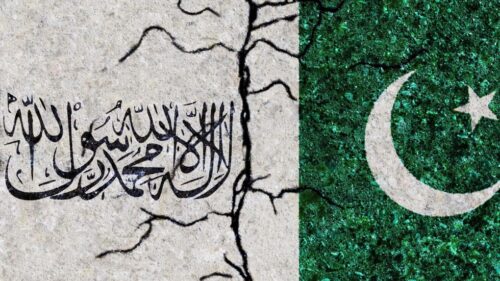
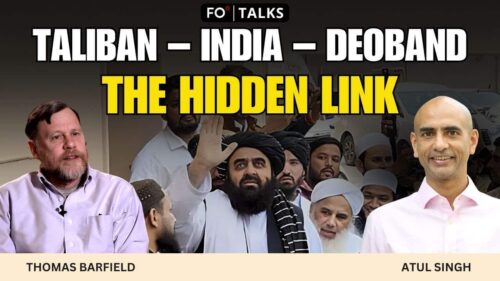
Fair Observer’s Video Producer Rohan Khattar Singh and Professor Thomas Barfield explore why escalating clashes between the Taliban government in Afghanistan and the Pakistani army reflect far more than a border dispute. Along the Durand Line, a frontier that has long defied stable governance, Pakistan now faces the consequences of a strategy that once seemed to serve its interests. What once appeared to be strategic depth has evolved into a security dilemma, as cross-border militancy, ethnic ties and historical grievances converge.
Khattar Singh and Barfield examine deeper structural forces shaping the conflict, including Pashtun identity, contested borders and regional rivalries. Together, Barfield and Khattar Singh explore whether Pakistan now faces a prolonged insurgency rooted in choices it helped create.
The Taliban victory and Pakistan’s strategic miscalculation
Barfield explains that the escalation stems largely from the Taliban’s relationship with the Tehrik-i-Taliban Pakistan, an insurgent movement targeting the Pakistani capital of Islamabad. The Taliban, he notes, see the group as ideological and ethnic allies, which complicates Pakistan’s expectations of cooperation. “They see them as brothers in arms,” Barfield says, emphasizing the shared Pashtun identity that transcends state boundaries.
This dynamic represents a reversal of Pakistan’s earlier strategy. For decades, Islamabad supported the Taliban to secure influence in the Afghan capital of Kabul and limit Indian involvement in Afghanistan. Yet once the Taliban gained power in 2021, they no longer depended on Pakistan. According to Barfield, the Taliban “made good clients as long as they needed Pakistan,” but independence allowed them to revert to longstanding Afghan positions. These included rejecting the Durand Line and tolerating anti-Pakistan militants.
As a result, Pakistan achieved its objective of a Taliban-led Afghanistan, only to discover that the new government does not share Islamabad’s priorities. Instead, ethnic solidarity and historical grievances now outweigh past patronage, leaving Pakistan confronted by insurgent violence emanating from territory once expected to be friendly.
The Durand Line and Pashtunistan
A central theme of the conversation is the Durand Line, the 1893 boundary drawn between British India and Afghanistan. Barfield stresses that every Afghan government, regardless of ideology, has refused to recognize the border as legitimate. The dispute persists because the line divides Pashtun communities, many of whom maintain cross-border family ties and social networks.
For Barfield, the issue is both historical and emotional. Peshawar, once linked to Afghan political life, is a symbolic loss. Barfield notes that it remains “a phantom limb” in Afghan memory. Territorial divisions imposed during colonial rule continue to shape modern politics.
The Pashtun dimension complicates any settlement. While Afghanistan includes multiple ethnic groups, Pashtuns have historically dominated political leadership, ensuring that cross-border identity remains central to national policy. Barfield suggests that governments led by Tajiks or Uzbeks might have been more open to compromise, but the Taliban’s overwhelmingly Pashtun composition reinforces resistance to recognizing the border. The dispute therefore persists as a reflection of enduring ethnic solidarity.
Pakistan’s military dilemma
Khattar Singh presses Barfield on whether Pakistan might escalate to a ground offensive. Barfield argues that Islamabad faces a strategic trap. Conventional military superiority offers limited advantage against insurgent tactics, particularly in terrain historically resistant to external control. “Fighting an insurgency, as the Americans saw, is expensive and long-term,” he observes, highlighting lessons from previous conflicts in Afghanistan.
Even if Pakistan could seize major cities, the challenge of governance would remain unresolved. Barfield notes that Pakistan lacks a clear alternative leadership in Afghanistan and risks becoming entangled in another prolonged conflict. At the same time, Islamabad faces domestic instability, tensions with Iran and broader regional pressures, creating what Barfield calls a “monsoon season for troubles.”
These constraints limit Pakistan’s options. Airstrikes and border operations may continue, but a decisive solution appears elusive. The Taliban, meanwhile, rely on insurgent warfare and cross-border networks, prolonging instability along the frontier.
India, economics and regional competition
The discussion also turns to India’s role, which Pakistan views with suspicion. Barfield explains that India has historically cultivated ties with Afghanistan and invested in infrastructure projects designed to bypass Pakistan, including routes linking Afghanistan to Iran’s Chabahar port. These initiatives reduced Islamabad’s leverage over Afghan trade and provided Kabul with alternative partnerships.
Economic realities further complicate the situation. Afghanistan’s economy contracted sharply after the withdrawal of foreign aid, yet the Taliban have sought to maintain governance through taxation and limited revenue sources. Despite financial constraints, the movement continues to assert sovereignty and pursue diplomatic engagement with multiple regional actors, including India.
Barfield concludes that Afghanistan is returning to familiar geopolitical patterns: balancing regional powers while resisting external control. Pakistan’s attempt to shape Afghan politics through proxy influence has instead empowered a neighbor that pursues its own interests. The Durand Line conflict reflects deeper structural forces that are unlikely to disappear quickly. The Afghanistan–Pakistan frontier thus remains a volatile flashpoint, where historical grievances, ethnic politics and strategic miscalculations converge, raising the risk of a prolonged and destabilizing confrontation.
[Lee Thompson-Kolar edited this piece.]
The views expressed in this article/video are the author’s own and do not necessarily reflect Fair Observer’s editorial policy.






































Join the conversation
Share your perspective
Log in to share your thoughts and take part in the discussion.