






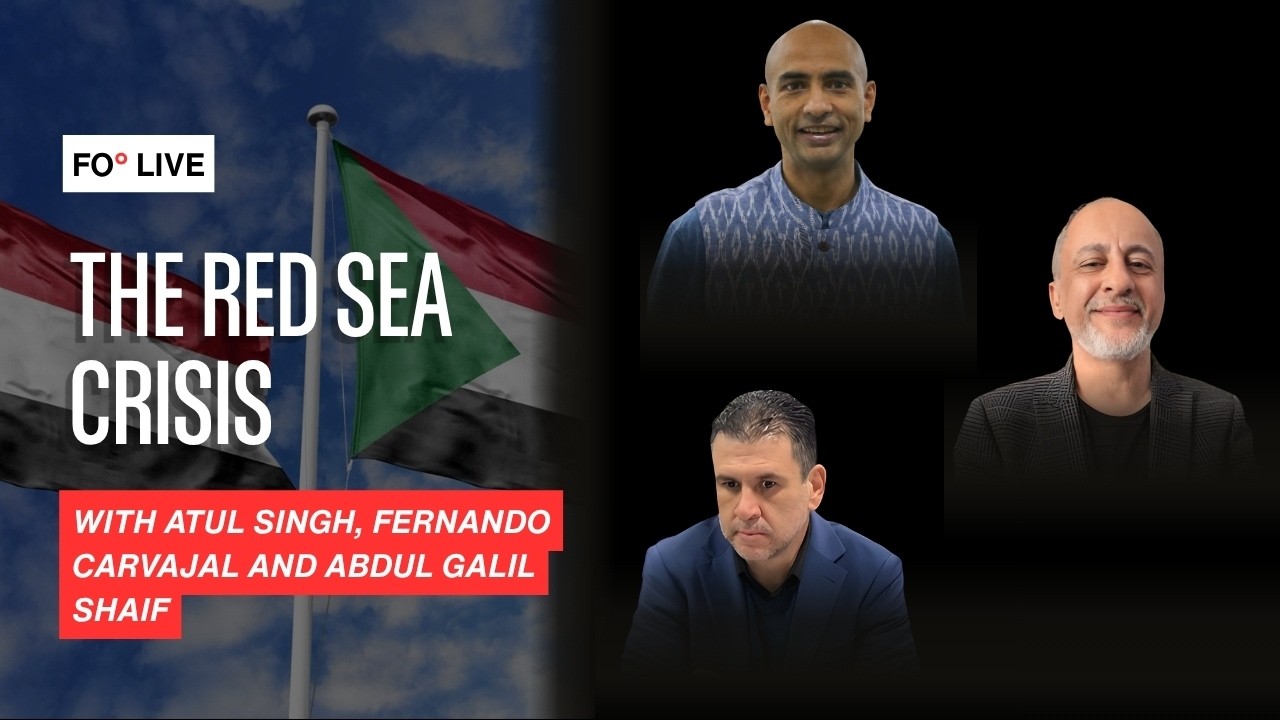
Fair Observer’s Video Producer Rohan Khattar Singh moderates an FO Live discussion on the Muslim Brotherhood, from its founding in Egypt in 1928 to its varied roles across Yemen, Sudan and the wider Middle East. He is joined by Fernando Carvajal, executive director of The American Center for South Yemen Studies; Dr. Abdul Galil Shaif, author of South Yemen: Gateway to the World, former Chairman of the Aden Free Zone Public Authority and Chairman of the Friends of South Yemen; and Anas Himedan, a Sudanese biomedical scientist and human rights advocate. The discussion presents the Brotherhood not as a single visible institution, but as a flexible political and social network that adapts to local conditions while retaining a broader ideological framework. Nearly a century after its creation, the central question is whether the movement is fading, or merely changing form once again.
A movement built for adaptation
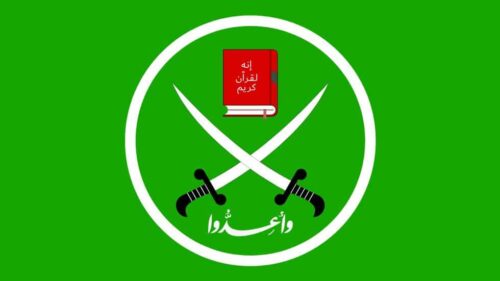
Shaif begins by noting the difficulty of defining the Brotherhood. Founded by a schoolteacher named Hassan al-Banna in Egypt, it started as a religious movement but developed into a political project aimed at shaping society through education, religious outreach and institutional influence. In Egypt, it has been severely restricted since the fall of Egyptian President Mohamed Morsi, but Shaif argues that its influence persists underground.
Yemen offers a different model. There, the Brotherhood-linked Al-Islah party did not simply copy the Egyptian organization. Instead, it embedded itself in tribal politics, patronage networks and state institutions. Shaif describes Al-Islah as a “hybrid political actor,” shaped by ideology but also by pragmatism and survival.
Sudan as a warning
Himedan gives the starkest account of the Brotherhood’s impact, focusing on Sudan. He argues that the movement, through the National Congress Party and related Islamist networks, helped shape decades of war, repression and institutional decay. He says Sudan shows what happens when the Brotherhood penetrates the state, education system, military and civil society.
Himedan describes recruitment through universities, where students could face pressure to join affiliated groups in order to advance academically. He also points to forced military recruitment, ideological indoctrination and the use of religion or ethnicity to divide communities. Brotherhood-linked elements within the Sudanese Armed Forces have been accused of extreme brutality in the current conflict, including the use of chemical weapons against civilians, which has contributed to sanctions and terrorist designations by multiple states. For him, the Brotherhood is no longer compatible with the modern world, because it cannot reform or adapt morally, even if it adapts tactically.
He believes the movement survives by creating enemies, sustaining conflict and blocking peaceful transitions that might end its political usefulness.
Yemen’s Al-Islah and political survival
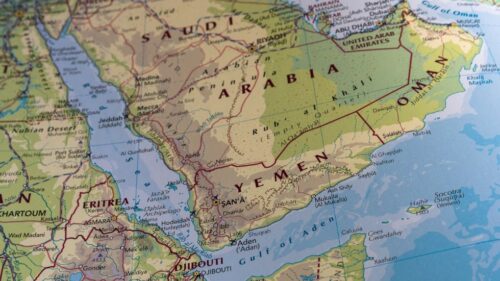
Shaif and Carvajal both emphasize that Yemen’s Al-Islah is more adaptable than Himedan’s account of Sudan might suggest. Shaif says Al-Islah has survived because it understands Yemen’s fractured landscape. It has worked with tribal leaders, aligned with Yemeni President Ali Abdullah Saleh’s regime, opposed southern independence and later positioned itself as a useful partner for Saudi Arabia against the Houthis.
Carvajal adds historic depth. He notes that Brotherhood influence in Yemen dates back to the 1940s, when Yemeni students in Cairo encountered Brotherhood networks. Over time, this influence moved through schools, mosques and state institutions. After unification in 1990, Al-Islah became a major pillar of political life.
Carvajal believes Al-Islah is not a normal party. Rather, it is an umbrella organization combining Brotherhood activists, Salafis, tribal leaders and business interests. Its strength lies in its capacity to provide religious legitimacy to political projects, much as it did for Saleh’s secular military regime.
Regional rivalries and shared enemies
The panel also explores how the Brotherhood fits into regional rivalries. Carvajal explains that Gulf monarchies view the movement as a threat because it seeks to shape Arab societies through religious politics. The Arab Spring intensified these fears, especially when the Brotherhood briefly led Egypt after 2011.
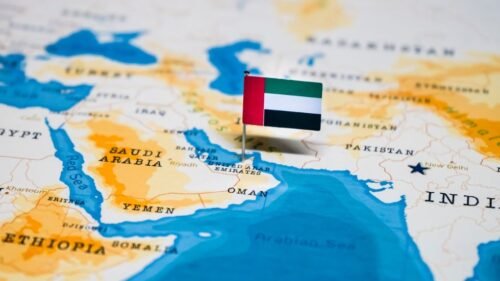
Yet the movement’s alliances are not simple. Despite the Sunni–Shia divide, Carvajal and Himedan both point to cooperation between Brotherhood-linked actors and Iran. Sudan, they note, has served as a route for Iranian weapons to Hamas, while Islamist forces in Sudan have received Iranian support. In Yemen, the Houthis, Al-Islah, Saudi Arabia and the United Arab Emirates form a shifting field of rivalry and convenience.
Carvajal summarizes the logic clearly: “Both entities, the Muslim Brotherhood and the Islamic Republic, need an enemy.” For him, permanent conflict gives ideological movements a reason to endure.
Decline or transformation?
The speakers disagree on the Brotherhood’s future. Himedan believes its era is ending because social media, public awareness and modern political expectations make old forms of manipulation harder to sustain. Shaif is more cautious. He sees Al-Islah as a survivor, especially in Yemeni cities like Taiz and Marib, where it retains social and charitable networks.
Carvajal warns that the Brotherhood remains dangerous precisely because it often lacks visible headquarters or formal structures. Its power lies in networks, education, secrecy and social influence rather than in a single command center.
The discussion ends with uncertainty rather than closure. The Brotherhood may be weakened in some countries, outlawed in others and divided by local conditions. Yet its history suggests that decline does not necessarily mean disappearance. Across Sudan, Yemen and the wider region, the movement’s future may depend less on its original ideology than on the crises, rivalries and political vacuums that continue to give it room to adapt.
[Lee Thompson-Kolar edited this piece.]
The views expressed in this article/video are the author’s own and do not necessarily reflect Fair Observer’s editorial policy.




































Comment