





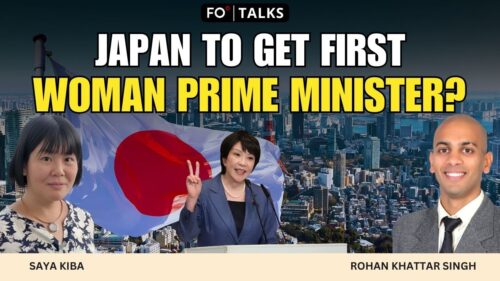
Fair Observer’s Video Producer Rohan Khattar Singh speaks with Saya Kiba, a professor at Kobe City University of Foreign Studies in Japan, about US President Donald Trump’s five-day tour of Japan, South Korea and Malaysia. The discussion examines how the newly inaugurated Japanese Prime Minister Sanae Takaichi handled Trump’s high-profile visit, how Beijing interpreted the optics and why the Association of Southeast Asian Nations (ASEAN) remains cautious as US–China rivalry sharpens.
Trump’s visit to Japan
Khattar Singh opens by asking whether Takaichi maximized the opportunities presented by Trump’s visit. Kiba notes that Japanese media gave the summit strong reviews, crediting Takaichi for her energy, visibility and political poise. Simultaneously, she stresses that the agreements Trump and Takaichi highlighted on rare earths, tariffs and defense were not new. They had been “prepared even before Takaichi was elected,” she explains, drafted by bureaucrats under the preceding administration of former Japanese Prime Minister Shigeru Ishiba.
Even so, Kiba argues that the diplomatic choreography mattered. Takaichi had just completed back-to-back visits to Malaysia for ASEAN and to South Korea for Asia-Pacific Economic Cooperation before hosting Trump in Tokyo. The sequence created an impression of momentum and international readiness despite her recent inauguration. However, it is too early to conclude what tangible outcomes Takaichi can deliver from this surge of activity.
Takaichi’s policies
Global media have quickly branded Takaichi as a right-wing, defense-forward leader. She has pledged to increase Japan’s defense budget, but Kiba questions whether such ambitions are fiscally realistic. Takaichi has simultaneously promised to preserve high-quality social welfare and explore tax reform. As Kiba wonders aloud, “What is the source of the budget for the defense budget?” Even former Prime Minister Fumio Kishida’s pledge to expand defense spending came without a concrete financing plan.
Japan’s signaling, Kiba explains, targets two distinct audiences. To the United States, especially under “Trump 2.0,” Tokyo wants to show that it is meeting alliance expectations and carrying its security burden. To its Asian neighbors, the message is different: Japan’s growing military posture is not destabilizing but is instead tied to its commitment to a “free, open and rule-based international order.”
China’s stance
The optics of Takaichi’s warm rapport with Trump quickly went viral across East Asia. Yet Kiba highlights that she moved directly from hosting Trump in Yokosuka, Japan, to holding a bilateral meeting with Chinese President Xi Jinping in South Korea. Despite Takaichi’s reputation in China as a conservative and ally of former Japanese Prime Minister Shinzo Abe, Kiba says she “toned down her very hard stance toward China,” and Beijing has already taken note.
Their summit was pragmatic. Takaichi voiced concerns over China’s rare-earth export controls, while both leaders agreed to strengthen communication between defense authorities and ensure effective crisis-management mechanisms. Japan’s approach is to deepen cooperation with the US while simultaneously using diplomacy to maintain predictability in relations with Beijing.
The Trump–Xi meeting
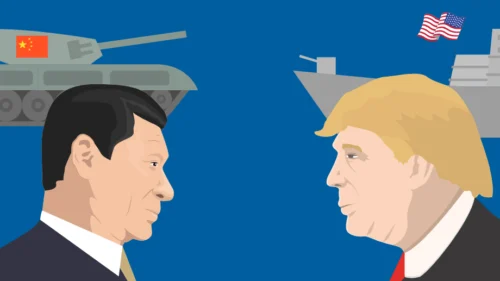
Japanese analysts watched the Trump–Xi meeting with particular concern. The moment Trump used the term “G2” — referring to the hypothetical Group of Two relationship between the US and China — Japanese media amplified it instantly. For Tokyo, the concept suggests two dominant blocs dividing the world into opposing spheres of influence. Japan, Kiba argues, rejects this binary framing. “We maintain autonomy in our own diplomacy,” she says. Japan does not want a world in which the US and China alone set the rules.
Japan and other Group of Seven partners support the liberal international order but are not aligned with Washington on every issue. A rigid US–China condominium would leave little room for middle powers to maneuver. Tokyo instead prefers a multipolar system with diverse, multinational actors — an environment more compatible with Japan’s strategic interests and its preference for consensus-driven diplomacy.
ASEAN is watching closely
While US allies such as Japan, Australia, South Korea and the Philippines welcomed the outcomes of Trump’s tour, ASEAN’s reaction has been noticeably subdued. Kiba says Southeast Asian governments are in “wait and see” mode. They are neither enthusiastic nor alarmed; rather, they are calibrating their positions amid a fast-shifting strategic landscape.
ASEAN states remain skeptical of US commitments, still critical of Washington’s handling of the Israel–Hamas conflict and wary of what Kiba describes as the erosion of “so-called democratization” under Trump’s return to power. At the same time, they recognize the practical benefits of continued US engagement, especially in defense and supply-chain resilience.
Looking ahead, Kiba believes Japan will widen its multilateral initiatives across the region, including in emerging areas such as energy transition, climate cooperation, supply-chain governance and intellectual-property protection. More “minilaterals” and tailored coalitions built around specific issues will define the next phase of Asian diplomacy.
[Lee Thompson-Kolar edited this piece.]
The views expressed in this article/video are the author’s own and do not necessarily reflect Fair Observer’s editorial policy.

































Comment