





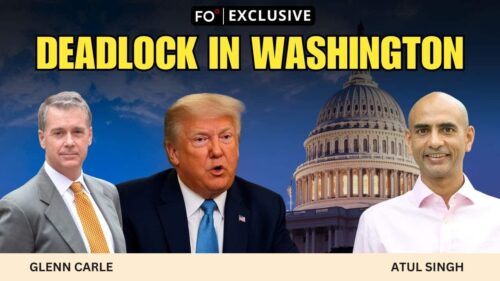
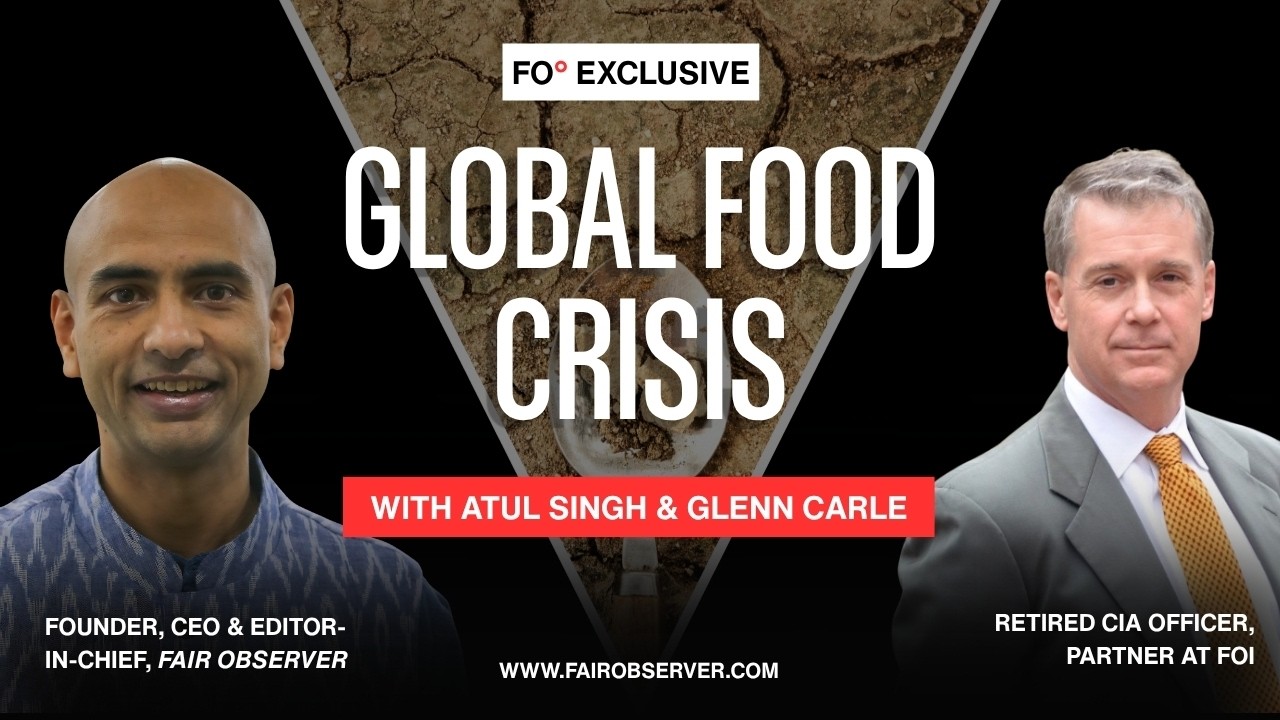
Editor-in-Chief Atul Singh and FOI Senior Partner Glenn Carle, a retired CIA officer who now advises companies, governments and organizations on geopolitical risk, examine the fast-moving power shifts across East Asia and the Pacific. Their conversation spans new leadership in Japan and South Korea, the United States’ strategic realignment and the intensifying economic and political confrontation between Washington and Beijing.
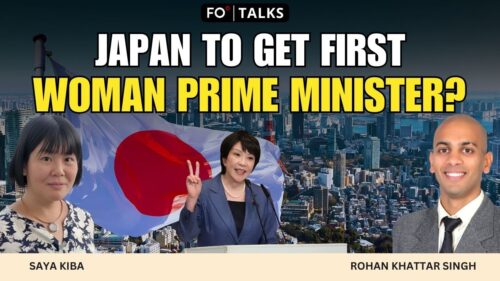
Japan’s first female prime minister
Japan’s new leader, Prime Minister Sanae Takaichi, stands for strong patriotism and culture-warrior traditionalism. The first woman to lead Japan in nearly a thousand years, she is a protégé of the late Japanese Prime Minister Shinzo Abe and models herself on his legacy. Like Abe, she champions the “three arrows:” fiscal expansion, monetary easing and structural reform.
However, Takaichi does not seem to care about structural reform. If she repeats Abe’s spending and easing policies, the yen could crash spectacularly. She faces a changed economic landscape — overall inflation is at 2.7% and food inflation is above 7% — and limited room to maneuver. There are significant dangers in her economic approach and assertive nationalism.
Takaichi has also aligned herself with former US President Donald Trump’s $550 billion investment pledge in exchange for tariff relief, signaling continuity with Washington rather than confrontation. Yet her nationalist views have strained regional ties. She visits the Yasukuni Shrine, which honors Japan’s war dead (including convicted war criminals), more often than most of her predecessors. She portrays Japan’s imperial-era actions as anti-colonial and pro-Asian, echoing the propaganda of the wartime Greater East Asia Co-Prosperity Sphere — a World War II concept promoting Asian unity under Japanese domination.
South Korea’s new direction
South Korean President Lee Jae-myung, a reformist former governor of Gyeonggi Province, came to power on June 4 after a coup attempt by his predecessor, President Yoon Suk Yeol. The transition ended months of political turmoil but opened debate over his softer stance toward North Korea and China. He is also pursuing a historic opening toward Japan, despite public skepticism.
This outreach remains fraught because of Japan’s resurgent nationalism and unresolved historical trauma — memories of wartime aggression and racial hierarchy that remain raw and bitter. Reconciliation efforts now collide with Japan’s revival of prewar symbols and narratives.
America’s strategic shift
Turning westward, US military and diplomatic doctrine is undergoing a substantial historic shift toward the Indo-Pacific. This shift is designed, as Glenn describes, to “rope India into helping the United States parry China.” Washington is pressing allies to double their defense budgets, and both Japan and Australia have responded through initiatives like the AUKUS submarine pact with the US and the United Kingdom.
The Pentagon’s strategy now emphasizes dispersed operations such as Agile Combat Employment and Expeditionary Advanced Base Operations, adapting to China’s vastly larger navy and long-range missile arsenal. Glenn likens the moment to past struggles between maritime coalitions and continental powers — from the Triple Entente of France, Great Britain and Russia before World War I to the various Ottoman–Venetian wars (1396–1718).
Smaller coastal states are hedging their bets. They are now balancing ties with the rising hegemon, China, while relying on the distant hegemon, the US, for defense. This dynamic, Glenn concludes, is “proof of a relative US decline,” prompting regional actors to diversify their security and trade relationships.
A cold war without peace
A senior US State Department official tells FOI that the US and China are now in a full-scale cold war. Washington has restricted Chinese access to advanced technology and leaned on allies to follow suit. The Dutch government, under US pressure, nationalized the Chinese-owned semiconductor firm Nexperia to curb technology transfer.
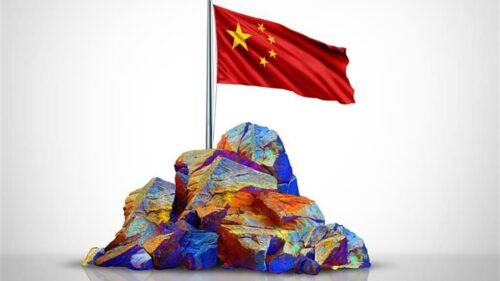
Beijing retaliated by restricting exports of rare earth minerals, which are critical for manufacturing countless electronic products and electric vehicles. China dominates this field, controlling about 60% of global mining and over 90% of refining capacity. In response, Trump threatened a 100% tariff on Chinese goods, briefly erasing $2 trillion from stock markets before retreating. (After this episode was recorded, from October 31–November 1, Trump and Chinese President Xi Jinping met at the Asia-Pacific Economic Cooperation summit in Gyeongju, South Korea, to seek leverage for a trade deal.)
China has suspended imports of soybeans, coal, oil and liquefied natural gas from the US, devastating farm states. “People in the Midwest are saying that, look, last year, China imported 1.7 million metric tons of soybean from the US … this year, in September, China imported none,” Atul remarks.
China’s own economy shows deep strain. Growth slowed to 4.8% in the third quarter of 2025, and factory-gate prices have fallen for three consecutive years. The Chinese Communist Party’s recent plenary session, the Fourth Plenary Session of the 20th Central Committee held in Beijing from October 20–23, saw the purge of 11 Central Committee members and 22 generals. Atul calls it “Maoism without Mao.” The late Deng Xiaoping’s era of reform and opening up to the world appears over as Beijing doubles down on technology self-sufficiency, supply-chain security and control over Taiwan.
Both powers are paying heavy costs. The US could restrict spare parts for China’s Boeing aircraft fleet, while Beijing could block pharmaceutical ingredients vital to American medicine. Each side is increasing the pressure without fully grasping the other’s culture or calculus.
In summary, East Asia is experiencing historic changes that cannot be stopped. Across the Pacific, from Tokyo to Seoul, Beijing to Washington, the region stands at the center of a new global struggle — one defined not by ideology, but by hard competition for security, resources and technological dominance.
[Lee Thompson-Kolar edited this piece.]
The views expressed in this article/video are the author’s own and do not necessarily reflect Fair Observer’s editorial policy.





























Comment