





Fair Observer’s Video Producer Rohan Khattar Singh speaks with Professor Paul Chambers about Thailand’s general election, held February 8, 2026. It delivered a decisive victory for conservative forces led by Thai Prime Minister Anutin Charnvirakul and his Bhumjaithai Party. The result now reshapes the country’s political landscape, as nationalism, rural mobilization and institutional power outweigh strong urban support for the progressive People’s Party. Thailand now stands at a crossroads, where demands for democratic reform collide with entrenched elite authority.
Nationalism, strategy and electoral muscle
Chambers describes the vote as “a landslide victory for the forces of the right,” marking a sharp setback for progressive reformists. Early polling had favored the social democratic People’s Party, successor to the dissolved Move Forward and Future Forward parties. Yet a convergence of political forces shifts the outcome.
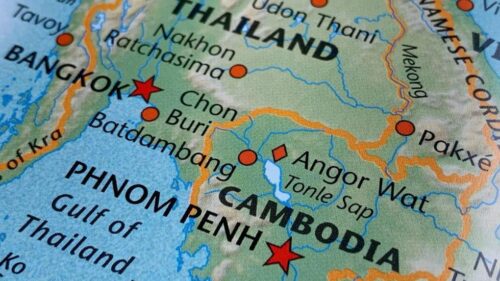
A border clash between Thailand and Cambodia in July 2025, which resulted in Thai casualties, fuels nationalist sentiment. A leaked phone call between then-Prime Minister Paetongtarn Shinawatra and former Cambodian strongman Hun Sen, in which she spoke negatively about the Thai army, further intensifies public anger. Chambers argues that Anutin capitalized on the moment and used “nationalism to glide towards a victory.”
But nationalism alone does not explain the result. Chambers points to allegations of vote buying in several provinces, coordination among conservative parties to avoid splitting the vote and the strategic use of local power brokers. Bhumjaithai also benefits from access to bureaucratic networks while in office, helping channel resources through provincial structures. Legal and questionable tactics combine to produce a commanding win.
Urban–rural divide, not an ideological earthquake
The election reveals a stark geographic split. The People’s Party wins every district in Thailand’s capital of Bangkok and nearly all seats in the northern city of Chiang Mai. Rural provinces, particularly those near the Cambodian border, tilt heavily toward Anutin.
This pattern seems to reflect structural differences rather than a sweeping ideological realignment. Urban voters gravitate toward progressive platforms, while rural constituencies respond more strongly to nationalism and patronage networks. Chambers does not see the result as evidence of a permanent conservative turn, however. Instead, he calls it the “temper of the times,” shaped by border tensions and political mood.
He also criticizes the People’s Party’s internal weaknesses. Compared to its predecessors, it fails to organize effectively at the grassroots level and struggles to resonate beyond urban centers. The loss, then, stems not only from repression or manipulation but from strategic shortcomings within the reform movement itself.
Monarchy, military and managed democracy
The structure of Thai power serves as a major talking point. Chambers explains that King Rama X, the king of Thailand, stands above politics and democracy. He says Thailand operates through a partnership between the monarchy and the military, with the armed forces acting as guardian and junior partner.
The Senate, appointed rather than elected under the 2017 constitution, plays a decisive role in selecting the prime minister alongside the lower house. Parliament functions, but within strict boundaries. The lower chamber can debate budgets and investigate issues, yet it operates under the shadow of potential military intervention. Any serious challenge to royal prerogatives risks triggering a coup.
This framework shapes electoral politics. Even when progressive parties perform well, institutional levers remain firmly in conservative hands. Courts, oversight bodies and security forces collectively reinforce elite dominance.
Section 112 and the cost of dissent
The discussion turns personal when Chambers recounts his own prosecution under Section 112 of Thailand’s criminal code, the lèse-majesté law. The statute prohibits insulting the monarchy and carries severe penalties. He describes it as “a very ambiguous law,” one that allows broad interpretation and political weaponization.
In April 2025, Chambers was sentenced to 15 years in prison over a conference flyer stating that the king holds more power than the prime minister. Although he did not write or post the material, his name appears in connection with the event. He spent two nights in a rural prison before being released on bail. Charges were eventually dropped by the attorney general, but immigration authorities retained his passport until he boarded a flight out of Bangkok. “Yes, I had to flee,” he tells Khattar Singh.
His case is not isolated. More than 280 individuals face Section 112-related cases. Anti-monarchy protests between 2020 and 2023 drew thousands of young demonstrators. The state responds not only with arrests but with subtler tactics: visits to families, legal pressure and selective prosecutions. Prominent activist Arnon Nampa remains imprisoned. Such measures weaken the reform movement incrementally rather than through dramatic mass repression.
Constitutional reform at a crossroads
Alongside the election, voters support a referendum to begin drafting a new constitution to replace the military-backed 2017 charter. Reformers hope to curtail the appointed Senate’s power and restore a more democratic framework akin to the 1997 constitution.
Yet the path forward is steep. Three separate referendums are required to amend the charter. Chambers doubts the new government will push aggressively for further votes. With a fresh electoral mandate, Anutin can argue that voters have rejected sweeping change.
Meanwhile, judicial pressure intensifies. The National Anti-Corruption Commission forwards a case against 44 People’s Party members to the Supreme Court. If upheld, the ruling could strip them of political rights and potentially dissolve the party altogether. Chambers sees this as part of a broader strategy to erode progressive reformism bit by bit.
Thailand’s election thus reflects more than a partisan shift. It exposes the tension between popular demands for democratic change and a resilient alliance of monarchy, military and judiciary. Whether reformers can overcome institutional barriers or whether conservative dominance hardens further will shape the country’s political future and reverberate across Southeast Asia.
[Lee Thompson-Kolar edited this piece.]
The views expressed in this article/video are the author’s own and do not necessarily reflect Fair Observer’s editorial policy.






































Comment