
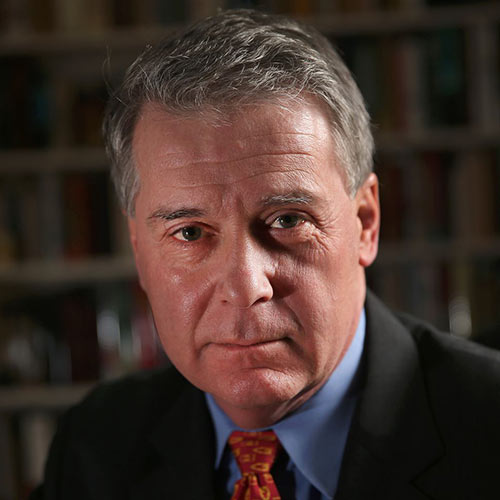


Retired CIA officer Glenn Carle offers a provocative and deeply unsettling analysis of US President Donald Trump. He claims that Trump is what intelligence professionals would classify as a Russian asset, not a traditional spy who takes orders, but someone who has been cultivated and influenced over decades. He traces the beginnings of Trump’s relationship with Russian intelligence back to 1986, when Trump Tower caught the attention of Natalia Dubinin, the daughter of Russian Ambassador Yuri Dubinin. This, he says, eventually led to Moscow’s long-standing efforts to entice Trump with the idea of building a Trump Tower in Red Square.
How intelligence recruitment works
Carle explains that this type of influence operation involves spotting, assessing, developing and ultimately recruiting targets, often through subtle psychological manipulation. He describes how even small gestures, such as offering a favor, can establish bonds of loyalty or create a sense of indebtedness.
Trump, in Carle’s view, is especially susceptible due to his vanity and his consistent loyalty to those who flatter him. While Trump does not align with Russia on every issue — notably diverging on Iran — Carle notes he has parroted Russian state messaging and advanced Kremlin-aligned policies across many domains.
Domestic ideology and institutional erosion
Whitaker and Carle shift the conversation from foreign entanglements to the domestic sphere, where they see grave danger in the political movement surrounding Trump. Carle argues that Trump’s actions are part of a broader ideological push by elements of the Republican Party’s right wing to gut the federal government. This includes promoting the “unitary executive theory,” shrinking federal functions to defense and border control, and dismantling institutions built since the New Deal. These ideas, according to Carle, come not from Trump himself but from his inner circle and movement intellectuals.
The crisis of American democracy
Carle concludes with a stark warning: The United States is undergoing its deepest institutional crisis since the Civil War. Unlike the societal unrest of the 1960s, he believes the current moment poses a threat to the core structures of American governance. He cites attacks on the First Amendment and on the free media, reduction of social services programs, efforts to centralize military command and widespread distrust in democratic institutions. Although critics may dismiss these concerns as exaggerated, Carle insists they are very real — and dangerous.
[Lee Thompson-Kolar edited this piece.]
The views expressed in this article/video are the author’s own and do not necessarily reflect Fair Observer’s editorial policy.





















Join the conversation
Share your perspective
Log in to share your thoughts and take part in the discussion.