





Fair Observer’s Video Producer Rohan Khattar Singh speaks with Saboor Sakhizada, Program Manager at Syracuse University and former interpreter with the US military in Afghanistan, about rising tensions between Afghanistan and Pakistan along their border, the Durand Line. Drawing on firsthand experience of the war on terror, Sakhizada explains how clashes have reignited, what the Taliban’s shifting alliances reveal and why India and the United States may yet reshape South Asia’s next chapter.
Afghanistan–Pakistan clashes
Khattar Singh opens by asking why violence has flared again along the border. Sakhizada says the latest firefights are the product of deep mistrust, not isolated incidents. Both sides feel they are defending their sovereignty, but both are losing control of the narrative and the frontier.
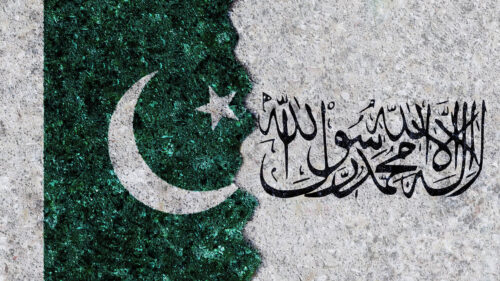
The fighting, he explains, stems from the Taliban’s growing assertiveness since returning to power on August 15, 2021. Pakistan, which once saw the Taliban as a proxy ally, now accuses the Afghan capital of Kabul of harboring militants attacking Pakistani forces. The Taliban counters that the Pakistani capital of Islamabad shelters anti-Taliban factions and conducts unprovoked cross-border strikes. These mutual accusations, Sakhizada warns, risk escalating into a sustained confrontation neither side can afford.
The Durand Line
Khattar Singh then asks Sakhizada to revisit the historical fault line dividing the two countries. The Durand Line, drawn in 1893 by British colonial administrators, cut through Pashtun tribal lands without regard to geography or kinship. For Afghans, it remains a line drawn in sand, not in hearts.
Successive Afghan governments have refused to recognize the line as an international border, while Pakistan treats it as settled law. That tension has shaped every major conflict between the neighbors. Sakhizada points out that today’s battles are not just territorial but symbolic — part of a struggle over national identity and the legacy of the British empire.
Border fighting escalates
After years of uneasy cooperation, relations between the Taliban government in Kabul and Pakistan’s military establishment have deteriorated sharply. Sakhizada highlights how economic desperation, refugee flows and armed groups moving freely across the frontier have amplified the danger. Both militaries are reinforcing outposts and issuing aggressive statements, creating a feedback loop of fear.
Khattar Singh asks whether mediation by China, Iran or Qatar could cool the situation. Sakhizada expresses skepticism: Regional powers prefer a stable status quo to direct involvement, leaving the two neighbors to settle their feud alone. The risk, he warns, is that low-intensity clashes could escalate into open war.
Taliban–India ties and India’s role
Turning to India, Khattar Singh notes that the Indian capital of New Delhi once froze all engagement with the Taliban after 2021. Sakhizada observes that this policy has begun to shift. The Taliban, isolated and cash-strapped, now seeks diplomatic recognition and investment. India, meanwhile, views re-engagement as a way to contain Pakistan and maintain access to Central Asia.
Ideology is less important than survival, Sakhizada explains. The Taliban need partners who can invest, and India wants stability to its north. Even modest steps, like reopening trade routes or cultural exchanges, could reshape South Asia’s balance of power. For India, Afghanistan remains a testing ground for whether it can act as a regional stabilizer rather than a distant observer.
Will Trump get Bagram?
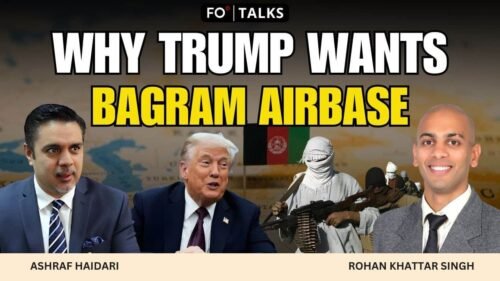
Khattar Singh raises the question dominating Washington headlines: Is US President Donald Trump seeking to regain Afghanistan’s Bagram Airbase? The facility, located 40 kilometers (over 24 miles) north of Kabul, was once the centerpiece of America’s military presence in Afghanistan. Sakhizada doubts that US troops will return in force but believes the symbolism matters. Bagram, he says, “has always been more than an airbase.” It serves as a reminder that the US can still project its power into Central and South Asia if it so chooses.
A renewed US foothold, even limited, could deter regional adventurism by Pakistan or China. Yet Sakhizada cautions that any American re-entry risks reigniting Afghan resentment toward foreign occupation. Washington, he argues, must avoid repeating past mistakes of overreach and neglect if it wishes to rebuild credibility in the region.
Why is the world silent?
Why do global powers appear so indifferent? Sakhizada describes the silence as deliberate: Russia, China and Iran prefer containment to confrontation, while Western nations are preoccupied with Ukraine, Gaza and domestic crises. Afghanistan has fallen from the front of the world’s collective mind.
He warns that neglect could prove costly. The Durand Line may seem peripheral, yet instability there can trigger wider fallout, from extremist mobilization to trade disruption. Without diplomatic engagement, both Afghanistan and Pakistan risk dragging their neighbors into another prolonged conflict.
A fragile balance
Khattar Singh closes by asking whether the two nations can still come back from the brink. Sakhizada believes a narrow window remains. Dialogue, confidence-building measures and regional diplomacy could halt the slide toward war, but only if both sides overcome decades of suspicion. Unfortunately, ordinary Afghans and Pakistanis will pay the price for decisions made in distant capitals.
The Durand Line, once drawn by empire, still divides hearts, homes and histories. Whether it remains a border or becomes a battlefield again will depend on how Kabul, Islamabad and the silent powers watching from afar choose to act.
[Lee Thompson-Kolar edited this piece.]
The views expressed in this article/video are the author’s own and do not necessarily reflect Fair Observer’s editorial policy.
































Comment