



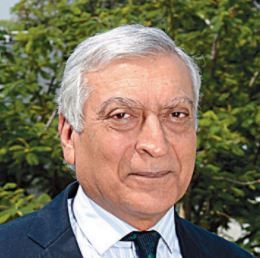

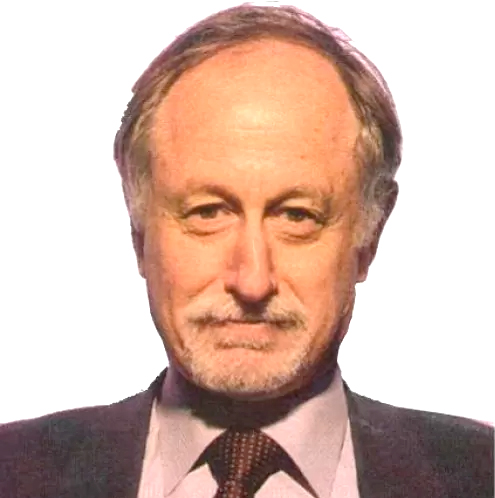
Fair Observer’s Chief Strategy Officer Peter Isackson, former Foreign Secretary of India Kanwal Sibal and Assistant Editor Luna Rovira discuss the landmark January 27 trade agreement between India and the European Union. Sibal frames it in striking terms, calling it the “mother of all deals” because of the scale involved: India’s 1.4 billion-strong market linking with the EU’s 27-nation bloc, whose economy rivals that of the United States.
India is already the world’s fourth-largest economy and is projected to become the third within a few years. Europe, meanwhile, remains a high-consumption, technologically advanced export power but faces demographic decline and slow growth. Sibal sees the agreement as more than commercial; once economic linkages deepen, political cooperation on international issues becomes easier. Trade, investment and technology transfer create strategic ballast.
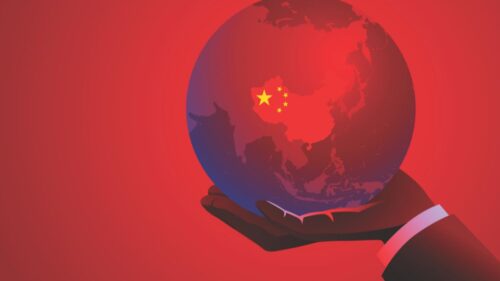
The deal also reflects Europe’s recalibration away from China. Sibal argues that Beijing’s “excessive manufacturing capacities” and dominance in rare earths, renewables and key industrial processes have generated structural imbalances. Europe seeks resilient supply chains and alternatives to overdependence. In this context, he describes India as “a very attractive partner,” citing democratic governance, market openness and greater predictability compared to China.
Trump, tariffs and strategic diversification
US President Donald Trump serves as the catalyst here. The US imposed 15% tariffs on Europe while extracting major energy purchase and investment commitments. This has shaken European confidence in the transatlantic relationship.
Sibal argues that Trump has “humiliated Europe,” not only through trade pressure but through the broader disruption of NATO structures and Ukraine diplomacy. Isackson probes whether Europe’s long-standing subordinate alignment with Washington has reached a breaking point. Sibal identifies that India and Europe now seek to “expand [their] options” and reduce exposure to American unpredictability.
For India, the calculus is similar. It faces some of the highest US tariffs, and the future direction of American trade policy remains uncertain. The India–EU agreement thus reflects mutual hedging. It is an attempt to widen strategic autonomy in an era of volatile American leadership.
Europe, Ukraine and the question of sovereignty
The discussion broadens to Europe’s geopolitical standing, especially in the Ukraine war. Sibal observes that both Trump and Russian President Vladimir Putin have sidelined Europe in negotiations. For him, this exclusion signals that Washington does not assign Europe decisive weight in matters of continental security.
He also argues that Europe weakened its own credibility. Admissions by former French President François Hollande and former German Chancellor Angela Merkel that the Minsk agreements served as temporary arrangements undermined trust in Moscow. Meanwhile, Baltic states and Poland exert disproportionate influence within EU consensus politics, amplifying a moralized anti-Russian narrative.
Isackson raises the internal fragmentation of Europe itself: weak parliamentary authority at the EU level, rising populist parties such as Germany’s Alternative for Germany, and declining public trust in national governments. Sibal agrees that the Belgian capital of Brussels has accumulated authority in areas that blur the boundaries of member-state sovereignty, though he cautions against dismissing Europe as strategically irrelevant. If Washington and Brussels coordinate effectively, Europe could still shape outcomes. But at present, he sees a continent struggling to define a coherent geopolitical voice.
Regulation, reform and economic complementarity
On the mechanics of the deal, Sibal pushes back against concerns about India’s bureaucratic readiness. He believes Europe’s regulatory ecosystem poses a greater challenge. The EU’s strict health, digital and environmental standards — including the Carbon Border Adjustment Mechanism — may limit practical market access even after tariff reductions.
Agriculture, notably contentious in the agreement between the EU and the Southern Common Market trade bloc, is excluded from the India deal, reducing the likelihood of domestic backlash. The deal also includes a mobility framework for skilled workers, which Sibal distinguishes from immigration.
He stresses economic complementarity. Indian exports in textiles, leather, gems and jewelry could benefit significantly as duties fall to zero. Europe supplies advanced industrial goods and technology. India, meanwhile, is consciously reducing protectionism, having concluded or pursued agreements with Australia, the United Arab Emirates, the United Kingdom and others. Integration into global supply chains is now a strategic priority, not an afterthought.
Russia, sanctions and India’s strategic balance
The final segment addresses India’s continued purchase of Russian oil and its role within BRICS. Sibal insists India has violated no international law. Purchases were made at discounted price caps set by the US, and Indian refiners operated within sanction parameters. Recent US tariff penalties have already reduced Indian offtake.
European leaders have voiced concern, and some Indian firms have faced EU sanctions. Still, Sibal rejects accusations of hypocrisy as “ridiculous,” especially given Europe’s own substantial energy purchases from Russia in the early years of the war.
India, he emphasizes, will not sever ties with Moscow or its BRICS partners. Rather, it is a moderating force within BRICS — a country that prevents the grouping from hardening into a purely anti-Western bloc. In his formulation, India’s presence serves Western interests by keeping channels open between democratic and authoritarian systems. A multipolar world, in his view, should not be anti-Western but more balanced, giving emerging powers a greater voice in global governance.
[Lee Thompson-Kolar edited this piece.]
The views expressed in this article/video are the author’s own and do not necessarily reflect Fair Observer’s editorial policy.


















Comment