



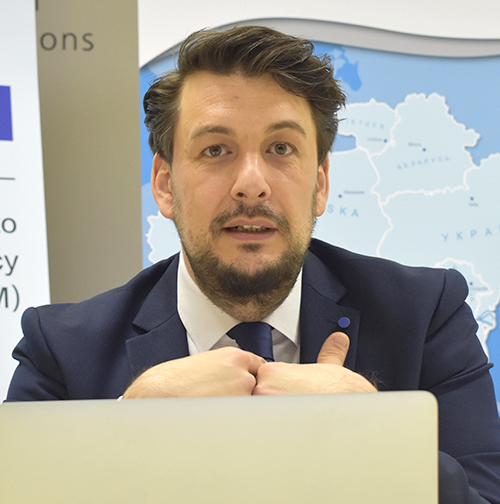

Fair Observer’s Video Producer Rohan Khattar Singh speaks with Sebastian Schäffer, Director of the Institute for the Danube Region and Central Europe, about Ukraine’s ambitious aircraft plans and the political turbulence unfolding in its capital of Kyiv. Their discussion explores two major stories moving in parallel: Ukraine’s letters of intent for hundreds of advanced European fighter jets, and a corruption scandal touching senior figures close to Ukrainian President Volodymyr Zelenskyy. Together, these developments illuminate the challenges and contradictions of Ukraine’s wartime decision-making and what they mean for Europe’s security future.
Ukraine’s Rafale deal
Khattar Singh opens the conversation with Ukraine’s headline-grabbing announcement: a letter of intent (LOI) to acquire 100 Dassault Rafale fighter jets from France. Schäffer clarifies the nature of the agreement, noting that “it’s an LOI, it’s a letter of intent…there is an intention of purchasing 100 Rafale jets,” but no firm contract yet. Even so, he argues that political symbolism matters. Three years into Russia’s full-scale invasion, Ukraine is signaling a shift from emergency survival to long-term force planning.
The French jets represent a generational transition away from the Soviet-designed aircraft Ukraine relied on for decades. They also situate Ukraine squarely within Western defense networks. While Schäffer acknowledges that he is not an expert on military details, he underscores that Rafales are heavier, multi-role strike aircraft — very different from the Soviet platforms Ukraine is retiring.
Even in draft form, the LOI sets the stage for a decade-long strategic realignment. It also hints at deeper European integration, a theme Schäffer considers essential for the continent’s future security posture.
Why is Ukraine buying jets now?
If these aircraft will only arrive years from now, Khattar Singh asks, why undertake such commitments in the middle of a war? Schäffer argues that Ukraine is preparing for the day a ceasefire silences the gunfire.
Any such agreement may involve territorial concessions, which in turn makes military deterrence even more crucial. Ukraine’s air force has been severely depleted since February 2022, and rebuilding it will take time. Pilot training cycles alone stretch far beyond the timelines of battlefield need, as the F-16 jet rollout already demonstrated.
Khattar Singh frames this moment as a turning point: Ukraine is no longer simply replacing losses but reinventing its air force. Whether the future brings Rafales, Saab JAS 39 Gripen jets or a mix of Western aircraft, Ukraine is signaling that it intends never again to be dependent on Russian military systems.
Who will pay for Ukraine’s jets?
Khattar Singh then raises the uncomfortable question: Ukraine cannot afford these jets, so who will?
Schäffer calls this the “billion-dollar question.” Ukraine is spending a massive share of its GDP simply to survive the war. France and Sweden, the potential suppliers, face their own fiscal constraints. Without external financing, these deals cannot materialize.
One solution under active debate is the use of frozen Russian assets held in Europe. This discussion resurfaces repeatedly, though no consensus has yet emerged. Alternatively, the European Union could pursue a joint financing framework — an approach Schäffer believes would strengthen European defense cooperation more broadly.
For now, the LOIs remain political signals: France and Sweden betting on Ukraine’s future resilience, and Ukraine placing long-term trust in European security structures. But without a viable funding mechanism, the plans cannot advance from intention to procurement.
Corruption in Ukraine
The conversation closes with arguably the most politically explosive development: a major corruption scandal inside Ukraine’s government. The case reportedly involves tens of millions of dollars and senior officials in strategically vital ministries. Schäffer describes it bluntly: “This is not a minor scandal. This is a major corruption case… in a strategically… vital sector.”
The scandal’s timing causes extreme damage. As Ukraine seeks billions in military support, corruption revelations offer ammunition to skeptics in Europe and the United States. They also feed Kremlin narratives portraying Ukraine as illegitimate or chaotic.
Yet Schäffer insists the scandal contains an overlooked positive: Ukraine’s anti-corruption bodies uncovered it despite wartime censorship, martial law and intense pressure. This demonstrates that the country’s democratic oversight institutions still function. In his view, that fact matters more than the scandal’s political fallout.
However, populist leaders across Europe will likely weaponize the case to argue against continued aid. The longer the war lasts, the more potent such narratives may become. Ukraine’s choices today — signing ambitious aircraft LOIs, exposing internal wrongdoing and navigating financial uncertainty — will shape not only Ukraine’s security but Europe’s geopolitical landscape for years to come.
[Lee Thompson-Kolar edited this piece.]
The views expressed in this article/video are the author’s own and do not necessarily reflect Fair Observer’s editorial policy.





























Comment