



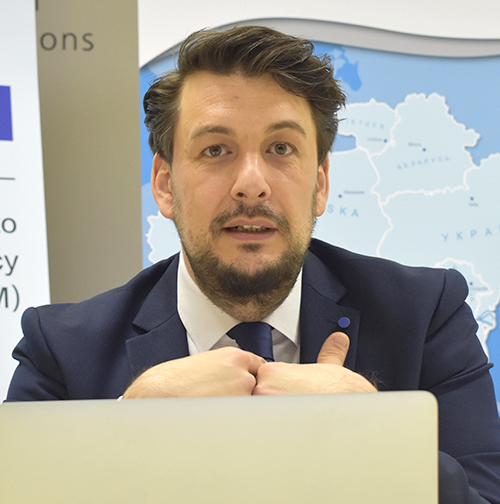
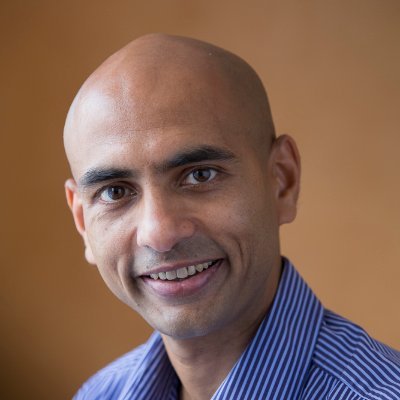
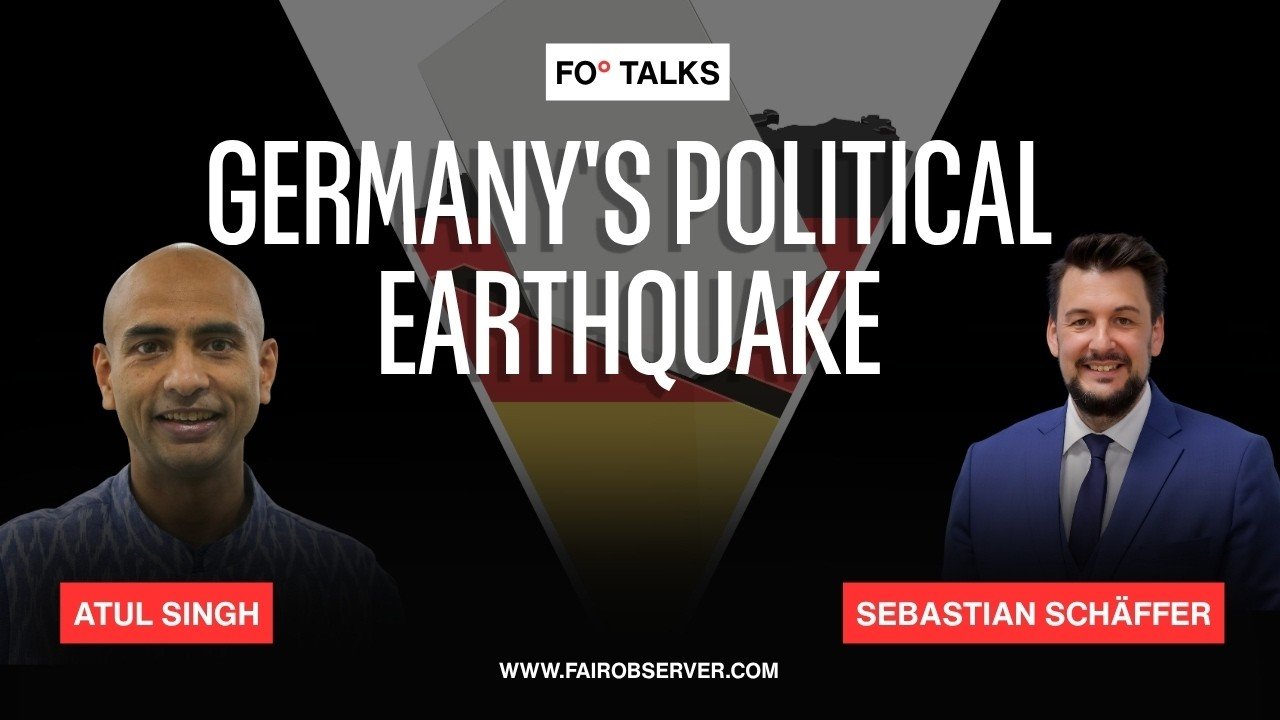
Fair Observer Founder, CEO & Editor-in-Chief Atul Singh speaks with Sebastian Schäffer, the Managing Director at the Institute for the Danube Region and Central Europe, shortly after his return from Ukraine. Schäffer offers, in Singh’s words, a “calm and considered view” of the war with Russia, drawing from his on-the-ground experiences. This conversation explores daily life under conflict, Ukraine’s push for European integration, the future of NATO and European security, risks to European unity and Schäffer’s vision of a just peace.
Life under constant threat
Schäffer states that if his trip had been a travel blog, it would bear the headline, “Playing Russian Roulette and the Piano in the Parliament,” referencing the danger of drone and missile attacks and a memorable anecdote from Ukraine’s legislature. He describes multiple daily air raid alarms and the personal calculus of whether to seek shelter, which varies depending on proximity to the front. Tools like Telegram updates and the Kyiv Digital app help Ukrainians decide how to respond.
Attacks have surged in recent weeks. Schäffer attributes this to Russian President Vladimir Putin’s determination to subjugate Ukraine — something he believes will not succeed. Singh challenges his optimism, citing desertions, economic collapse and waning Western support. Schäffer, however, maintains his view, stressing the value of seeing the situation firsthand.
Ukraine’s path to the EU
Schäffer strongly supports Ukraine’s membership bid to the European Union, arguing that the will to join extends from leadership to the general population. His “piano” anecdote — about reforms to prevent proxy voting in parliament — illustrates Ukraine’s commitment to governance reforms. He notes Ukraine’s rapid adoption of EU regulations and insists the country is ready “on paper,” but warns that rejection by the EU would endanger the entire European integration project.
NATO, defense spending and security architecture
Schäffer is equally committed to Ukraine joining NATO, calling it the only way to secure its sovereignty. However, NATO could collapse if the United States refuses to act on a future Article 5 breach — that is, if the US does not respond to attacks on fellow NATO countries.
Singh brings up a critique from Washington: that Europeans are soft and taking advantage of American defense. In response, Schäffer clarifies that not all European countries underinvest in defense. The two speakers mention exceptions like Poland, Greece and the Baltic states, while acknowledging Germany, Spain and Italy’s reliance on US protection. Schäffer supports calls for greater European defense spending and coordination, envisioning a stronger security architecture even without a consolidated European army. His concern is whether Europe can act quickly enough to maintain unity and deter threats.
Risks to European unity
Schäffer identifies divisions over the Russian threat as a key vulnerability. Hungary, Slovakia and internal political splits in Poland exemplify differing threat perceptions. Russian provocations, such as drone surveillance of German bases, meet unprepared responses due to regulatory and equipment gaps.
Domestic politics — like Germany’s far-right Alternative for Germany (AfD), former Parliament member Sahra Wagenknecht’s leftist party and instability in the Netherlands — further complicate consensus. Schäffer accuses the AfD of Kremlin ties, while describing Wagenknecht’s alignment as ideological. He frames defense spending as both an economic stimulus and a security necessity.
The “guns and butter” dilemma
Singh questions whether democracies can mobilize for war when significant portions of the population prefer, in analogous terms, “butter” over “guns.” Schäffer replies that opponents are far from forming a majority and insists Europe is already at war in all but name. If Ukraine falls, hostile forces could operate from its territory, bringing air raid alarms to major European cities. Supporting Ukraine now, he argues, is far cheaper than fighting a wider war later.
Conditions for a just peace
Schäffer lays out three non-negotiable conditions: restoring Ukraine’s 1991 borders, securing Russian compensation (possibly through frozen assets) and prosecuting war crimes. Singh deems these unrealistic, suggesting they amount to total war with Russia. Schäffer concedes they are aspirational but insists they represent justice. He envisions weakening Russia’s capacity and provoking internal change rather than direct all-out war.
Singh asks what cost he’d bear. Schäffer replies, “everything that it takes;” aid to Ukraine would go to prevent a larger, worse conflict.
Reconstruction and economic support
Singh raises the subject of Ukraine’s economic collapse and fears of corruption. Schäffer insists that democracy is alive in Ukraine and that reconstruction is feasible with political will. He points to integrating Ukraine into the EU, opening markets and leveraging its innovative potential. His core message remains: The cost of Ukraine’s defeat would far exceed the cost of its support.
[Lee Thompson-Kolar edited this piece.]
The views expressed in this article/video are the author’s own and do not necessarily reflect Fair Observer’s editorial policy.














Comment