




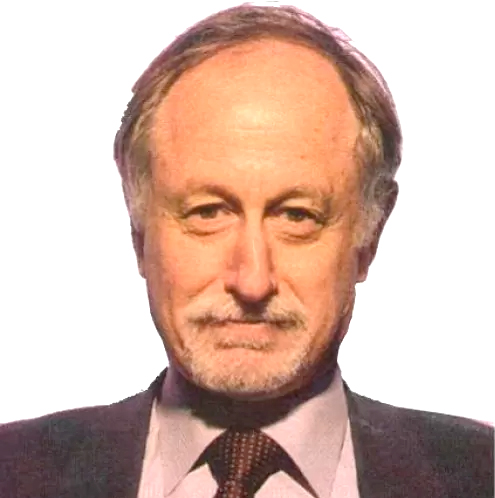
In this edition of FO° Talks, Fair Observer Chief Strategy Officer Peter Isackson speaks with Jean-Daniel Ruch, who served as Switzerland’s ambassador to Serbia, Turkey and Israel. Ruch was also a political advisor to the prosecutor of the International Criminal Tribunal for the former Yugoslavia. Isackson and Ruch delve into the evolving role of diplomacy in the 21st century.
Traditionally, the role of the diplomat has been to promote peace by keeping political leaders informed. Diplomats serve not only as their government’s voice but as its eyes and ears in world capitals. They speak with important leaders, assess the mood and motivations of their host country and relay their assessments back home. These assessments are vital for giving political leaders the options they need to best manage relations and avoid or end war.
In the era of modern warfare, however, things have changed. The West is involved in two ongoing wars in Ukraine and Gaza. In these conflicts, governments increasingly rely on intelligence services and military intelligence to provide assessments and recommend policy options. This trend has reached a tipping point that has now endowed intelligence services with greater influence in defining policy than diplomats. Political leaders have largely sidelined diplomats, relegating them to the role of mouthpieces who announce decisions they have already made in consultation with intelligence.
This is a dangerous trend. An intelligence analyst is not a substitute for a diplomat. Diplomats bring a unique and invaluable perspective to the table. They seek to comprehend not only their nation's interests but also the complex web of interests of all actors involved. Effective diplomats develop an acute understanding of the concept of indivisible security, which is to say, the security and interests of all of the actors involved. While intelligence and the military focus on security alone, diplomats have the task of bringing into the equation essential political, historical, cultural and religious aspects, making their role pivotal in shaping policy options.
The legacy of Cold War tensions
The issues in Israel have become a diplomat's nightmare. Diplomats have been crying for a two-state solution between Israel and Palestine, but nothing has come of their repeated attempts. Part of the issue with a two-state solution is that no major political capital has been willing to invest in finding and implementing a solution.
Russia is the other major problem that diplomats must now deal with. Ruch maintains that the war in Ukraine could potentially have been avoided, well before the Russian invasion. When Vladimir Putin became president in 2000, US President Bill Clinton was finishing up his second term. Putin met with Clinton and suggested the idea of Russia joining NATO. Clinton appeared favorable to the suggestion, but later that same day, when the two met again, Clinton explained that his people told him Russia's joining NATO was not possible.
Europeans have debated the question of pan-European security for decades. Moscow advocated but never implemented ot. French President Macron at various times before, and even after the Russian invasion he was favorable to a solution based on this principle, but to no effect.
The issues with Russia have always been present, and this is because the mentality of the Cold War never disappeared. The West perceived the Soviets as a threat to the West because they came with a totally different model of society. After the Cold War, the US and the Soviets needed to reach some kind of mutual understanding, if only to prevent a nuclear holocaust, which the world came close to experiencing during the 1962 Cuban Missile Crisis. The most important of these agreements was the ABM Treaty of 1972. George W. Bush scrapped this treaty in the early 2000s at the same time he was launching new wars in the Middle East.
Since those events, mistrust has become a dominant factor in the relationship between Washington and Moscow.
[Jean-Daniel Ruch's latest book, Crimes, Hate, Tremors: From One Cold War to the Other, in Pursuit of Peace and Justice, is now available on Amazon.]
[Liam Roman wrote the first draft of this piece.]
The views expressed in this article/video are the author’s own and do not necessarily reflect Fair Observer’s editorial policy.



























Comment