




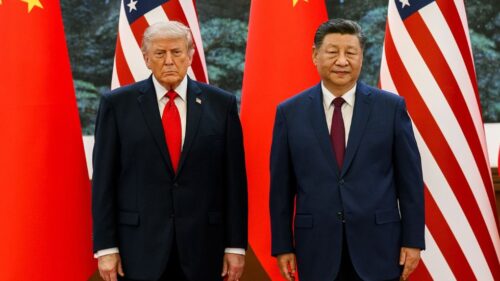
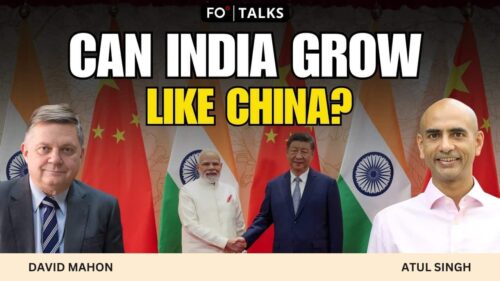
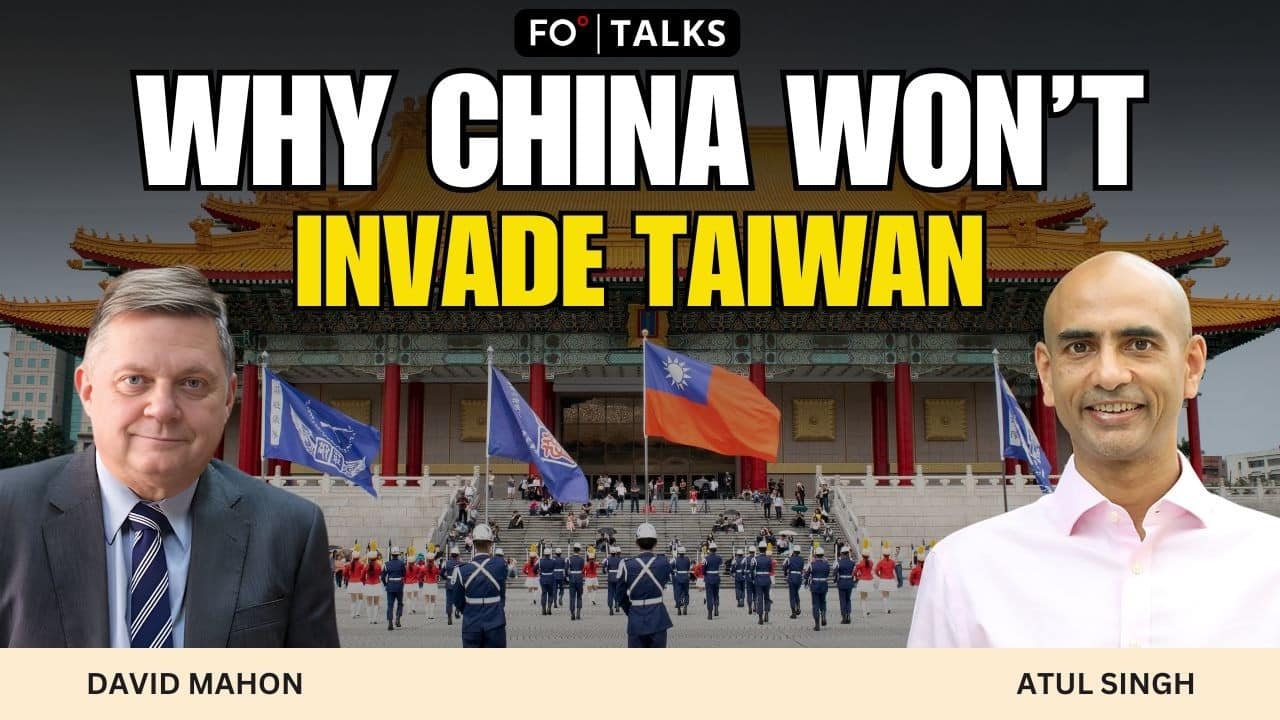
Editor-in-Chief Atul Singh and Beijing-based Kiwi investor David Mahon discuss the May 2026 summit between US President Donald Trump and Chinese President Xi Jinping. While the White House presents the meeting as a triumph of transactional deal-making, Mahon believes that the summit’s real significance lies in symbolism rather than substance. The discussion ranges from Taiwan and the unraveling of “Chimerica” to the decline of American primacy and China’s evolving role in the global order.
A summit built on perception
Singh opens by examining the contrasting interpretations of the summit emerging from Washington and Beijing. The White House fact sheet portrays the meeting as a diplomatic and economic success, highlighting agreements on Iran, North Korea, agricultural exports and Boeing aircraft sales. Yet Mahon argues that many of these announcements amount to aspirational talking points rather than binding commitments.
Mahon notes that China has long mastered the art of the memorandum of understanding, producing agreements that outline broad principles without locking either side into concrete obligations. He points to the market’s skeptical response to Trump’s Boeing claims, observing that Boeing shares actually fell after the announcement. Agricultural trade also reflects deeper structural shifts. China’s move toward Brazilian soybeans seems unlikely to reverse because Brazilian products are cheaper and often of higher quality.
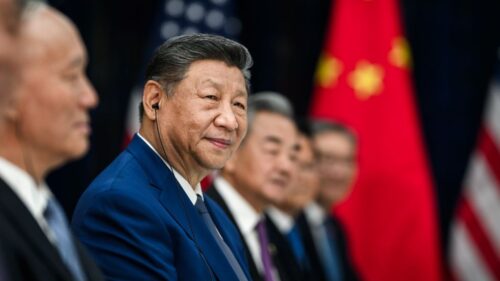
More importantly, Mahon says the summit marked a psychological shift in the relationship between the two countries. “They met as equals,” he states, arguing that China no longer approaches the United States as the junior partner in the relationship. That change in perception, rather than the individual deals announced in Beijing, may prove the summit’s lasting significance.
Taiwan and strategic weakness
The conversation then turns to Taiwan, which Singh describes as one of the central fault lines in US–China relations. In Mahon’s view, Taiwan’s importance to Washington stems less from democracy than from its usefulness as leverage against Beijing. He traces the issue back to US President Richard Nixon’s 1972 opening to China and the One China framework that followed.
Mahon dismisses the increasingly common prediction that China plans to invade Taiwan in 2027. He states that Beijing understands the enormous military, economic and political costs such an operation would entail. Taiwan’s geography alone would make an invasion extraordinarily difficult, while any prolonged conflict would threaten China’s access to global trade and finance.
Instead, Mahon interprets China’s military posture as largely reactive. From Beijing’s perspective, the country is surrounded by American alliances and military deployments stretching from Japan to the Philippines. Chinese military exercises and missile development are therefore viewed internally as defensive responses to containment rather than preparations for expansion.
Mahon also suggests that the recent US-led war in Iran has altered Beijing’s assessment of American power. He argues that Xi sees Washington as strategically weakened and increasingly reluctant to sustain major overseas confrontations. Trump’s response to Taiwan during the summit reinforced that perception. “We’re not really going to mess with this,” Mahon paraphrases the president as signaling, a statement he views as highly significant.
The myth of the “China shock”
Singh next raises the “China shock” thesis, the argument that Chinese manufacturing devastated the American working class by hollowing out industrial jobs across the Midwest. Mahon strongly rejects this interpretation.
He believes that American corporations voluntarily moved production to China in search of lower costs and higher profits. According to Mahon, technology, automation and agreements like NAFTA played a far larger role in destroying industrial employment than Chinese trade alone. “It’s a falsehood,” he says of the popular narrative blaming China for America’s industrial decline.
Mahon points to the enormous success American companies enjoyed in the Chinese market over the past three decades. Firms such as General Motors, Coca-Cola and Johnson & Johnson benefited enormously from China’s economic rise, while shareholders profited from lower production costs and expanding consumer markets.
For Mahon, the deeper problem lies within the American economic system itself. The US built an unsustainable model based on debt, deficits and consumption beyond its means. China has become a convenient scapegoat for structural weaknesses that originate domestically.
Asia’s return and the future of the global order
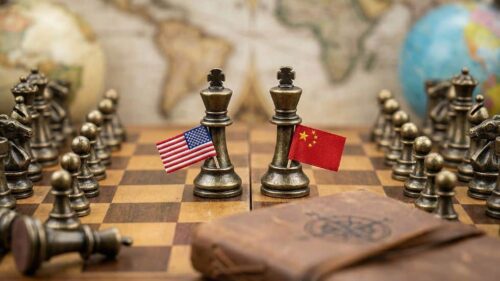
Finally, Singh and Mahon broaden into a debate about global primacy and the future international system. Mahon rejects popular comparisons to the Cold War or the “Thucydides Trap,” as he feels such analogies oversimplify a far more complex transformation. Instead, he sees the current moment as part of Asia’s historical reemergence after centuries of Western dominance.
“Asia is back,” Mahon says. He claims that China has already displaced the US as the central economic force across much of the region. While American military bases remain, he believes Washington’s broader influence is steadily receding.
Simultaneously, Mahon insists that China is not attempting to overthrow the post-1945 international order. Despite criticism over policies in Xinjiang, Tibet and elsewhere, he says that Beijing largely seeks to preserve and reform existing institutions rather than dismantle them. China benefits from stable trade systems, functioning global rules and multilateral organizations like the United Nations and the World Trade Organization.
Mahon concludes that the Beijing summit itself will likely fade from memory. Yet the larger tensions between the US and China will continue shaping global politics for years to come. He predicts a prolonged period of instability in which both powers compete economically and technologically while struggling to adapt to a more multipolar world.
[Lee Thompson-Kolar edited this piece.]
The views expressed in this article/video are the author’s own and do not necessarily reflect Fair Observer’s editorial policy.
























Comment