




[Editor’s note: This video was recorded on Monday, February 23, 5 days before the February 28 US–Israeli attack on Iran.]
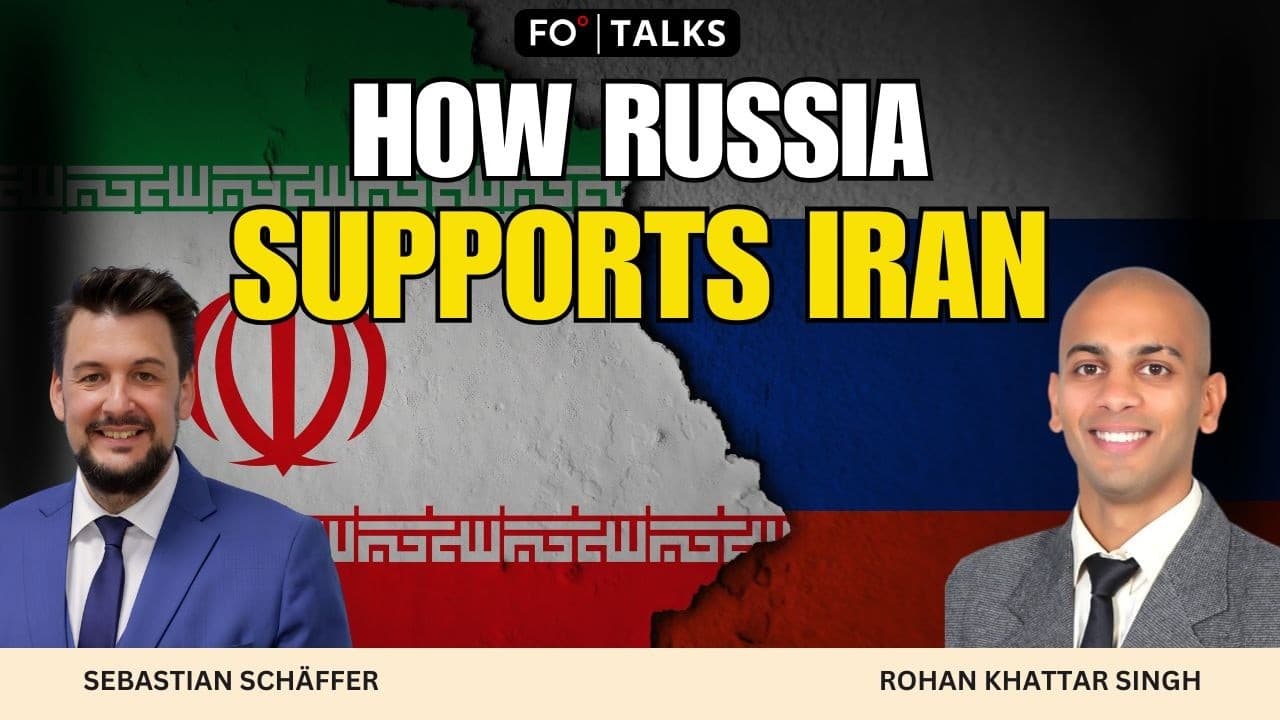
Fair Observer’s Video Producer Rohan Khattar Singh speaks with Stephen Zunes, professor of politics and director of Middle Eastern Studies at the University of San Francisco. As the United States positions nearly 600 fighter jets, two carrier strike groups and dozens of warships around Iran, the conversation explores whether Washington is preparing for war.
Khattar Singh asks the central question: Can the US carry out a limited strike on Iran, or would escalation be inevitable? Zunes analyzes the legality of military action, the internal dynamics of Iranian politics and the wider geopolitical risks if conflict spreads across the Middle East.
The limits of “limited strikes”
US President Donald Trump suggested that Washington could launch “limited strikes” against Iran. Zunes argues that such action would violate international law and potentially the US Constitution if undertaken without congressional authorization.
More importantly, he doubts the premise that any conflict could remain contained. Iran possesses multiple ways to retaliate, including attacks on US bases across the region or disruptions to maritime traffic. The Strait of Hormuz, through which roughly a fifth of global oil flows, is particularly vulnerable.
Zunes warns that history rarely supports the idea of neatly bounded conflicts. As he puts it, even if Washington intends a small operation, there is a very high chance of it “getting totally out of hand.” Regional militias aligned with Iran could also target American forces, expanding the battlefield beyond the initial strike.
The massive US military buildup itself signals to Zunes that Washington may be preparing for more than coercive diplomacy.
Maximum pressure without diplomacy
Khattar Singh highlights the contradiction in US policy: Trump withdrew from the 2015 nuclear agreement in 2018 but now demands new concessions from Iran’s capital of Tehran. Zunes argues that the “maximum pressure” campaign leaves Iran with little incentive to negotiate.
Effective diplomacy, he says, requires a credible exchange. Sanctions relief was central to the earlier agreement, but Washington has indicated that sanctions might remain even if Iran complied with new demands.
Zunes also challenges the idea that nuclear proliferation or democracy promotion is the primary US concern. He believes the deeper issue is geopolitical alignment. Iran remains one of the few regional powers that refuses to accept US strategic dominance in the Middle East.
This broader contest for influence, he argues, shapes Washington’s confrontational approach.
Nationalism and the rally effect
Could military pressure weaken the Iranian regime? Zunes believes the opposite is more likely.
Iran’s political leadership is unpopular among many citizens, and the country has experienced waves of protest in recent years. Yet Iranian society also possesses a strong sense of national identity rooted in thousands of years of history.
Many Iranians who oppose the regime still reject foreign military intervention. In such circumstances, external attacks often strengthen rather than weaken governments. “People tend to rally around the flag if they’re being attacked,” Zunes explains.
He compares the situation to NATO’s bombing of Serbia in the 1990s, which was opposed by the student leaders in the anti-Milosevic struggle because it strengthened Serbian nationalism. Though the pro-democracy movement eventually won, they recognized that it set back their efforts. For Zunes, this dynamic undermines the idea that bombing Iran could trigger regime change.
Internal weakness, structural resilience
Khattar Singh asks whether Iran’s government is now at its weakest point after years of economic pressure and protest. Zunes acknowledges that the regime faces declining legitimacy and widespread dissatisfaction.
Recent demonstrations have drawn support from social groups traditionally aligned with the state, including merchants in Iran’s historic bazaars. This broader coalition reflects deep frustration with corruption, economic mismanagement and authoritarian rule.
Yet Zunes cautions that regime change is far from imminent. Iran’s political system is complex and oligarchical, not centered on a single ruler. Power is distributed among clerical authorities, the Islamic Revolutionary Guard Corps, elected institutions and competing factions.
That structure, he argues, makes the system harder to topple than more centralized dictatorships.
Nuclear logic and global consequences
Khattar Singh and Zunes conclude by examining Iran’s nuclear program and the reactions of other global powers.
Zunes suggests that military pressure could actually accelerate Tehran’s pursuit of nuclear weapons. Observing the contrasting fates of Iraq and North Korea, Iranian leaders may conclude that nuclear deterrence offers the only reliable protection against invasion.
At the regional level, Gulf Arab states and Turkey appear wary of war. Although they rival Iran strategically, they fear the economic and security consequences of a wider conflict.
China and Russia, meanwhile, are unlikely to intervene militarily. However, Zunes argues that a unilateral US attack would reinforce their belief that Washington disregards international law. “It will just underscore their concern that the United States is a rogue superpower,” he says.
For Zunes, the ultimate danger is precedent. If major powers openly violate international norms, others may follow. In that scenario, a conflict with Iran would not remain a regional crisis but could reshape global geopolitics.
Ultimately, the US and Israel would launch a missile strike on Iran on February 28, triggering the 2026 Iran war.
[Lee Thompson-Kolar edited this piece.]
The views expressed in this article/video are the author’s own and do not necessarily reflect Fair Observer’s editorial policy.



































Comment