









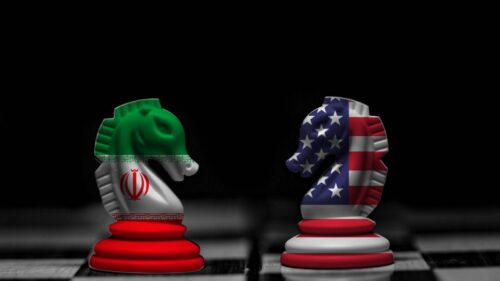
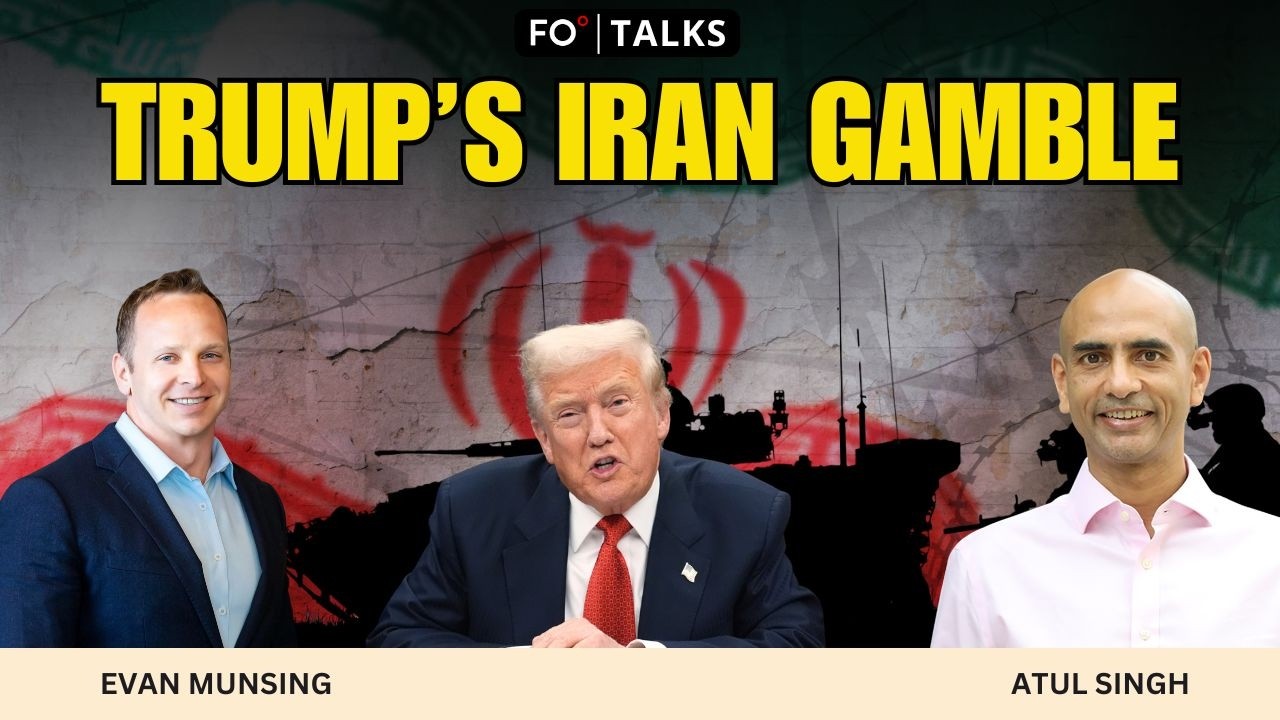
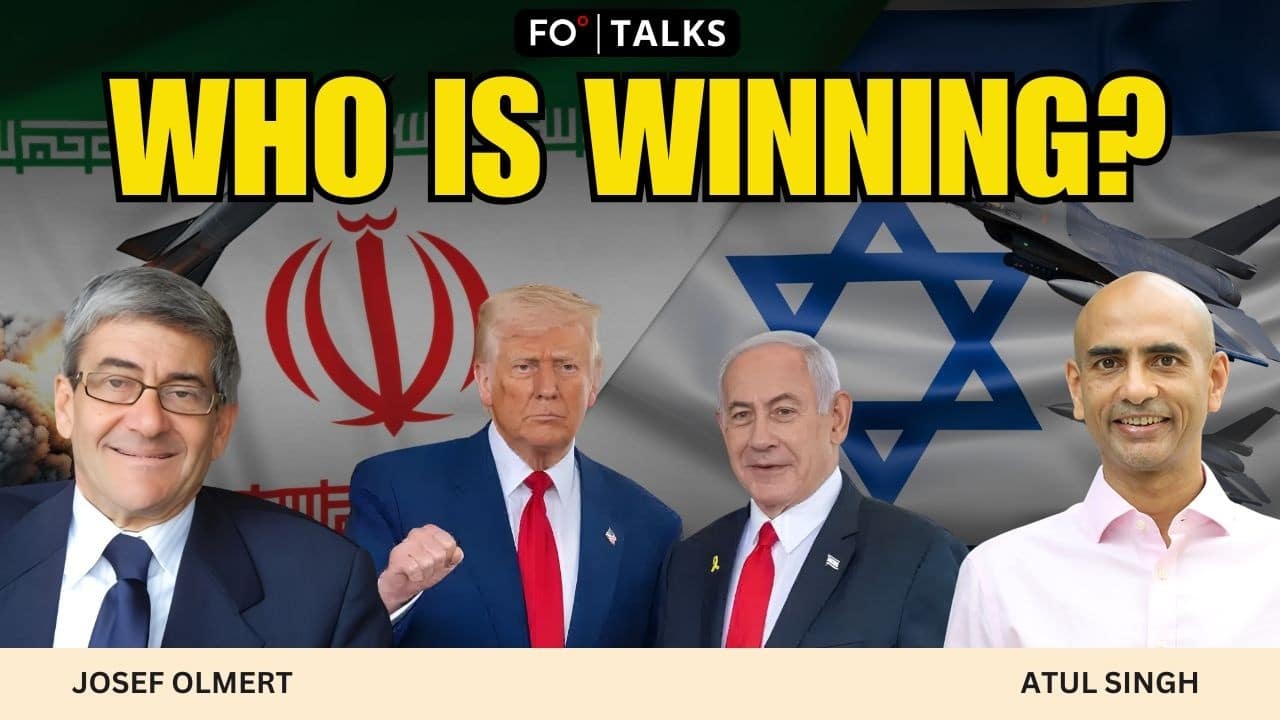
Editor-in-Chief Atul Singh leads an FO Live editorial workshop on the escalating US–Israel war on Iran. The war is not an isolated crisis, but a conflict preceded by a long history. Joined by Katilyn Diana, Cheyenne Torres, Casey Herrman, Zania Morgan and Lucy Golish, Atul argues that the confrontation cannot be understood without revisiting the 1948 creation of Israel, the 1953 CIA-backed coup in Iran and the 1979 Iranian Revolution. Atul moves between history, military strategy and economics, asking not only how the war began but also what kind of regional and global disorder it may yet unleash.
The three dates that shape the conflict
Atul begins by identifying three decisive turning points: 1948, 1953 and 1979. In 1948, the UN established the state of Israel. It immediately had to fight the invading Arab states. For Israelis, that moment remains inseparable from the trauma of the Holocaust and the fear that the state could be destroyed at birth. Palestinians remember this moment as the Nakba, the mass displacement that accompanied Israel’s creation. Atul suggests these two memories still shape how the region understands security and injustice.
He then turns to 1953, when Iranian Prime Minister Mohammad Mossadegh faced an overthrow after nationalizing oil. Atul presents the coup as a foundational rupture in modern Iranian political memory. Britain and the US, he argues, removed a nationalist leader and restored a monarchy that ruled through repression. He says that the intervention weakened secular opposition and unintentionally strengthened the clerical networks that later filled the vacuum. By 1979, those clerical forces were organized enough to take power during the Iranian Revolution and build a theocratic state deeply suspicious of both Washington and domestic dissent.
Revolution, paranoia and the proxy strategy
The discussion portrays the Islamic Republic as a regime shaped by insecurity from the start. Atul explains that after the revolution, the new leadership distrusted the regular military and built Iran’s Islamic Revolutionary Guard Corps as a parallel force. The Iran–Iraq War of 1980–1988 then hardened the regime further, reinforcing a political culture built around sacrifice, siege and martyrdom.
From that position, Iran gradually extended influence through allied armed groups across the region. Hezbollah, Hamas and later the Houthis became central as instruments of an Iranian strategy designed to offset conventional weakness. Atul argues that the regime sought legitimacy by presenting itself as the one power willing to resist both Israel and the US, while many Arab governments moved toward accommodation.
Simultaneously, he makes clear that opposition to Western power did not make the Iranian system admirable. He repeatedly stresses its repression of women, students and dissidents, as well as its economic failures and political brutality.
A decisive moment for Israel and the US
Atul argues that Israel and the US believe Iran is now weaker than it has been in years. From the Israeli perspective, the danger is existential. A small state with limited strategic depth cannot easily tolerate the possibility of a hostile regional power gaining stronger missile and nuclear capabilities. As Atul puts it, Israeli Prime Minister Benjamin Netanyahu has built his career around the doctrine that “peace through strength is the way forward.” In that framework, confrontation appears necessary.
Atul also highlights Israel’s confidence in its intelligence reach and military effectiveness. Atul describes a country that believes it has penetrated Iran deeply and can strike key personnel and infrastructure with precision. Yet he does not present victory as automatic.
Casey raises the possibility of Iran’s “Balkanization.” Atul explores the idea, noting that some American and Israeli thinkers see advantage in a looser, weaker or fragmented Iran. But he also warns that this could produce unintended consequences, including nationalist backlash, prolonged instability and deeper hostility toward outside powers.
Uncertainty inside Iran
Iranian society is fractured and complex. Atul notes widespread discontent with the regime, especially among younger and educated Iranians. Protest movements, secular aspirations and anger at repression all suggest that the Islamic Republic has lost legitimacy among many citizens. Yet he cautions against assuming that foreign bombing will automatically translate into regime collapse.
External attack can strengthen nationalism even where a government is unpopular. Atul remarks that “nationalism is the last refuge of a scoundrel,” but he also considers it a real political force. The killing of senior leaders, especially the Ayatollah, may not weaken the regime in the way outsiders expect. Martyrdom carries powerful weight in Shia political culture, and the failing oppressive late ruler has now become a symbol of resistance after being killed by a foreign enemy.
Kaitlyn and others push the conversation toward possible futures, including a democratic Iran. Atul sees some hope there, especially in a decentralized federal model that protects minorities and devolves power. But he also emphasizes that opposition groups remain divided among monarchists, republicans, federalists and competing ethnic movements. That makes any clean transition unlikely.
The war’s economic danger
When Zania asks about stagflation, Atul shifts from battlefield dynamics to global markets. He warns that a prolonged conflict could disrupt shipping through the Strait of Hormuz, drive up energy prices and trigger a supply shock across the world economy. Oil above $90 per barrel is not just a regional problem; it hits transport, industry, fertilizers, food production and financial confidence all at once.
The risk is not merely higher inflation but the toxic combination of inflation and stagnation that defined the 1970s oil shocks. The Gulf’s importance extends beyond crude exports. Capital from Arab states is deeply embedded in global finance, technology, property and sport. If war erodes confidence, both trade and investment could suffer.
This discussion ends with a broader warning: This is not only a Middle Eastern war. It may become a global economic and geopolitical turning point whose consequences reach far beyond the region.
[Lee Thompson-Kolar edited this piece.]
The views expressed in this article/video are the author’s own and do not necessarily reflect Fair Observer’s editorial policy.

























Comment