


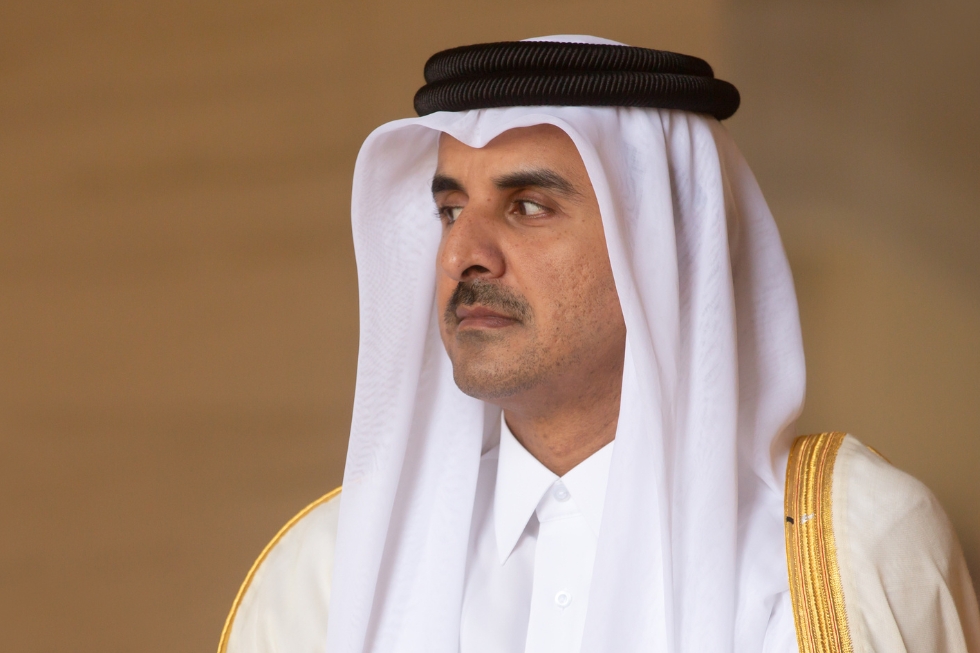



Sudan’s civil war is not a simple clash between rival generals. It is the continuation of an Islamist project that began in 1989, when the Muslim Brotherhood seized power through a military coup and turned Sudan into its first openly ruled “model” state. For more than three decades, the Sudanese Islamic Movement embedded itself in every institution of power. After the 2019 revolution removed Sudanese President Omar al-Bashir, these networks adapted rather than disappeared. Today, they remain a central force sustaining the conflict.
Naming those networks is not a strategy, however. This war ends when a greater power — namely, the United States — squeezes their patrons. Washington should start with Qatar, the outside power most aligned with the Islamist current inside the Sudanese Armed Forces (SAF) and most exposed to American pressure.
The Brotherhood never left
Khalid Omer Yousif, former minister of cabinet affairs in Sudan’s civilian-led transitional government, has stated the stakes clearly: “The Muslim Brotherhood’s project in Sudan is not merely a domestic struggle for power. It is an Islamist project that strategically converges with Iran’s regional ambitions, reinforcing its efforts to expand its influence across the Red Sea and Africa.” His assessment is correct. The Brotherhood’s restoration of influence inside the SAF has reopened the door to Tehran that the 2019 revolution had begun to close.
We now see undeniable evidence of deep ties between SAF leadership under General Abdel Fattah al-Burhan and the Muslim Brotherhood. The US has designated the Sudanese Muslim Brotherhood and its armed wing, the Al-Baraa Bin Malik Brigade, as a Foreign Terrorist Organization. The State Department noted that this brigade has recruited and fielded over 20,000 fighters, many trained with Iranian Revolutionary Guard Corps assistance. It operates as a semi-autonomous but integrated components of SAF operations.
Public statements from senior SAF officers, including Lieutenant General Yasser al-Atta, confirm the presence of multiple Brotherhood battalions fighting alongside regular army units. The Brotherhood is not an ally of the army. It is an infiltrator that now holds significant influence over recruitment, financing and strategic decisions.
Why talks keep failing
This ideological infrastructure explains why purely political solutions have repeatedly failed. Where war itself is lucrative through gold, ports, land, weapons contracts and patronage, talks alone cannot succeed. Such wars end when external funding and arms flows are disrupted.
In proxy conflicts, the external donor with the better international reputation usually proves more susceptible to diplomatic and economic pressure. Blanket moral equivalency is not only analytically flawed. It is strategically counterproductive. It obscures accountability and delays the targeted action required to change behavior on the ground.
Both sides have committed atrocities. The Rapid Support Forces (RSF) have carried out systematic massacres, ethnic cleansing and sexual violence amounting to war crimes and crimes against humanity, particularly in the Darfur region and against non-Arab communities. These crimes must be condemned without qualification. We can condemn RSF brutality, however, without ignoring the parallel reality that the SAF has become the primary vehicle for the return of a US-designated terrorist organization and its Iranian partners.
The SAF receives support from multiple actors. Iran supplies critical drones, including the Mohajer-6 and Ababil, that have enabled precision strikes and territorial gains. Turkey provides Bayraktar TB2 and Akinci drones that deliver air superiority. Saudi Arabia offers financial and diplomatic backing. Egypt provides overt political and military coordination. Qatar functions as a key political, financial and discreet military enabler.
Start with Doha
Qatar stands out because it is the patron most aligned with the Islamist current now embedded in the SAF. Doha has given the Port Sudan authorities political cover, received Burhan repeatedly, and — according to reports — funded Chinese-made K-8 jets and facilitated weapons shipments transiting Doha to Port Sudan. European analysts have likewise described Doha as funding weaponry to the SAF while remaining highly receptive to the ascent of Islamists associated with the army. Atta, the SAF chief of staff and the officer most openly associated with Brotherhood battalions inside the army, is the relationship’s key node.
Combined with Qatar’s long record of sheltering and financing Brotherhood-linked networks, and its deep military relationship with nuclear-armed Pakistan — through which a $1.5 billion SAF weapons package has been negotiated — Doha is the most leverageable external actor sustaining the SAF’s Islamist core. Disrupting those flows, while also addressing Saudi support for the SAF and the United Arab Emirates’s backing of the RSF, is essential.
What Washington should do
US policy now reflects that urgency. Trump’s senior Africa envoy Massad Boulos has called on the UN Security Council to extend the existing Darfur arms embargo to cover all of Sudan and to “stop external financial and military support to the parties, such as drones and related technologies, from entering Sudan.” Russia and China have obstructed a broader embargo on the claim that it would undermine the SAF. That position aligns with the interests of those supplying weapons to the conflict. The obstruction creates an argument for targeted bilateral pressure on the most leverageable patrons, beginning with Qatar.
Turkey, Iran, Saudi Arabia and Egypt also play enabling roles. Targeted pressure on the most ideologically aligned patron, starting with Qatar, offers the clearest route to deescalation. Qatar’s value to the SAF is not only matériel, but also diplomatic insulation. Doha still occupies rooms that Abu Dhabi and even Riyadh cannot share with Islamist networks. Only when that cover is priced can civilian-led processes such as the Somoud Alliance’s three-track roadmap of humanitarian access, ceasefire and inclusive transition have space to succeed.
Sudan’s people have endured enough: more than 150,000 dead, millions displaced and famine threatening entire regions. Those with leverage in Gulf and Turkish capitals have a specific task. Follow the money. Identify the most leverageable patron. Cut the flows that have held Sudan hostage since 1989. The roadmap exists. The pressure points exist. What has been missing is the will to use them.
[Lee Thompson-Kolar edited this piece.]
The views expressed in this article are the author’s own and do not necessarily reflect Fair Observer’s editorial policy.
Qatar’s Man in Khartoum: How Yasser al-Atta Became Doha’s Most Useful General
Qatar’s backing of Sudan’s military, especially through Lieutenant General Yasser al-Atta, has entrenched Islamist militias — even those sanctioned by...
FO Live: How the Muslim Brotherhood Survives and Thrives Across the Middle East
In this episode of FO Live, Rohan Khattar Singh and regional experts examine the Muslim Brotherhood as a decentralized network...
FO Podcasts: The Muslim Brotherhood Explained — Origins, Ideology and Global Influence
In this episode of FO Podcasts, Atul Singh and Cynthia Farahat examine the Muslim Brotherhood’s origins, debating whether it evolved...
The US Sanctions Sudan’s Muslim Brotherhood
The US recently designated Sudan’s Muslim Brotherhood as a terrorist group amid ongoing conflict between the Sudanese Armed Forces and...
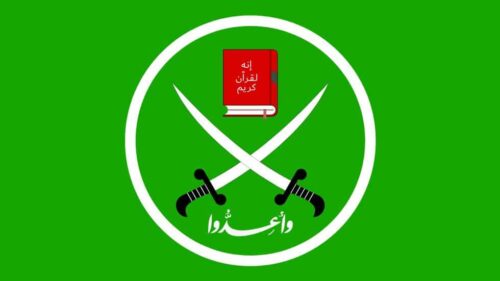
Fascistic Tendencies in the Muslim Brotherhood
Right from its beginnings in 1928, Egypt’s Muslim Brotherhood was inspired by fascism. Even today, its animating ideas, guiding principles,...
Support Fair Observer
We rely on your support for our independence, diversity and quality.
For more than 10 years, Fair Observer has been free, fair and independent. No billionaire owns us, no advertisers control us. We are a reader-supported nonprofit. Unlike many other publications, we keep our content free for readers regardless of where they live or whether they can afford to pay. We have no paywalls and no ads.
In the post-truth era of fake news, echo chambers and filter bubbles, we publish a plurality of perspectives from around the world. Anyone can publish with us, but everyone goes through a rigorous editorial process. So, you get fact-checked, well-reasoned content instead of noise.
We publish 3,000+ voices from 90+ countries. We also conduct education and training programs
on subjects ranging from digital media and journalism to writing and critical thinking. This
doesn’t come cheap. Servers, editors, trainers and web developers cost
money.
Please consider supporting us on a regular basis as a recurring donor or a
sustaining member.
Will you support FO’s journalism?
We rely on your support for our independence, diversity and quality.





Comment