




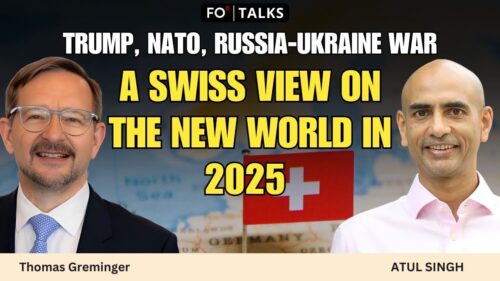
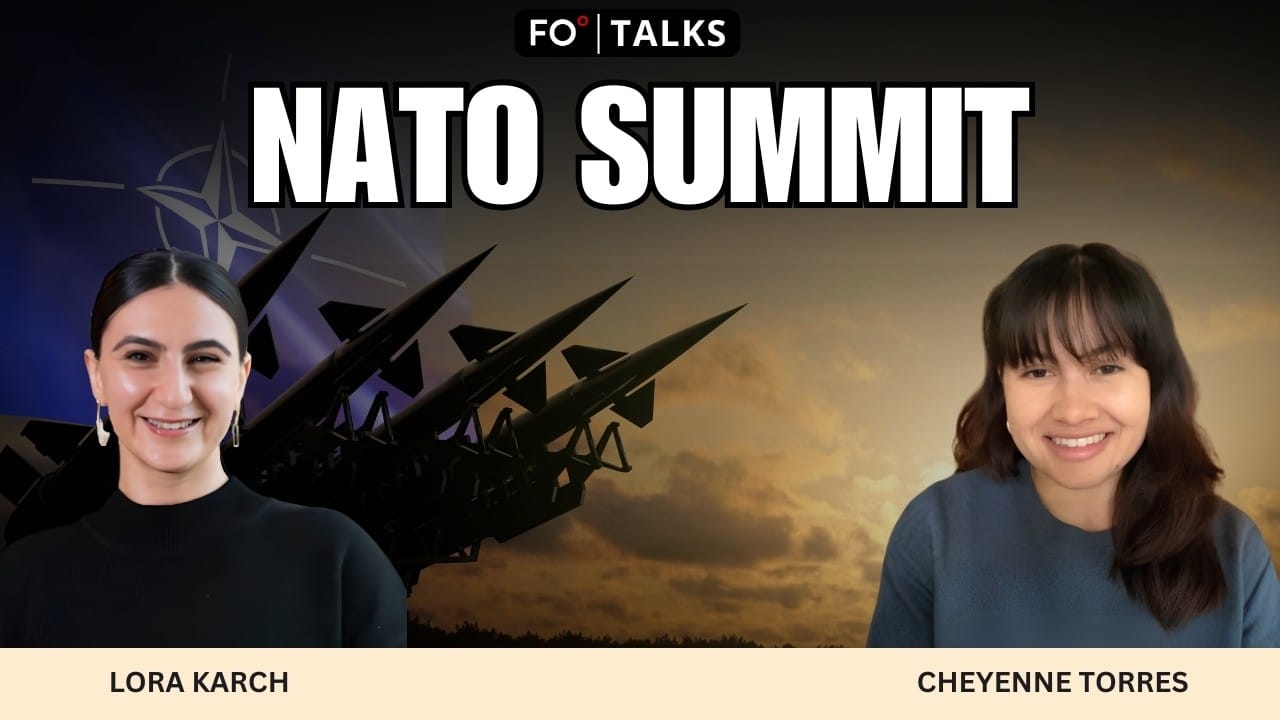
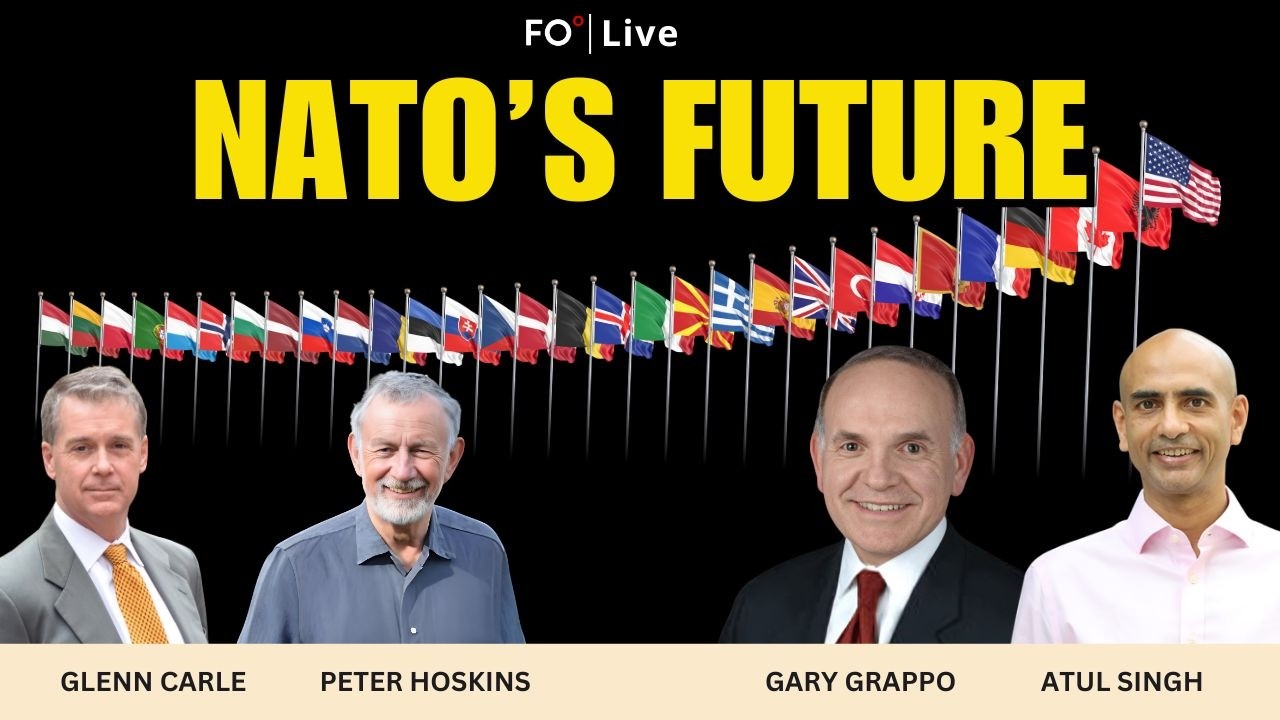
Fair Observer Founder, CEO & Editor-in-Chief Atul Singh and the Executive Director of the Geneva Centre for Security Policy, Thomas Greminger, discuss the recent NATO summit and its implications for Europe. Greminger credits NATO Secretary General Mark Rutte with containing US President Donald Trump’s volatility and ensuring the alliance “survived that summit.” However, he warns its medium-term future remains unpredictable under Trump.
At the summit, Europe pledged to spend 3.5% of GDP on defense and 1.5% on areas like cybersecurity and infrastructure, totaling 5%. Greminger sees political resolve to invest more, but doubts all NATO members can or will reach the target. He believes it is largely a concession to please Washington.
Meeting the 5% target could undermine social stability
Singh presses on where Europe will get its funds, given its aging populations, high debt and fragile welfare systems. Greminger predicts significant “crowding out” of spending on health, education, diplomacy and other needs. Such trade-offs could fuel populism on both ends of the political spectrum. He agrees that the political backlash could be substantial if social safety nets erode in pursuit of military targets.
Europe faces a security threat mix that stretches resources thin
Greminger outlines Europe’s security environment as a mix of conventional military risks, primarily from Russia, and hybrid threats like cyberattacks and disinformation. Transnational dangers such as terrorism, violent extremism and trafficking persist, while climate change emerges as a new factor. Politicians face the challenge of stretching limited resources across defense, national resilience and social cohesion.
Globalization’s uneven rewards are weakening social cohesion
Addressing Singh’s intelligence concerns about marginalized youth — both disenfranchised Muslim communities and alienated working-class whites — Greminger says these trends have been building for over a decade. He links them to dissatisfaction with globalization, where perceptions of unequal benefit outweigh objective gains. Left unresolved, this discontent could undermine social cohesion across Europe, including in Switzerland.
Strategic autonomy is rising but Europe’s defense industry lags
Though the current trends are not a formal doctrine, Greminger sees growing determination to reduce dependence on Washington’s “moods” and unpredictability. Europeans have made efforts to unify major players, like the EU three — France, Germany and Italy — and strengthen independent capabilities. He suggests Trump may ironically be remembered as a promoter of European strategic autonomy.
Europe’s defense sector is not yet able to meet its demand, meaning militaries will continue buying US arms in the short to medium term. If the Ukraine war drags on, Europe may reindustrialize its defense base; if the conflict ends on acceptable terms, spending could decline as other priorities reassert themselves.
Trade tensions could erode the transatlantic alliance
Reconciling the US–Europe security partnership with growing trade disputes remains a challenge. Greminger warns that consistently hostile US trade policies will have political repercussions for NATO. Europeans may accept some unfriendly policies to preserve the alliance, but there are limits. Washington should act with care to avoid alienating its partners.
[Lee Thompson-Kolar edited this piece.]
The views expressed in this article/video are the author’s own and do not necessarily reflect Fair Observer’s editorial policy.































Comment