



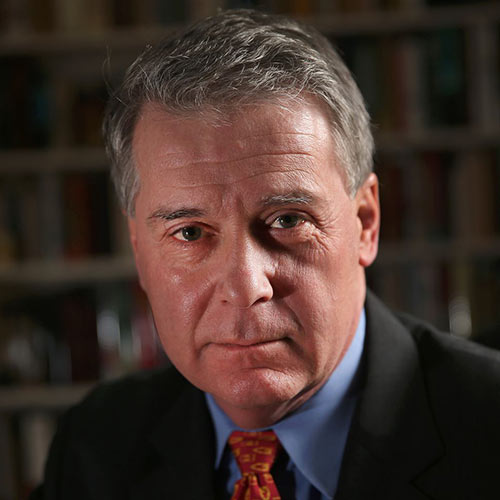
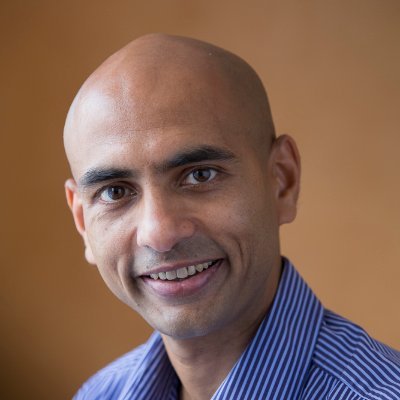
Fair Observer Founder, CEO & Editor-in-Chief Atul Singh and retired CIA Officer Glenn Carle open this section of their discussion with signs of American institutional decline: a muted presidential parade, unrest in Los Angeles and a growing perception that the United States now mirrors unstable developing nations. Atul laments the collapse of the principles that once defined America — rule of law, stable institutions and merit-based leadership. He warns that ideological extremism has replaced civic norms, with “totalitarians on the left and authoritarians on the right” dominating discourse and weakening the national center.
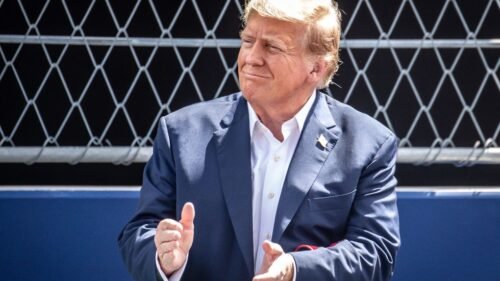
A focal point of this erosion is Harvard University, long a symbol of American soft power. Atul states that a legal battle now prevents the university, with its $53 billion endowment and large population of elite foreign students, from admitting any more international students. He sees this as part of a broader crackdown, including a sweeping immigration campaign that Donald Trump has pushed. Under this campaign, Immigration and Customs Enforcement (ICE) carries out what is described as the largest mass deportation program in US history. It regularly ignores due process and answers protests with military deployments — a rare escalation in US domestic affairs.
Revolutionary shifts in governance and power
Glenn contextualizes these developments as more than political turbulence. They are, in his view, signs of a systemic revolution. He argues the US faces its most profound crisis since 1861, but unlike the American Civil War, today’s upheaval directly targets foundational institutions. At the heart of this shift are two radical ideological projects: Project 2025, which seeks to shrink the federal government to just border control and defense, and the theory of the unitary executive, which would grant the president unchecked authority, modeled after authoritarian regimes like China’s.
Glenn calls the theory “literally revolutionary in intent” and traces its intellectual roots to Carl Schmitt, a legal philosopher who served Adolf Hitler’s Nazi regime during World War II. These ideas, he warns, are not theoretical — they’re being translated into policy. The federal deployment of Marines and National Guard troops to California, despite no declared emergency, marks a dangerous centralization of military authority. These actions represent to Glenn a conscious attack on the current American order, aiming to reshape governance, dismantle the post-New Deal consensus and exclude multicultural voices from cultural and political power.
Cultural crisis, social fragmentation and the decline of discourse
Atul and Glenn identify cultural and economic undercurrents fueling this crisis. Atul acknowledges that elite institutions like Harvard are not above criticism — he condemns their chilling effect on speech and the regulatory capture that shields large corporations. But he insists that these problems stem from deeper societal fault lines: a gutted working class, a crisis of affordability in education and housing and a collapsing media ecosystem. The ratio of journalists to public relations professionals has gone from 1:2 in 1998 to 1:10 today, turning political debate into constant spin and leaving voters uninformed.
Glenn underscores the racial and cultural dimensions of this upheaval. He describes a white male elite unwilling to accept the demographic and cultural evolution of America, lashing out to preserve dominance. Harvard, in this context, becomes a symbolic enemy — a stand-in for everything multicultural, intellectual and global. The result, he warns, is a paradigm shift in what is considered normal or acceptable in American society. Glenn reflects on French political philosopher Alexis de Tocqueville’s warning: When every voice carries equal weight but lacks authority or knowledge, democracy devolves into chaos and the tyranny of the majority takes hold.
[Lee Thompson-Kolar edited this piece.]
The views expressed in this article/video are the author’s own and do not necessarily reflect Fair Observer’s editorial policy.






















Comment