




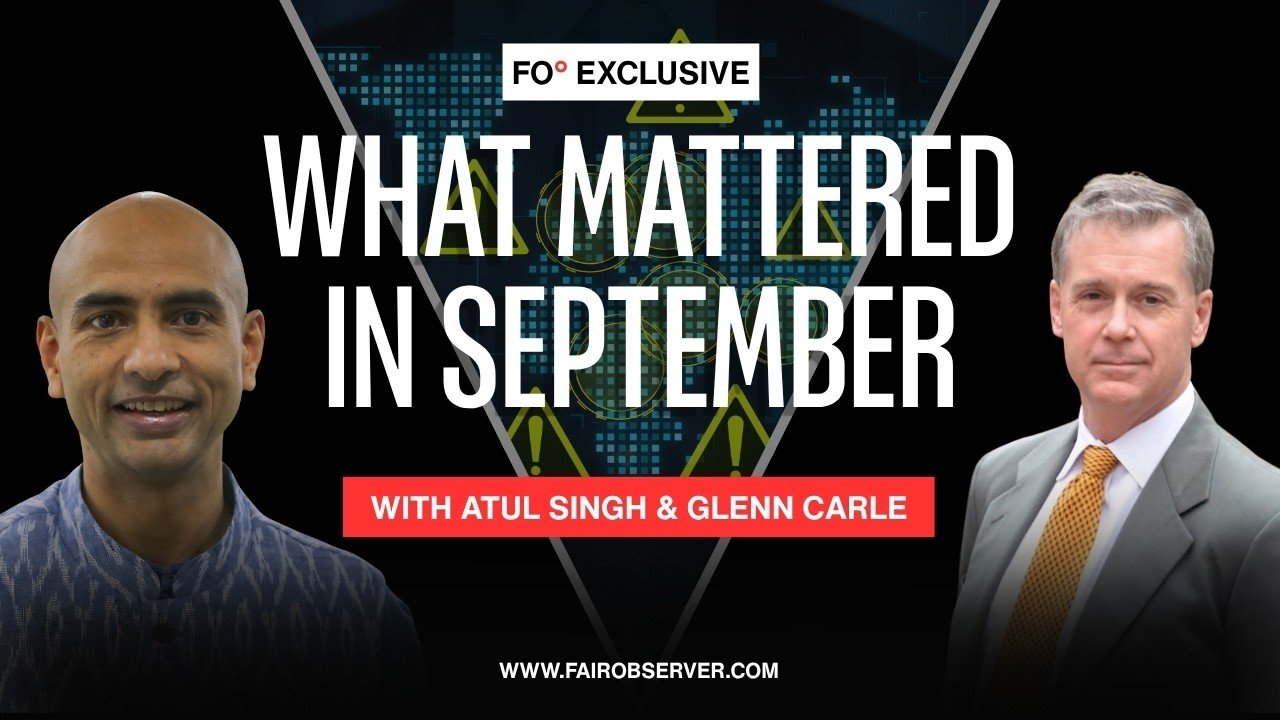
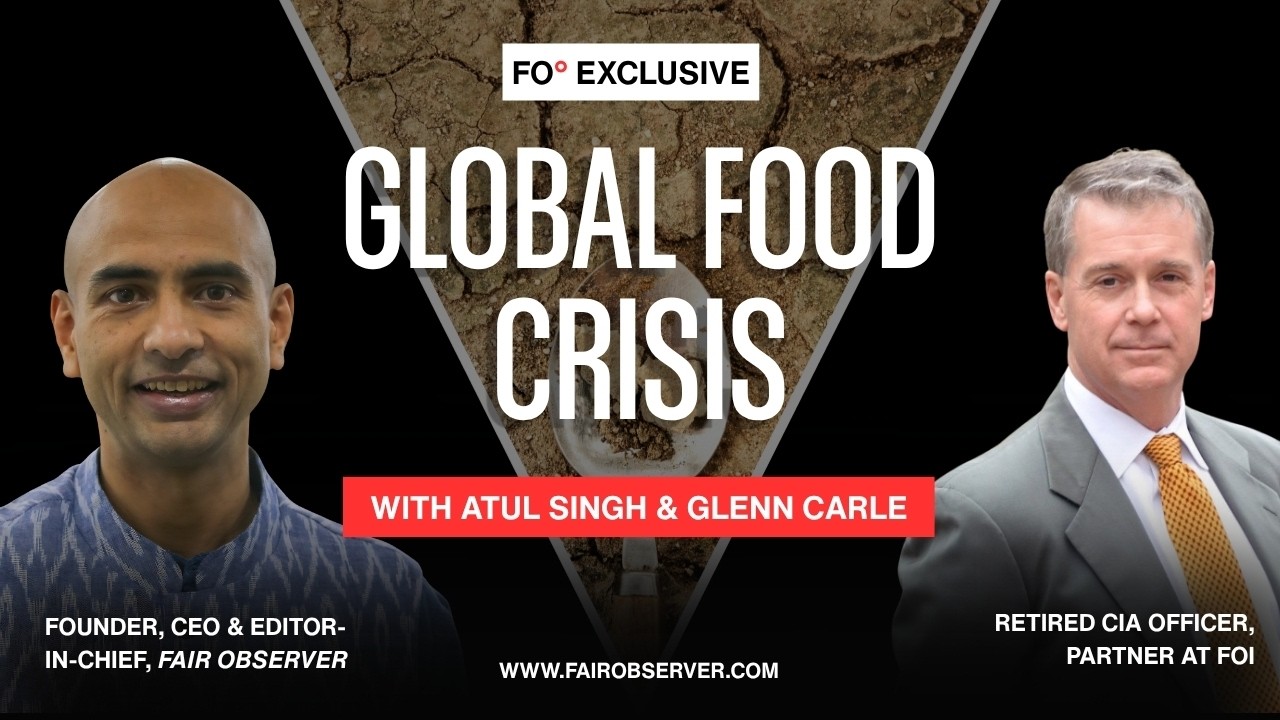
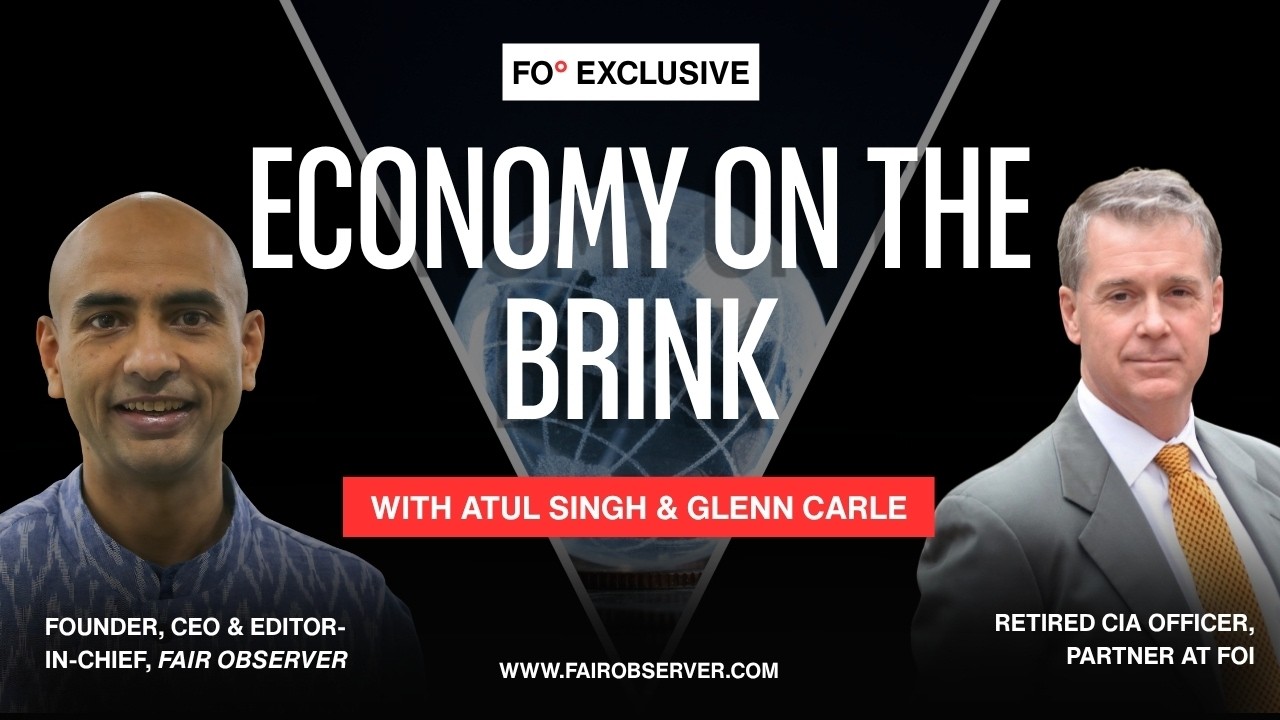
Editor-in-Chief Atul Singh and retired CIA Officer Glenn Carle analyze economic pain and political turmoil across the globe. The US is not unique in facing division and stagnation; decades of sluggish growth and rising inequality have left citizens frustrated, and in recent months, protests and government crises in several major countries have toppled leaders and fueled new uncertainty.
Atul underscores that revolutions correspond with the price of bread or rice in the case of Asia. Per capita growth over the last two decades has been dismal: just 0.6% in the UK and 0.7% in both France and Japan. These averages mask the fact that most of the benefits have gone to a small elite, while the majority have seen declining living standards. Glenn stresses that when growth slows and inequality rises, citizens look for scapegoats — often immigrants, rivals abroad or their own leaders.
Japan’s cost-of-living crisis
Japan exemplifies how economic strain destabilizes politics. Inflation reached 3.2% in January, while the price of rice doubled. Outrage grew after a cabinet minister joked about rice, forcing his resignation.
The ruling Liberal Democratic Party has lost its grip, failing to win majorities in both houses of parliament. Prime Minister Shigeru Ishiba resigned as US tariffs and regional tensions mounted. Japan now faces the prospect of its fourth prime minister in five years, a remarkable churn for a nation once considered a bastion of stability. Atul’s sources in Tokyo worry about fragmentation in Japanese politics that could hamper Japan’s response to both economic challenges and regional security threats.
France’s fiscal crisis and street protests
Meanwhile, France is caught in what Glenn calls a “perpetual crisis.” In just nine months, parliament has voted out two governments. Michel Barnier, best known for negotiating Brexit, became the prime minister but failed to win the vote of confidence in parliament. François Bayrou replaced him but quickly fell also, warning that France was “living beyond its means.” French President Emmanuel Macron then appointed loyalist Sébastien Lecornu, making him France’s fifth prime minister since 2022.
The numbers are stark: a budget deficit of 5.8%, the highest in the eurozone, and debt at 114% of GDP. Borrowing costs are climbing and markets are nervous. Bayrou warned of a Greece-style debt crisis, raising the specter of International Monetary Fund intervention. On the streets, protests have erupted, targeting both the government and economic conditions. Atul’s sources in Paris worry that polarization and fragmentation in French politics have made governments short-lived and blocked any action to address the crisis. Some analysts even question the durability of the French Fifth Republic itself.
The UK’s triple shock
The UK faces an even worse situation. Its economy was hammered by three shocks: the 2008 financial crisis, Brexit and the Covid-19 pandemic. Productivity lags behind peers, infrastructure is deteriorating and real wages have barely grown since 2008, even as debt has ballooned.
Economic pain has fed political unrest. Recently, 150,000 people marched in London under the banner of far-right activist Tommy Robinson, a far-right anti-immigration activist with several criminal convictions. Immigration, particularly illegal crossings of the English Channel, has become a lightning rod. Atul observes that contacts in London and Manchester expect the right-wing Reform UK party to build support at the expense of both the Labour Party and the Conservatives. The rise of far-right populism, combined with economic stagnation, suggests a period of deepening polarization.
The revolutions of 1848
Glenn offers a historical context to current problems, likening the current moment to the revolutions of 1848. At that time, agricultural failures created economic pain while nationalism fueled cultural unrest, sparking uprisings across Europe. Today’s economic stagnation, mixed with cultural anxiety, shows a striking parallel.
He observes that once-dominant groups, particularly in the West, feel they are losing control of their societies. Immigration often becomes the symbol of this perceived decline. Glenn adds that the concentration of wealth since the 1980s has amplified the anger. In the US, 1% of the population now controls 40% of wealth, while the bottom 80% hold just 10%. Glenn warns that inequality could undermine the legitimacy of democratic institutions, as happened earlier in Ancient Rome.
Nepal and the “nepo kids”
The crisis is not confined to developed economies. Across South Asia, popular anger has boiled over. Nepal is the latest flashpoint: High youth unemployment, falling remittances and visible corruption ignited protests led by Generation Z. Social media highlighted the lavish lifestyles of politicians’ children — dubbed “nepo kids.” Mobs stormed parliament, torched buildings and attacked party leaders.
Atul places this upheaval in a regional pattern: Sri Lanka in 2022, Pakistan in 2023 and Bangladesh in 2024 all saw mass movements that toppled or nearly toppled governments. Indian analysts fear that Nepal’s protests could spread. Although India has grown faster than its neighbors, it is not immune. Atul stresses that dissatisfaction, unemployment and inequality could spark unrest even in India, adding to the pressures businesses already face in Western markets.
The broader pattern
The recurring theme is clear: Economic pain is destabilizing political order worldwide. In the developed world, decades of low growth and high inequality have hollowed out trust in governments. In the developing world, corruption, weak institutions and youth outrage are driving upheaval.
Atul concludes that volatility will dominate the months ahead, with protests and government crises multiplying across continents. Glenn agrees, emphasizing that these are not isolated shocks but systemic pressures reshaping global politics. From Tokyo to Paris, London to Kathmandu, instability has become the new normal.
[Lee Thompson-Kolar edited this piece.]
The views expressed in this article/video are the author’s own and do not necessarily reflect Fair Observer’s editorial policy.

























Comment