



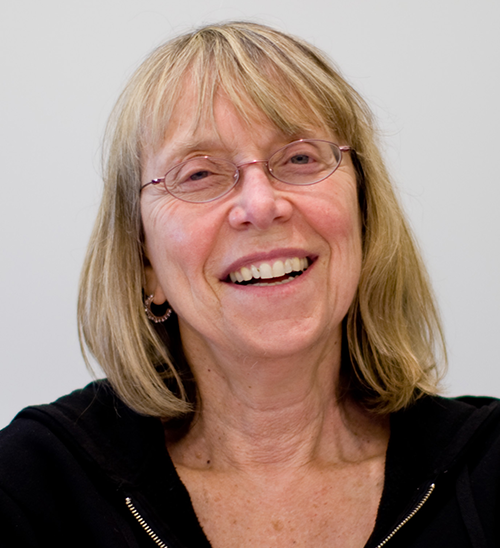

Fair Observer Board Member Heather (Heldman) Neeman and renowned educator Esther Wojcicki discuss how artificial intelligence is transforming education. Wojcicki’s TRICK method — Trust, Respect, Independence, Collaboration and Kindness — can empower parents and students alike. The discussion addresses both the micro level of parenting and the macro challenges facing US education.
The TRICK method in 2025
Drawing from her book, How to Raise Successful People, Wojcicki emphasizes that the simple TRICK principles often run counter to today’s parenting habits. She offers a detailed set of actions parents can take to foster independence: letting children set up their own playdates instead of acting as the go-between, involving them in scheduling after-school activities and assigning meaningful household responsibilities. She believes these steps signal trust and help children “be in control of their world,” countering the modern trend of over-accommodation.
Examples range from letting children plan weekend outings to giving them full responsibility for a pet’s care — without stepping in if they fail. She also points to research showing that children who do regular chores grow into more capable and happier adults. She notes that in immigrant families, where children often “pull their weight,” self-sufficiency tends to be higher.
AI’s place in the classroom
Wojcicki draws a direct parallel between the current fear of AI in schools and past overreactions to calculators in the 1980s. She criticizes outright bans, such as those in New York City and Los Angeles, as short-sighted and rooted in fear. Instead, she calls for structured AI literacy programs, likening them to driver’s education: “You wouldn’t give someone a car without teaching them to drive.”
Her classroom philosophy — used successfully when integrating computers decades ago — is to position students as co-learners and teachers, allowing them to share AI discoveries with peers. She argues that this not only demystifies technology but also builds speaking skills, confidence and collaboration. Projects such as AI-assisted video storytelling about personal heroes allow students to engage creatively while learning about the responsible use of powerful tools.
The trust gap in public education
Neeman highlights a broader erosion of trust in American public schools, citing political tensions, rising homeschooling and safety concerns. Wojcicki agrees, attributing much of the problem to a “one-size-fits-all” instructional model. She argues that expecting a single teacher to meet the needs of students who may be years ahead or behind is “almost impossible” in a standard class period. Gifted students, struggling students and those in the middle all require different forms of engagement. The current push for identical treatment in the name of equality, she says, “runs against common sense and human nature,” leaving many parents frustrated and disillusioned.
Rethinking the model
The conversation turns to innovative alternatives. The program 2 Hour Learning, co-founded by MacKenzie Price, offers a concise model that combines individualized AI-driven instruction in the morning with afternoons dedicated to passion projects and collaborative work. Wojcicki sees this as “100% aligned” with her TRICK philosophy, arguing that it avoids the boredom and disengagement common in traditional classrooms where students “sit quietly memorizing material they don’t care about.” She believes public schools could adapt such models, especially with AI’s ability to tailor lessons to each student’s pace and needs.
Wojcicki’s nonprofit, Global Moonshots for Education, founded in 2019, works to spread such approaches worldwide. It recognizes schools that empower students as independent thinkers and collaborative problem-solvers.
Democracy, misinformation and AI risks
Neeman raises concerns about algorithm-driven “information silos” that feed different facts to different political groups, further polarizing the country. Wojcicki links this directly to low literacy levels — she cites data showing that most American adults read at only a sixth-grade level, with many minorities at a fourth-grade level — and the lack of critical thinking instruction.
Wojcicki warns that misinformation, once believed, is stubbornly resistant to correction. A false story about Pope Francis endorsing US President Donald Trump illustrates this. The rise of deepfakes compounds the problem, making it difficult for the public to discern truth from fabrication.
Teaching history, she argues, must go beyond rote memorization and instead connect past events to present realities — for instance, studying ancient Egypt alongside modern Egyptian politics or linking author George Orwell’s famous novel, 1984, to current examples of authoritarian behavior.
Looking ahead with hope
Despite these challenges, Wojcicki ends on an optimistic note. She is developing an AI-supported parenting app called Parenting TRICK to guide parents toward fostering independence rather than hovering over their children. She is also co-authoring a book with 25 of her former students to showcase how her educational style has shaped their lives and careers.
Her hope is that such tools and stories will inspire districts and policymakers to adopt more personalized, flexible models like 2 Hour Learning’s — models she believes can prepare young people to think critically, work collaboratively and contribute meaningfully to a healthy democracy.
[Lee Thompson-Kolar edited this piece.]
The views expressed in this article/video are the author’s own and do not necessarily reflect Fair Observer’s editorial policy.







































Comment