
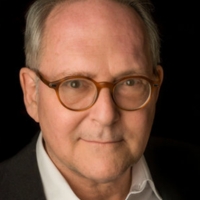


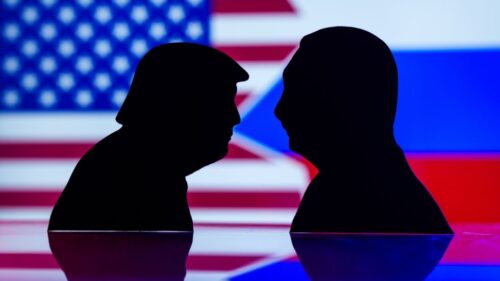
Fair Observer’s operations chief of staff Cheyenne Torres and veteran investigative journalist and author Craig Unger discuss US President Donald Trump’s decades-long connections to Russian figures and Unger’s argument that Soviet and Russian intelligence cultivated Trump as an asset. Drawing on his books, House of Trump, House of Putin: The Untold Story of Donald Trump and the Russian Mafia and American Kompromat: How the KGB Cultivated Donald Trump, and Related Tales of Sex, Greed, Power, and Treachery, Unger traces these relationships through Trump’s real estate dealings, his 1987 visit to the Soviet Union and Russia’s documented interference in the 2016 US presidential election. Torres and Unger also examine social media’s impact on political discourse and the challenges facing investigative journalists in an increasingly fragmented information environment.
Russian money in Trump’s pocket?
Unger traces Trump’s connections with figures linked to Russian organized crime to at least 1984. That year, David Bogatin, whom FBI files connected to the Russian mafia, bought five Trump Tower condominiums for $6 million in cash. A New York State investigation linked the transaction to money laundering, he says.
This was not an isolated episode. Unger’s research identified 13 people connected to the Russian mafia who either lived in or owned condominiums in Trump Tower. He further alleges that more than $1 billion in Russian money eventually passed through Trump or Trump-branded properties.
Unger emphasizes that Soviet organized crime differed from traditional American organized crime because of its connections with the Soviet security apparatus. This overlap, he says, made Trump’s relationships potentially significant beyond ordinary financial crime.
Did the KGB cultivate Trump?
Unger pushes the timeline back to 1980, when Trump oversaw development on the Grand Hyatt New York. The hotel bought televisions from Joy-Lud Electronics, a company associated with businessmen Semyon Kislin and Tamir Sapir. Unger alleges that both men had connections to Soviet intelligence and describes the relationship as an early point of contact between Trump’s business world and people linked to the KGB.
His case relies partly on Yuri Shvets, a former KGB officer who served in Washington under journalistic cover during the 1980s. Unger claims Soviet intelligence gradually cultivated Trump, and that the KGB then helped arrange his first trip to the Soviet Union in 1987.
Unger distinguishes between an intelligence “agent,” who knowingly works for an intelligence service, and an “asset,” whose relationship can be much less formal. On that basis, he argues that Trump became a Russian intelligence asset.
Russia’s 2016 election interference
Torres and Unger turn from Trump’s personal history to documented Russian interference in the 2016 presidential election. Unger points to both the Mueller investigation and the bipartisan Senate Intelligence Committee investigation as evidence of Moscow’s efforts to influence American politics.
One episode involved Trump campaign chairman Paul Manafort and Konstantin Kilimnik, whom the Senate Intelligence Committee identified as a Russian intelligence officer. Unger states that Manafort shared internal Trump campaign polling information with Kilimnik during the campaign.
Russia’s Internet Research Agency also conducted a wide-ranging social media influence operation targeting American voters. Unger posits that such activities illustrate how social media has transformed foreign interference by allowing political actors to manipulate information environments at enormous scale.
Social media fractures political reality
For Unger, the larger danger extends beyond any individual election. Social media has divided Americans into increasingly isolated political communities that no longer agree on basic facts.
He connects this phenomenon to Vladislav Surkov, a former influential Kremlin advisor. Rather than relying simply on repeated propaganda, Unger says, the newer model floods the information environment with competing and contradictory narratives. The objective is not necessarily to persuade audiences that one account is correct but to make certainty itself difficult.
Unger also criticizes Tesla CEO Elon Musk’s ownership of the social media platform X, formerly Twitter. He contends that Musk’s changes to the platform have favored Trump and conservative political content.
Journalists must pursue truth
Torres closes by asking what younger journalists can learn from Unger’s five decades in investigative reporting. He contrasts the current media environment with the eras of Watergate, the Pentagon Papers and reporting on the My Lai massacre, when major investigations could produce congressional action and profound political consequences.
Unger warns particularly against access journalism. Close relationships with powerful sources may produce information, he says, but they can also leave reporters dependent on maintaining those relationships. His second warning concerns “both-sidesism.” Fairness requires journalists to represent competing claims accurately, but it does not require treating demonstrably unequal claims as equally credible.
Journalism’s fundamental obligation remains establishing what is true. Yet fragmented audiences, social media and intense political polarization make that task increasingly difficult. Investigative journalism still uncovers consequential facts, but its political impact depends on institutions and citizens staying willing to act on them.
[Lee Thompson-Kolar edited this piece.]
The views expressed in this article/video are the author’s own and do not necessarily reflect Fair Observer’s editorial policy.





















Join the conversation
Share your perspective
Log in to share your thoughts and take part in the discussion.