



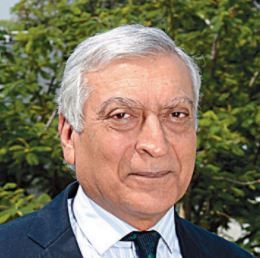
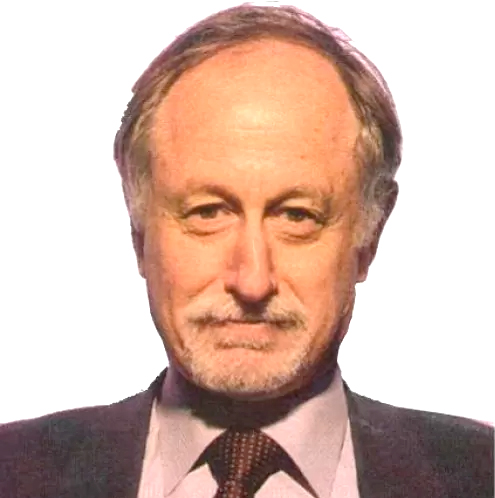
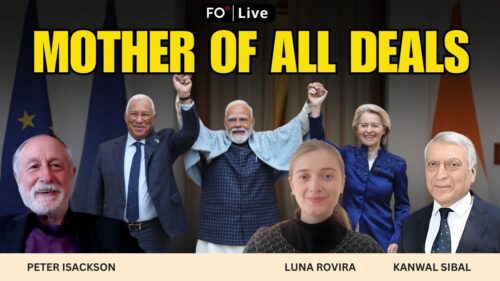
Fair Observer’s Chief Strategy Officer Peter Isackson and former Foreign Secretary of India Kanwal Sibal discuss the widening crisis in West Asia and the difficult strategic choices facing India as the Trump administration escalates confrontation with Iran. Sibal argues that India has more at stake in the region than almost any other major power, with millions of expatriate workers, critical energy dependence and ambitious connectivity projects now threatened by war and instability. As US President Donald Trump’s rhetoric grows more erratic and Gulf monarchies confront an increasingly dangerous security environment, the region is entering a period of profound uncertainty that could reshape the global order.
India’s Gulf dilemma
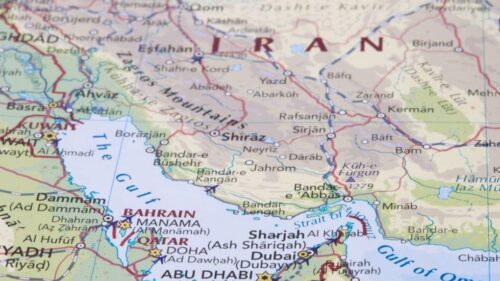
Sibal begins by outlining why the Gulf sits at the center of India’s strategic thinking. The United Arab Emirates, he explains, has become the “hub” of India’s West Asia policy, with bilateral trade exceeding $70 billion and nearly four million Indians living and working there. Beyond commerce, the relationship now spans defense cooperation, artificial intelligence, green energy and semiconductor development.
These partnerships form part of a broader Indian strategy linking the Gulf to Europe and Africa. Sibal points to the India–Middle East–Europe Economic Corridor (IMEC), announced during India’s G20 presidency, as a major geopolitical initiative that is now stalled by regional conflict and Israel’s deteriorating position in the region.
India is severely exposed to instability. Nearly 10 million people of Indian origin live across West Asia, sending home roughly $40 billion in annual remittances. The region also supplies around half of India’s oil and 60% of its liquefied petroleum gas imports. Any prolonged disruption, Sibal says, threatens India more directly than most other global powers.
Iran, connectivity and strategic balancing
Sibal stresses that India’s relationship with Iran is driven by long-term geopolitical necessity rather than ideology. Before US sanctions, Iran was one of India’s largest oil suppliers, and New Delhi has continued maintaining diplomatic ties despite pressure from Washington.
Two connectivity projects remain especially important. The Chabahar Port project gives India access to Afghanistan and Central Asia while bypassing Pakistan. The International North–South Transport Corridor links India to Russia through Iran and the Caspian Sea, potentially reducing both shipping times and costs.
For Sibal, Iran also matters because it represents a crucial counterweight in the balance between Sunni Gulf monarchies and Shia regional power. India therefore seeks to maintain relations with all sides simultaneously: Iran, the Gulf states, Israel and the United States. That balancing act now severely constrains India’s diplomacy.
Rather than adopting a public position, Sibal supports what he calls “quiet diplomacy” behind the scenes. India’s leadership, he says, has remained in constant contact with regional actors while avoiding overt mediation efforts that could entangle New Delhi in unpredictable American decision-making.
Trump’s diplomacy and Pakistan’s role
Sibal expresses strong skepticism toward Trump’s handling of the crisis. He describes the US president as “extremely erratic” and argues that he repeatedly undermines negotiations through inflammatory rhetoric and maximalist demands.
Sibal is especially critical of Trump’s demand for “unconditional surrender” from Iran, arguing that such language makes meaningful diplomacy nearly impossible. “That’s not negotiation,” Sibal comments. “That’s humiliation.”
Isackson and Sibal also examine why Pakistan has emerged as a key intermediary between Washington and Tehran. Sibal explains that Pakistan’s long border with Iran, large Shia population and Islamic identity make it a more practical interlocutor than India in the current environment. Geography and domestic politics force Islamabad to carefully manage relations with both Saudi Arabia and Iran while avoiding internal instability.
Sibal cautions that India should avoid becoming directly involved in mediation efforts. In his view, attempting to broker negotiations would risk turning India into “a hostage to Trump’s idiosyncrasies and egomania.”
America’s reliability and India’s constraints
Despite his criticism of Washington, Sibal acknowledges that the US remains India’s most important economic and technological partner. Bilateral trade in goods and services has reached roughly $240 billion, and India continues to rely heavily on American investment and advanced technologies.
Simultaneously, Sibal argues that the Trump administration has badly damaged global confidence in the US. Tariffs, attacks on allies and the erosion of international institutions have reinforced the perception that Washington is no longer a dependable strategic partner.
India therefore faces a difficult reality. It cannot fully align with China or Russia, yet it also cannot completely trust the US. Sibal says India must continue “hedging” while recognizing that its options remain constrained by its rivalry with China and its dependence on Western technology.
Within India itself, attitudes toward the US are mixed. Business and technology sectors remain strongly pro-American because of deep links to Silicon Valley, while parts of the political class and broader public remain skeptical of American power and intentions.
Israel, Gulf monarchies and a fractured region
Toward the end of the discussion, Sibal turns to the growing fragmentation inside West Asia itself. Gulf monarchies, he argues, now face a “nightmare” scenario. They fear Iranian dominance, yet US military bases have also made them targets without guaranteeing security.
Sibal believes Israel has benefited strategically from the crisis because international attention has shifted away from Gaza, Lebanon and the West Bank. He argues that Israel continues expanding its regional influence while Arab states remain divided and unable to present a unified front.
Despite growing controversy, India’s partnership with Israel remains strong. Israel is deeply integrated into India’s defense ecosystem, particularly in missile technology, surveillance systems and counterterrorism capabilities. Sibal suggests that Israel may also serve as an indirect channel for certain advanced American technologies unavailable through formal US transfers.
Still, he acknowledges that India’s public positioning has become more difficult as regional polarization intensifies. What once appeared to be a manageable balancing strategy between Israel and the Arab world is becoming increasingly fragile as the wider regional order fractures.
[Lee Thompson-Kolar edited this piece.]
The views expressed in this article/video are the author’s own and do not necessarily reflect Fair Observer’s editorial policy.






















Comment