



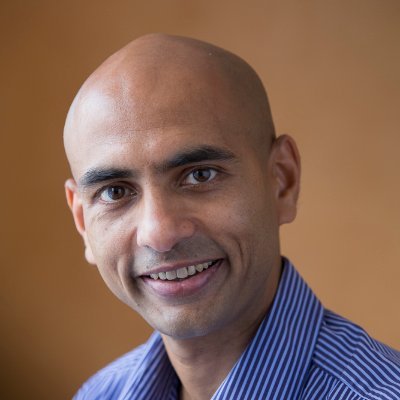
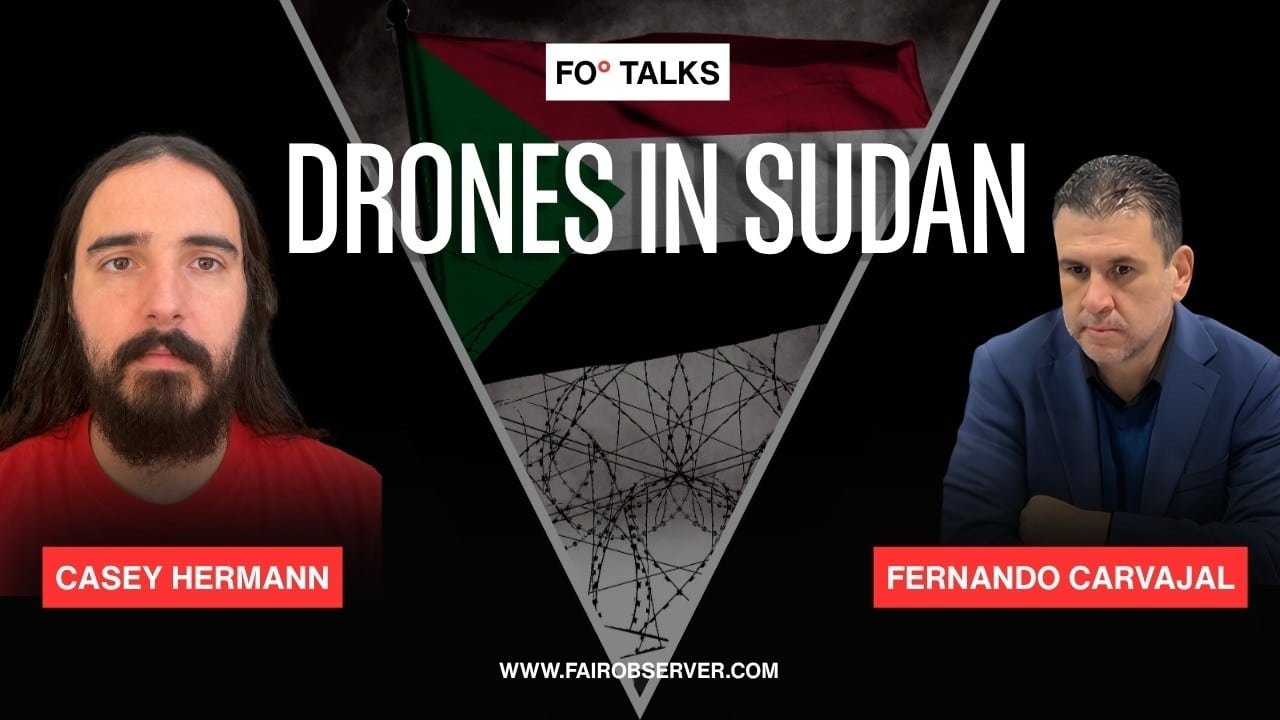
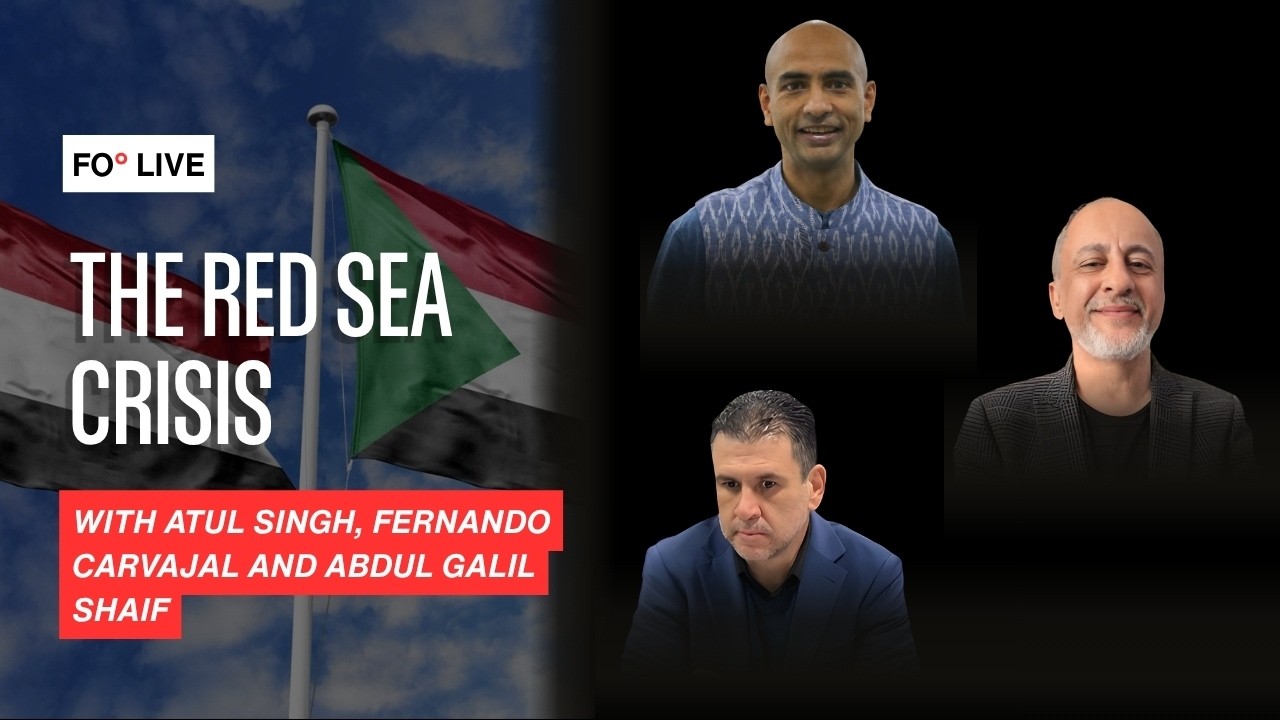
Editor-in-Chief Atul Singh and retired Executive Director of The American Center for South Yemen Studies Fernando Carvajal discuss one of the Middle East’s most complex and forgotten wars. Their conversation traces how local rivalries, sectarian identities and international ambitions have turned Yemen into a battleground for regional power and ideological confrontation. Carvajal emphasizes that the conflict is not simply a civil war, but a protracted struggle involving overlapping agendas from Tehran, Iran, to Tel Aviv, Israel, and from Riyadh, Saudi Arabia, to Washington, DC.
The Houthis and the regional escalation
Singh and Carvajal begin by talking about the latest flashpoint: the Israeli strike that killed Ahmed al-Rahawi, a senior Houthi leader. The Houthis, otherwise known as Ansar Allah, began in 2004 as a small Zaydi Shia revivalist movement in northern Yemen. They evolved into the country’s dominant insurgent force, opposing what they viewed as corrupt Saudi-backed regimes. Their slogan, “Death to Israel, Death to America,” encapsulates both their defiance and the ideological connection to Iran’s Axis of Resistance.
Carvajal explains that Israel’s attempt to “seize the moment against the Houthis” by targeting them under the cover of its broader regional operations has inflicted civilian suffering and, in his view, violated international law. He warns that states such as Israel and the United States risk losing moral ground when they mimic the lawlessness of non-state actors.
The Houthis, meanwhile, have leveraged their confrontation with Israel to project themselves as defenders of the Palestinians. Yet Carvajal argues that this stance is less about Palestine and more about Iran, since Tehran has supplied them with weapons and political direction. Their attacks on commercial ships and naval vessels in the Red Sea and the Bab al-Mandab Strait have turned one of the world’s busiest maritime corridors into another front in the regional conflict.
The civil war itself, Singh reminds viewers, began in earnest after Yemeni President Abdrabbuh Mansour Hadi invited Saudi intervention in March 2015. This created a battlefield where Iranian-supplied drones and missiles face off against Western-approved air power, with millions of Yemenis trapped in between.
Yemen’s fragmented state and southern secessionism
To understand today’s divisions, Carvajal retraces Yemen’s modern history. Before unification in 1990, there were two Yemens: a northern republic led by military officer Ali Abdullah Saleh and a socialist south aligned with the Soviet Union. Even after unification, deep social and theological differences persisted. The northern Zaydi faith — a Shia offshoot distinct from Iran’s Twelver Shi’ism — coexisted uneasily with the Sunni majority in the south.
Saleh’s decades-long rule maintained this fragile unity through patronage and repression until the Arab Spring destabilized the regime. The Houthis, once his allies, turned against him and killed him in 2017. Meanwhile, southern resentment revived in the form of the Southern Transitional Council, led by Major General Aidarus al-Zoubaidi, which now controls much of the oil-rich south and seeks to restore pre-1990 independence.
Yemen is a highly complex tribal society where ideology mixes with kinship and geography. The Sana’a regime crushed the peaceful Southern Movement (also known as al-Hirak, or “the movement”) in the late 2000s, giving way to militarized separatism once the Saudi-led coalition intervened. Carvajal believes it is delusional to think the Houthis represent Yemen’s organic leadership — their revolutionary zeal, he contends, is more about domination than governance.
Foreign hands and proxy wars
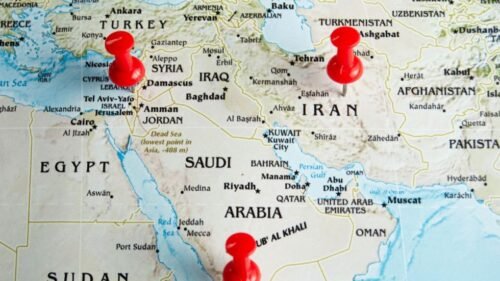
The conversation turns outward to the states that have transformed Yemen into a regional chessboard. Saudi Arabia sees Yemen as its “backdoor to Mecca,” and for decades treated it as a dependent buffer state. The collapse of this influence after Saudi King Abdullah’s death in 2015 left a vacuum quickly filled by Iran. Through weapons transfers confirmed by UN reports in 2017, Tehran has turned the Houthis into a testing ground for missile and drone technology later seen in other conflicts, including Ukraine.
Carvajal calls Yemen “Saudi Arabia’s backyard.” Riyadh’s interventions, from the 1960s to the present, have been driven by the fear of republicanism or Iranian expansion near its borders. Yet Saudi Arabia’s own campaign has stagnated, draining resources and producing no decisive outcome.
To Yemen’s east, Oman plays a quieter but equally strategic role. It has hosted Houthi representatives and Iranian envoys under the guise of mediation while tolerating cross-border smuggling. Carvajal views Oman’s stance as pragmatic: By accommodating Tehran, it shields itself from both Salafi Islamic extremism and the chaos of another southern state on its frontier.
The United Arab Emirates occupies a different niche — backing the southern secessionists as part of a marriage of convenience. Its 2015 intervention and subsequent drawdown created an enduring alliance between Emirati financiers and southern militias. The UAE’s economic links with Iran complicate its position, making it both an ally in the anti-Houthi coalition and a bridge in the Gulf’s shadow diplomacy.
Iran’s goals, Carvajal says, are threefold: to consolidate the Axis of Resistance, to establish a strategic foothold on the Arabian Peninsula and to bring Zaydi Shi’ism closer under the orbit of Twelver orthodoxy. In that sense, Yemen serves as Tehran’s laboratory for expanding its influence westward while tying down Saudi military bandwidth.
The fading diplomacy
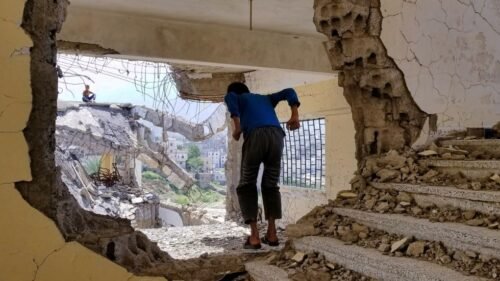
Both Singh and Carvajal agree that the humanitarian catastrophe is inseparable from diplomatic failure. Yemen’s economy has imploded under inflation, with oil revenues collapsing and the United Nations receiving barely a quarter of the funding it requests for relief operations. Since mid-2023, the Houthis have detained aid workers and imposed restrictions on international non-governmental organizations, strangling what remains of civil society.
Carvajal argues that the world has grown numb to Yemen’s suffering. “Donor fatigue” reflects a hierarchy of empathy in which Ukraine or Sudan draws resources while Yemen slips off the radar. The failure of the 2018 Stockholm Agreement, especially the inability to retake Yemen’s key port of Hodeidah, marked a turning point. The Houthis emerged emboldened, convinced that time and endurance are on their side.
Singh notes that external powers may find the current stalemate convenient — predictable, containable and far cheaper than a peace settlement that would require reconstruction and reconciliation. Carvajal warns that this cynical equilibrium allows the Houthis to grow stronger, eliminate dissent and deepen Iranian integration. “The Houthis basically have the entire country hijacked,” he says, “because they’re not interested in peace unless they swallow up the whole.” Without genuine political inclusion for the south, any settlement will merely legitimize Houthi dominance.
A conflict without closure
As their exchange closes, Singh observes that Yemen’s tragedy lies in its invisibility: a war without victory, a state without sovereignty and a population without relief. Carvajal echoes that the conflict persists because every external actor calculates that an endless crisis is safer than unpredictable peace. The Houthis thrive on resistance, Iran gains leverage, the Saudis preserve a buffer and the West avoids the burden of rebuilding a failed state.
After two decades of war, Yemen stands as both a mirror and a warning — a mirror of the Middle East’s entangled rivalries and a warning of how neglected conflicts can outlast the ambitions that created them.
[Lee Thompson-Kolar edited this piece.]
The views expressed in this article/video are the author’s own and do not necessarily reflect Fair Observer’s editorial policy.

































Comment