




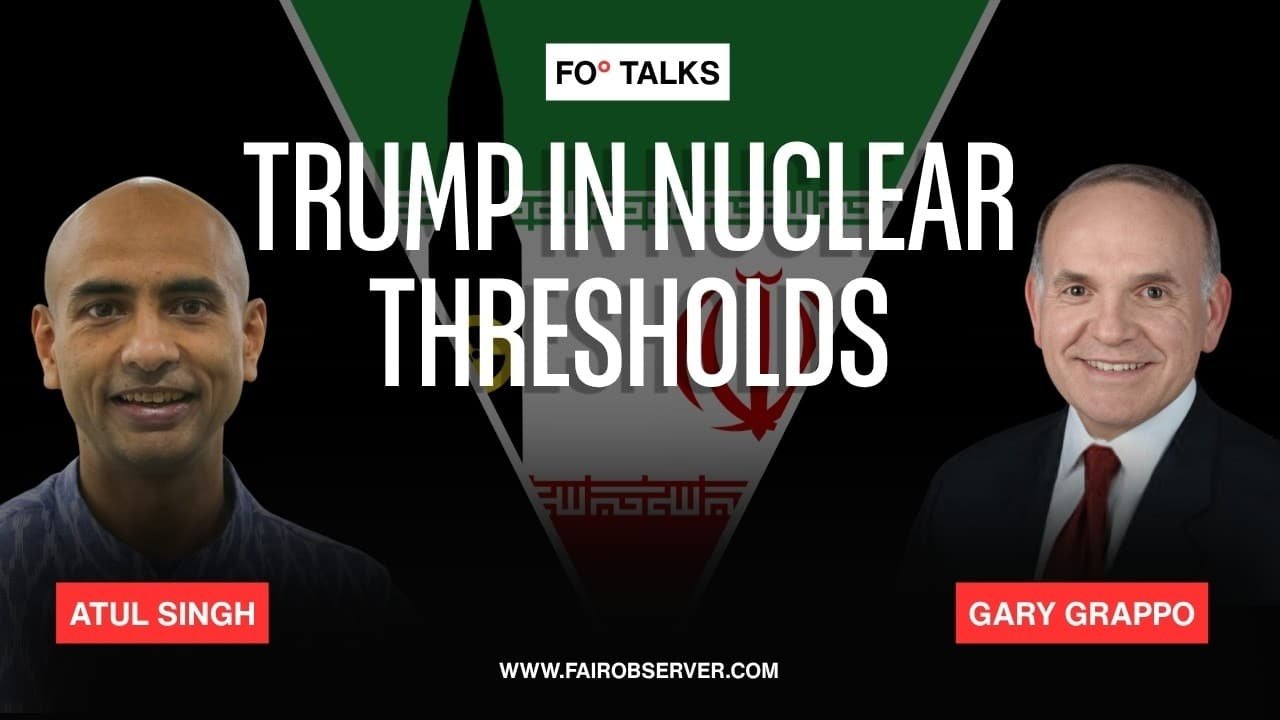
Editor-in-Chief Atul Singh and FOI Partner Manu Sharma examine the historic US intervention to support the Japanese yen and what it reveals about a changing global economy. They explain Japan’s importance to international capital markets, growing economic pressure on the country and the risk that turmoil could spread through global markets. They broaden their discussion into US relations with Europe, mounting economic nationalism and whether technological advances can resolve the deeper imbalances confronting the world economy.
Why Washington supported the yen
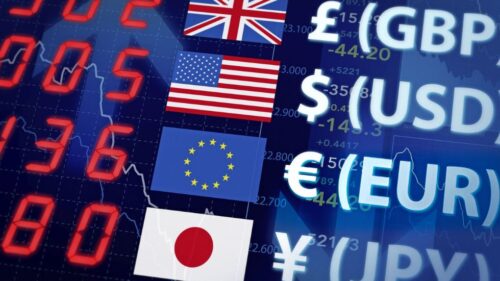
In July 2026, the Japanese yen fell to its weakest level against the dollar since 1986. On July 31, the US Treasury intervened to help Japan support the currency, marking the first such US effort to strengthen the Japanese currency since 1998. The Federal Reserve Bank of New York sold euros and bought yen on the Treasury’s behalf.
Manu states that the intervention matters because Japan remains a major provider of capital to the global economy. Following its extraordinary postwar industrialization, Japan accumulated large trade surpluses and became an important financier of both Asian industrial development and Western financial markets.
That role helped create the yen carry trade. Investors borrow cheaply in yen and invest the proceeds in higher-yielding assets elsewhere. The difference between Japan’s low borrowing costs and higher returns abroad creates potential profits, particularly when investors use leverage.
The danger comes when this process reverses. If Japan needs capital at home, investors may have to unwind positions and move money back into the country. Such movements could create instability far beyond Japan.
Japan faces inflation
Japan now faces pressure from several directions. Atul points to the country’s dependence on imported energy and how Iran’s choking of the Strait of Hormuz has damaged the Japanese economy. Import costs have gone up and the yen is facing downward pressure. A weak yen makes a bad problem worse because Japan must now spend more of its currency to purchase dollar-denominated commodities.
Meanwhile, Bank of Japan Governor Kazuo Ueda has warned that underlying inflation is approaching the central bank’s 2% target. Yet the Bank of Japan held interest rates at 1% on July 31 as policymakers attempted to support domestic economic activity. Consequently, markets lost confidence in the yen.
Along with loose monetary policy, Japan is following an expansionary fiscal policy. Japanese Prime Minister Sanae Takaichi’s government is spending more than it earns. It is taking on more debt at a time when the Japanese debt has reached about 250% of GDP. The combination of expansionary monetary and fiscal policies at a time of massive debt and war-induced inflation is putting unprecedented pressure on the yen.
Manu says the US intervention may stabilize the currency temporarily, but the underlying economic pressures remain. If Japan eventually needs to repatriate large quantities of overseas capital, an unwinding of the carry trade could transmit financial stress around the world.
Does selling euros reveal Washington’s priorities?
For Manu, the most revealing part of the intervention is not that Washington bought yen but what it sold to finance those purchases: euros. He interprets that choice as a geopolitical signal that Washington considers Japan strategically more important than Europe.
Atul and Manu recall the 1985 Plaza Accord, when the United States, Japan, West Germany, France and the United Kingdom coordinated efforts to depreciate the dollar. At the time, Washington sought to depreciate the dollar to reduce its trade deficit. Then, Japanese and German exports were extremely competitive, and American manufacturing struggled. By making the yen and deutsche mark more expensive, the US aimed to curb imports and promote domestic industry.
Today, the US has different motives than in the 1980s. The US does not want market meltdown or contagion. Japan owns billions of dollars of American assets and protecting the yen is in American self-interest. If simultaneous financial pressure strikes several allied economies, the US has signalled that Japan will be the first to be rescued.”
Atul notes that many Europeans now believe that Washington views the EU as an economic competitor. In particular, Republicans are increasingly distrustful of Europe. They say that Europe gives empty sermons and constantly criticizes the US despite the fact that Washington has subsidized European security for decades.
Manu summarizes the distinction provocatively: Japan is “a net supplier of capital,” while Europe is “a net supplier of moral lectures.”
The global economy enters dangerous territory
The conversation then turns from Japan and Europe to the broader financial system. Manu states that global resource, capital and security networks are undergoing a fundamental reorganization. China has become dominant in industries such as electric vehicles while traditional European industrial strengths, particularly Germany’s automotive and chemical sectors, face growing pressure.
Europe also faces capital shortages and weak growth, problems highlighted in the former Italian Prime Minister Mario Draghi’s report on European competitiveness. Manu says that regulatory rigidity and difficulties in attracting outside investment compound these structural weaknesses.
More broadly, Atul and Manu contend that years of loose monetary and fiscal policy have led to inflationary pressures. Today, excessive money is chasing insufficient economic output. They discuss the pernicious influence of Modern Monetary Theory, which held that governments issuing their own sovereign fiat currencies do not rely on taxes or borrowing to fund spending, because they can create new money at will. They also highlight the enormous stimulus introduced during the Covid-19 pandemic along with a dramatic increase in money supply. This was part of a longer period of cheap money, rising debt and inflated asset valuations.
The imbalances in the global economy have led to a populist counterreaction. Manu points out that we now live in an increasingly mercantilist international system. Governments are trying to protect domestic industries, reshore production, secure resources and reduce dependence on competitors. Atul describes this emerging behavior as a “smash and grab strategy” in which states seek control of resources and territory as economic and geopolitical competition intensifies.
Technology may not provide an easy escape
Atul and Manu end by challenging predictions that artificial intelligence and robotics will solve these economic problems. They discuss Tesla CEO Elon Musk’s prediction of technological superabundance, in which automation dramatically increases production and ultimately diminishes the importance of money.
Manu compares the argument with economist John Maynard Keynes’s 1930 essay, “Economic Possibilities for our Grandchildren,” which envisioned technological progress dramatically reducing the amount of work humans would need to perform in the future. Nearly a century later, Keynes’s 1930 vision has not entirely come true.
Manu believes technological utopias underestimate human emotions, inequality, institutional incentives and political conflict. Atul similarly questions whether an AI-driven increase in productivity can arrive quickly enough to resolve excessive debt, inflated valuations and the widening gap between money supply and real economic output.
For Atul and Manu, the yen intervention therefore represents more than an isolated currency operation. It reveals how the global financial system is increasingly unstable. The US is trying its best to prop up Japan in order primarily to save itself. If Japan dumps American treasuries, things could get very ugly pretty quickly.
[Lee Thompson-Kolar edited this piece.]
The views expressed in this article/video are the author’s own and do not necessarily reflect Fair Observer’s editorial policy.









































Comment