




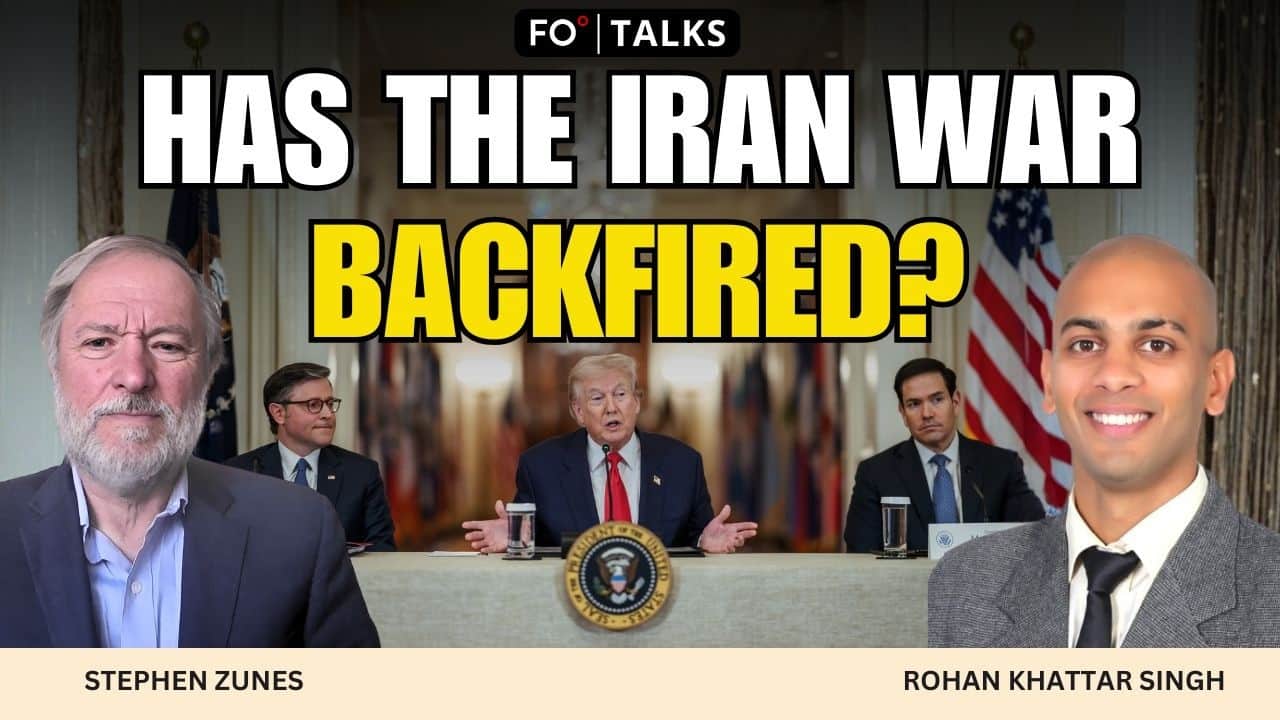
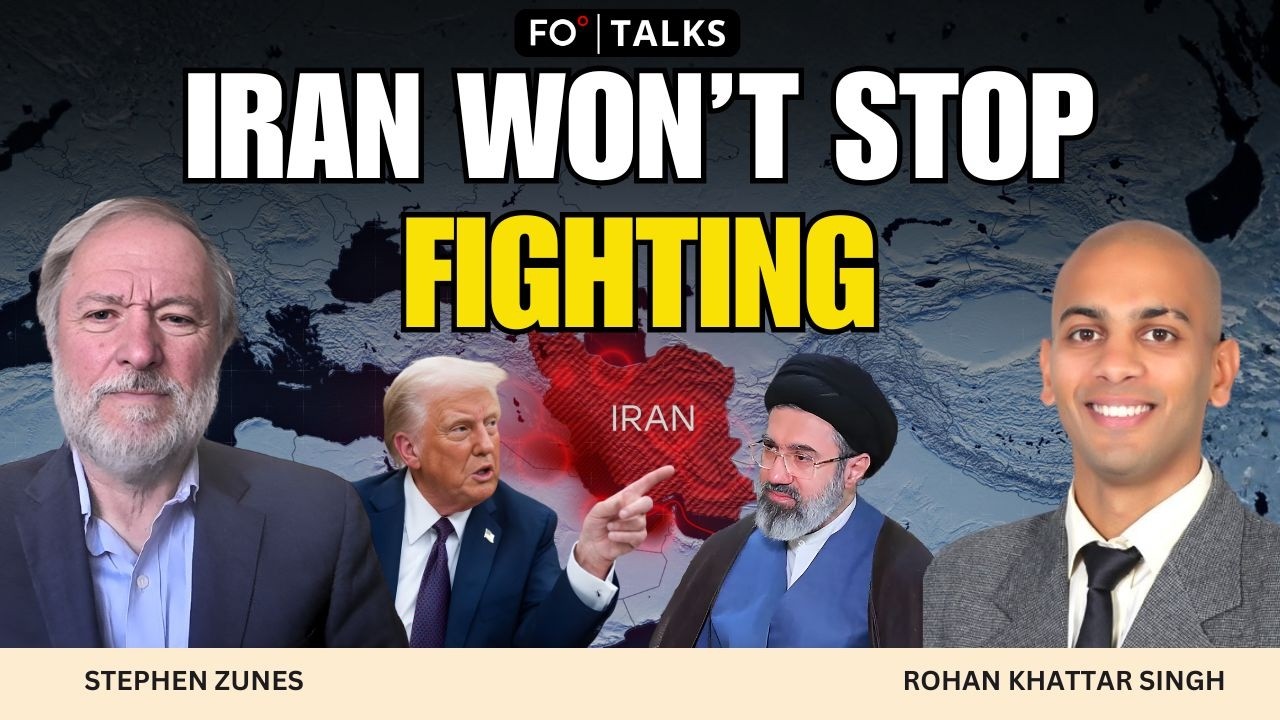
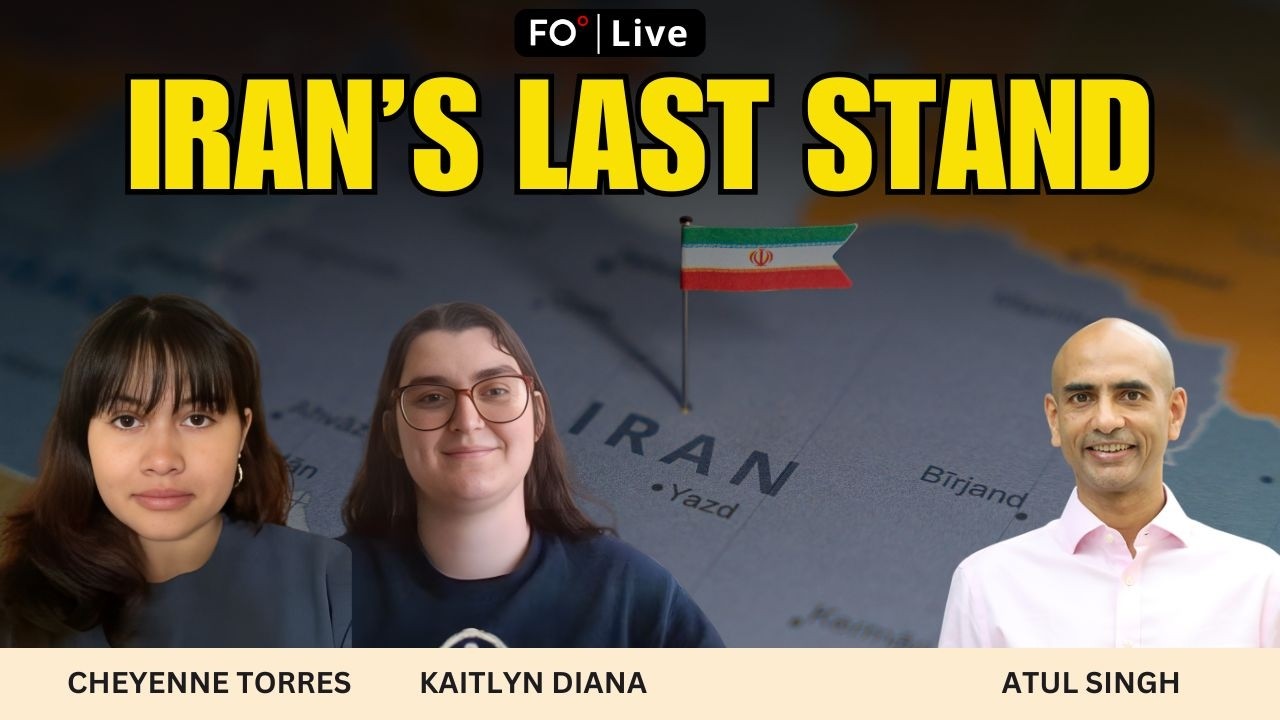
Fair Observer’s Video Producer Rohan Khattar Singh speaks with Stephen Zunes, professor of politics and director of Middle Eastern Studies at the University of San Francisco, about a war that was meant to weaken adversaries but may instead be reinforcing them. As fighting spills across Iran, Israel and Lebanon, is the military force achieving its stated political aims? Or is it producing the opposite effect?
A war measured in displacement
Khattar Singh opens with Lebanon, where the scale of destruction has become impossible to ignore. Zunes points to the displacement of roughly 1.2 million people in a country of just five million, describing a campaign that goes far beyond tactical strikes. Entire towns in southern Lebanon have been leveled, often in areas with little evidence of active combat.
For Zunes, the pattern resembles deliberate devastation rather than incidental damage. “These are not buildings damaged in firefights… this is controlled demolitions,” he says, highlighting how the campaign disproportionately affects civilians. The targeting of infrastructure linked to Hezbollah’s social services, including medical networks, further blurs the line between military and civilian space. The result is a humanitarian crisis that risks reshaping Lebanon’s social fabric for years to come.
Hezbollah’s resilience and roots
Khattar Singh and Zunes then turn to Hezbollah itself. Despite the killing of senior leaders and significant operational setbacks, the group remains intact. Zunes provides historic context for the group’s resilience: Hezbollah emerged in direct response to Israel’s 1982 occupation of southern Lebanon, embedding itself within marginalized Shia communities.
Over time, it evolved into more than a militant organization. By providing healthcare, welfare and local governance where the Lebanese state fell short, Hezbollah built a durable support base. That dual role as both militia and service provider helps explain why it can absorb military blows without collapsing.
Zunes also highlights the cyclical nature of the conflict. Efforts to eliminate Hezbollah risk reproducing the very conditions that sustain it. Military pressure, particularly when it affects civilian populations, can deepen grievances and reinforce the group’s legitimacy among its constituents.
Strategic goals, unmet outcomes
At the core of the conversation is the gap between stated objectives and actual results. The United States and Israel entered the conflict with ambitions that included weakening Iran’s regime, curbing its nuclear capacity and dismantling the Islamic Revolutionary Guard Corps (IRGC). The US hasn’t achieved even one of these goals.
The IRGC remains in place. Iran’s nuclear material has not been removed. Instead, Tehran has demonstrated new leverage by disrupting the Strait of Hormuz, a critical artery for global energy flows. A ceasefire, announced on April 16 and mediated by Pakistan, reflects these constraints as much as any diplomatic breakthrough.
Zunes is blunt about the broader pattern. “This kind of pressure… has not eliminated their nuclear program… if anything, it’s strengthened the regime,” he says. Rather than forcing capitulation, the campaign appears to have consolidated hardline power within Iran, undermining earlier internal dissent.
Regional ripple effects
Beyond the immediate battlefield, the war has triggered wider instability. The closure of the Strait of Hormuz has disrupted supply chains and strained Gulf economies that depend on both exports and imports through the corridor. Even states traditionally aligned against Iran now face difficult trade-offs between security and economic survival.
Khattar Singh notes that Gulf countries, including Saudi Arabia and the United Arab Emirates, have experienced the conflict’s consequences more directly. While some remain wary of Iran’s influence, the economic shock has increased the appeal of deescalation. For many, reopening the strait has become an overriding priority.
Simultaneously, tensions persist. Iranian strikes on regional infrastructure have hardened attitudes in some capitals, complicating any unified response. The result is a fragmented landscape in which no actor fully controls the trajectory of events.
Power, politics and unintended consequences
The conversation closes with the political dimension. Both Israeli Prime Minister Benjamin Netanyahu and US President Donald Trump face domestic pressures that intersect with military strategy. For Netanyahu, ongoing conflict may delay political reckoning at home. For Trump, the war’s economic and strategic fallout could shape upcoming elections.
Yet the most consequential shift may be inside Iran. Despite earlier protests against the regime, the external threat has rallied segments of the population around the state. Zunes sees this as a familiar dynamic. “People rally around the flag when they’re being bombed,” he observes. External intervention often strengthens the very forces it seeks to weaken.
This leads to a broader conclusion about regime change. Zunes argues that durable political transformation cannot be imposed from outside, but must emerge internally. Historical examples, from Eastern Europe to Southeast Asia, underscore the limits of military solutions in achieving political ends.
If the war has demonstrated anything, it is that escalation does not guarantee control. Instead of collapse, it may produce adaptation. Instead of weakening adversaries, it may entrench them. For policymakers, that raises a difficult but unavoidable question: What happens when the use of force systematically fails to deliver the outcomes it promises?
[Lee Thompson-Kolar edited this piece.]
The views expressed in this article/video are the author’s own and do not necessarily reflect Fair Observer’s editorial policy.

























Comment