





[On December 31, 2024, we predicted seven developments for 2025 and boldly went where only fools, angels and astrologers dare to go. So, what can we expect in 2025? To borrow words from the military, a more volatile, uncertain, complex and ambiguous (VUCA) world. This is Part 2 of a seven-part series. You can read Part 1 here.]
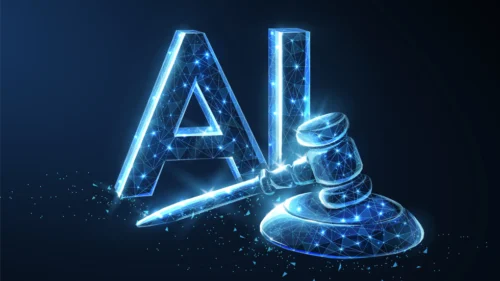
In just the next decade — even the next five years — AI will be performing most tasks better than humans. It will also be more efficient. The shocking question our societies must answer now appears to be, “Who will be the master, AI or humans?” Even the profoundly cautious National Intelligence Council warns that AI may pose “existential threats … that could damage life on a global scale” and that “require the development of resilient strategies to survive.”
AI will eliminate jobs and concentrate wealth
For the first time in ten thousand years of civilization, humanity faces an entity that will disrupt us, may control us and could even threaten our existence. Even if AI does not take over humanity, its impact on global employment, for both white- and blue-collar workers, could well disrupt societies and traditional ways of life.
In a poll of AI experts, 18% were excited at near-term prospects, 42% were equally excited and concerned and 37% were more concerned than excited about the changes in the “humans-plus-tech” evolution they expect to see by 2035. Numerous studies estimate that AI will eliminate the need for anywhere from seven to 48% of all jobs within 15 years. Kai-Fu Lee, one of the world’s leading experts on the subject, estimates that AI will eliminate the need for about 38% of all jobs by the early 2030s.
AI will also concentrate wealth in the few corporations and countries that have the financial and technical resources to develop and exploit this technology. Large AI firms in the US like Meta, Google and Microsoft will emerge as winners. So will Chinese companies like Tencent, Alibaba and Baidu.
Experts note, too, that wealth distribution will become even more unequal, with the top 1% of the population reaping most of the profits. Much of the rest of humanity will be in danger of losing its livelihoods. The US and China together are likely to capture 70% of the over $15 trillion that AI is estimated to add to the global economy by 2030.
The US and China will race to Mars
In addition to an AI race, a new space race is also underway. Both the US and China are racing to go to Mars. The former expects to get there by 2027–2028, while the latter is planning for 2028. Space is becoming increasingly militarized as well. Surveillance satellites, missile defense and anti-satellite technologies are increasingly important.
Governments and private players will invest an estimated $1 trillion in the space sector. SpaceX is developing a fully reusable, two-stage super heavy-lift launch vehicle called Starship. At 122 meters (equivalent to a 35-story building), Starship can currently carry 90 metric tons and will soon double that. SpaceX has launched Starship six times and plans 100–400 launches annually within one to three years.
Renewable energy will rise
A third technological race is on in the renewable energy industry. The majority of solar panels and batteries currently come from China. Electric vehicles (EVs) in China cost a third less than in Europe and the US. China subsidizes EVs handsomely. Furthermore, the Chinese EV industry has technological and production advantages over its competitors.
Global EV sales are projected to grow by 30% in 2025 and reach 15.1 million. In 2024, 11.6 million EVs were sold. They comprise 13.2% of total vehicle sales. This market share is estimated to grow year-on-year despite the Trump administration’s lack of enthusiasm for EVs.
Demand for electricity is rising significantly. Increasingly, renewables are supplying this electricity. In 2025, renewables will surpass coal to become the largest source of electricity for the first time in history.
[Anton Schauble and Lee Thompson-Kolar edited this piece.]
The views expressed in this article/video are the author’s own and do not necessarily reflect Fair Observer’s editorial policy.







































Comment