



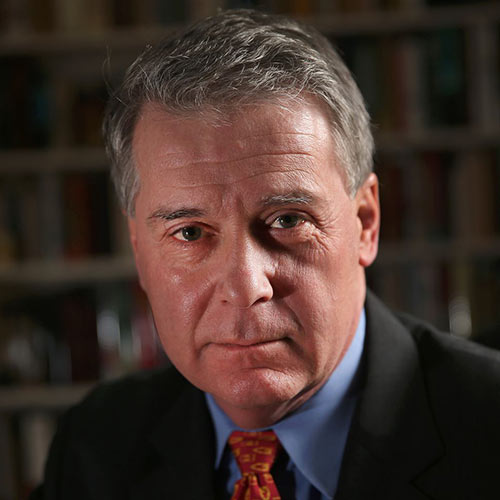
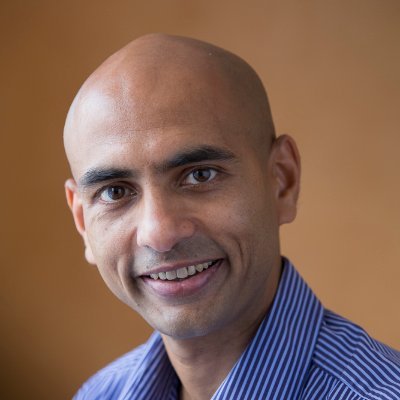
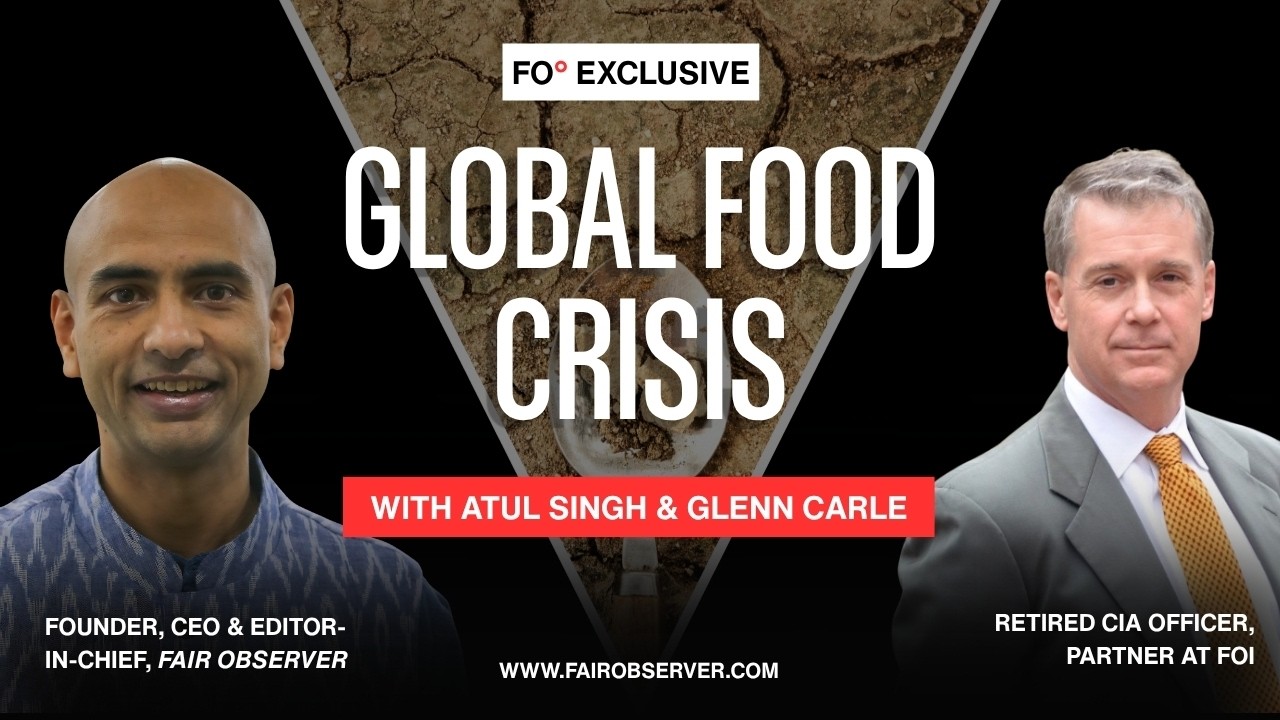
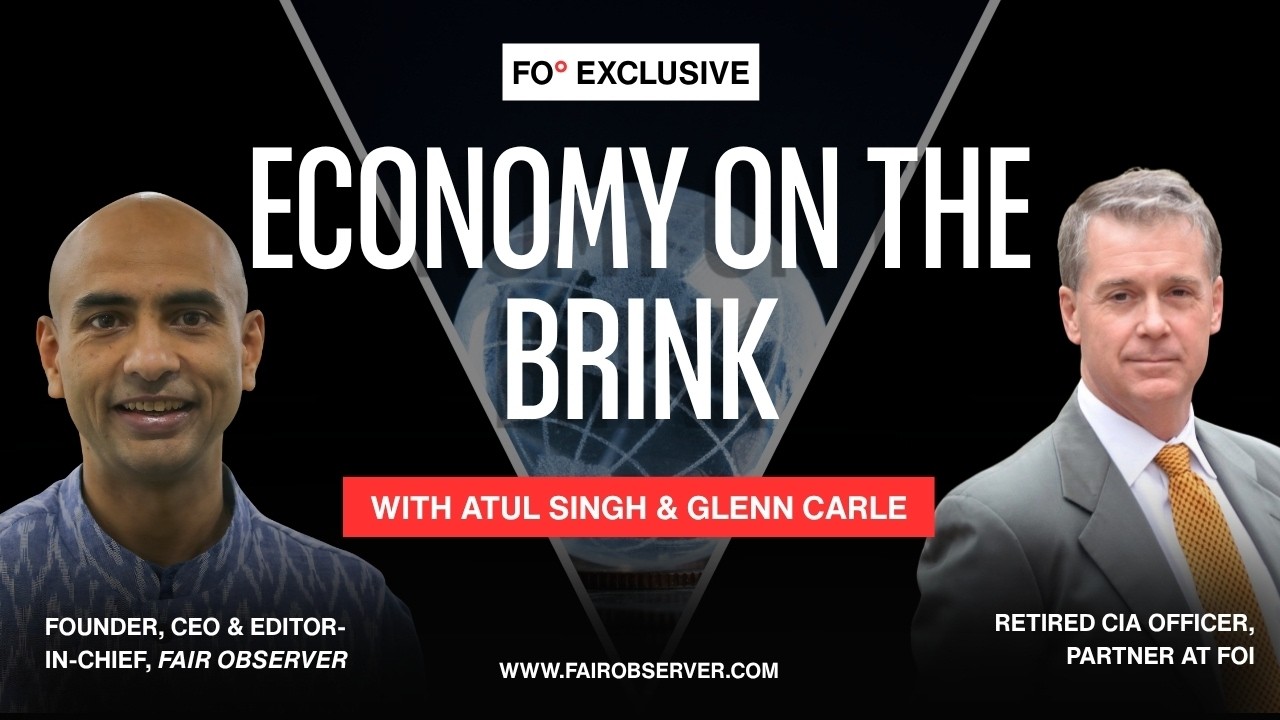
Editor-in-Chief Atul Singh and FOI Senior Partner Glenn Carle, a retired CIA officer who now advises companies, governments and organizations on geopolitical risk, examine the significance of Canadian Prime Minister Mark Carney’s speech at the World Economic Forum in Davos, Switzerland. Delivered at a venue long associated with globalization and consensus, Carney’s remarks challenged the new transactional world order defined by great power rivalry and called for the middle powers to respond by finding common ground and acting resolutely.
Saying the quiet part out loud and why Mark Carney matters
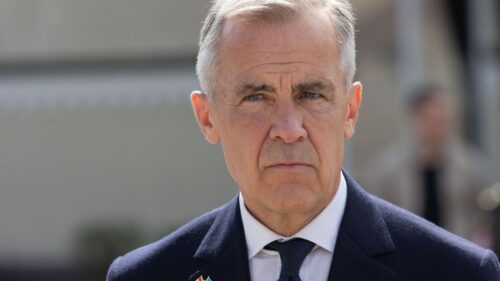
Carney’s speech was a rare moment when a Western leader articulated openly what many governments had been saying quietly: The rules-based international order no longer functions as an effective constraint on power. Speaking at the symbolic center of globalization, Carney argued that ritualized commitments to norms cannot survive in a world where major powers increasingly exempt themselves from them.
What made the speech unusual was not merely its content, but its venue and candor. Davos has historically served as a ceremonial reaffirmation of globalization’s virtues, even as those foundations have eroded. By declaring the normative order effectively dead from that stage, Carney broke a long-standing taboo among close US allies.
A former central banker with deep academic credentials and long experience managing systemic risk, Carney framed the moment in historical and philosophical terms. He invoked thinkers such as Athenian historian Thucydides and Czech leader Václav Havel to contrast a rules-governed order with an emerging Hobbesian reality. He warned that if medium and small powers do not act collectively, they will be subordinated individually. As he put it, “If you’re not on the table, you’re on the menu.”
Carney’s background lends unusual weight to the argument. As a former governor of both the Bank of Canada and the Bank of England, Carney is not a populist insurgent or ideological critic of globalization. He is a system insider warning that the system no longer works as advertised.
That credibility is crucial. Carney speaks not as a nationalist firebrand but as a technocrat accustomed to managing crises within established institutions. His conclusion — that those institutions can no longer be relied upon — therefore carries particular force.
Middle powers in a predatory world
Carney argued that speaking openly changes political reality by breaking taboos that preserve inertia. At the national level, he called for a redefinition of US–Canadian relations and outlined concrete steps already underway. Canada has accelerated trade diversification through bilateral and multilateral agreements that exclude the US, increased defense spending and cooperation with non-US partners and dismantled long-standing internal trade barriers to improve economic resilience.
Carney’s intervention was not rhetorical posturing but strategic signaling. The message was aimed as much at other middle powers as at Washington: Passivity is itself a choice, and usually a losing one.
Carney framed middle powers not as victims but as potential coalition builders. Individually, they cannot match great powers, but collectively, they can shape outcomes, constrain behavior and create alternative centers of gravity.
Critics note that Canada remains deeply dependent on the US market, lending weight to the argument that “there is no alternative.” After all, two-thirds of Canada’s trade is with the US. Glenn accepts the structural constraint but rejects the fatalism. Diversification can reduce dependence on the US and Canadian vulnerability.
Carney’s key point is that middle powers have agency. He did not provide a template for coordinated middle-power action but gave a clarion call for such action. Carney said, “We’re in the midst of a rupture,” while rupturing the illusion that the rules-based order still existed. Now that he has said the quiet part aloud, he has set off a rethinking about a new world order.
By incrementally diversifying trade, defense and diplomatic partnerships, Canada can reduce the costs of disagreement with Washington, even if it cannot eliminate them. That distinction — between dependence and fragility to independence and resilience — is central to Carney’s logic.
Carney’s speech resonated globally because it gave voice to anxieties widely shared but rarely expressed. It is the first signal by a Western leader that resistance to unilateral dominance need not begin with power parity, but with strategic clarity and collective intent.
Atul notes that the reaction to Carney’s speech was itself revealing. Praise came from diplomats, academics and policymakers across Europe, Asia, Latin America and Africa. Many leaders, he suggests, had been waiting for someone to say out loud what they were too scared to say themselves.
In that sense, Carney’s challenge to the Donald Trump administration was less about Canada exercising immediate leverage and more about setting a goal for American allies who have lost or are losing faith in the US. Once the death of the normative order is acknowledged, new strategies — alliances among middle powers, selective decoupling and institutional workarounds — are no longer forbidden. They have now become imaginable and, hence, possible.
[Lee Thompson-Kolar edited this piece.]
The views expressed in this article/video are the author’s own and do not necessarily reflect Fair Observer’s editorial policy.






























Comment