



Will Donald Trump usher in a new way of doing politics?
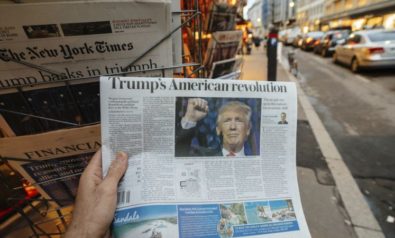
Donald Trump, the orange mystery, has captured the White House in the most unexpected manner and against the wishes of our liberal, globalized world. The common themes running rampant through the anti-Trump protests across America are of the president-elect being a sexist, racist, misogynist and a dictator. The entire Democratic Party campaign and the anti-Trump tirade by intellectuals, academia and media outlets like The New York Times, The Washington Post and Foreign Policy were primarily based on these same themes. There was a dearth of understanding the Trump phenomenon.
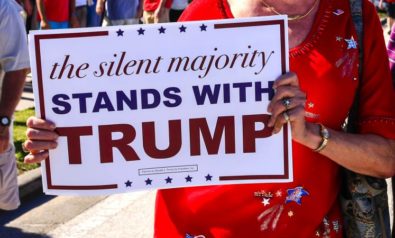
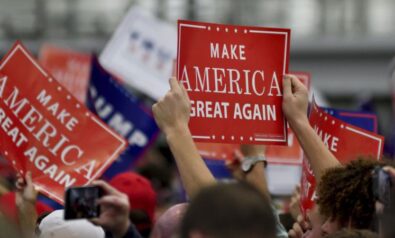
All that was visible in the media was the ridiculing of Trump as a clown. The elitist arrogance was so high that no one was prepared to recognize a simple fact: Trump enjoyed immense support among the electorate, and people had genuine and valid reasons to repose their faith in him. This elitist idealism and liberalism led to the Democratic Party’s defeat.
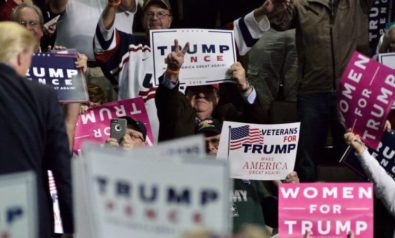
Donald Trump has been elected the 45th president of the United States. That is not going to change. So, there is no point indulging in polarizing tactics and spreading hate against him or his supporters on the basis of fictitious fears. There must be an attempt to understand what this man means to the US and the world.
In the capacity of US president, Trump could shape international affairs for at least the next four years. And today, the world is going through crucial times with the challenge of Islamic extremism, the surge of right-wing populism, a resurgent Russia, recalcitrant nuclear powers like North Korea and Pakistan, and the increasing ambitions of China for global dominance.
Not as Bad as You Think
The key question, however, is whether Trump, a billionaire businessman who has no experience in politics, really believes the things he spouted throughout his election campaign, or if that was pure rhetoric just to capture popular support.
America is a mature democracy where election promises and their implementation matter. Candidates like Hillary Clinton and Bernie Sanders, who have a long background in politics, are more likely to believe in sticking to campaign promises. Most analysts from a liberal academic background also hold the same belief. However, Trump has a business mindset and, for him, the literal translation of what he promised might not matter much because he does not come from a political background. He could even backtrack from the more extreme and unrealistic things that he promised. Like a good businessman, he is expected to differentiate between rhetoric and reality. He could be flexible, realistic and pragmatic in his approach to US foreign policy.
Scholars have found Trump’s views on foreign policy to be incoherent, erratic and uninformed. Vanda-Felbab Brown of Brookings writes:
“[C]andidate Trump did not feel bound by an ideology or the need for consistency. On issue after issue, he flip-flopped and adopted blatantly contradictory positions. Such erratic and inconsistent behavior will prove damaging if he practices it in the office. But then it can be argued that it also gives him a lot of room to go back on most of the detrimental and insane statements of the campaign and embrace sounder policies. He thus has an initial chance to make policy choices on the basis of carefully considering experienced and multiple voices rather than the campaign’s fury.”
Rethinking Foreign Policy
US foreign policy under the Trump administration could see a major restructuring of the post-Cold War order based on Western military alliances; globalization; trade liberalization; democratic states; the role of international institutions in global governance; the free flow of capital, labor and goods; and multiculturalism. This restructuring will be reflected in myriad domains of his foreign policy. The president-elect has already questioned the relevance of the North Atlantic Treaty Organization (NATO) on the grounds that American taxpayer money is spent on European security. There is a strong possibility of budget cuts in NATO military expenditure under Trump.
All NATO members are required to contribute 2% of their gross domestic product (GDP) to defense spending, but not all of them are meeting this, including France, Germany and Canada, while the US pays 3.6% of its GDP. So, other partners might have to increase their budgetary contributions. However, this does not mean that America will withdraw from NATO. US spending on collective security alliances is not an act charity or generosity—it is to serve US geopolitical interests and guarantee its security and that of its allies.
Further, with increasing populist and hyper-nationalistic trends across the Europe, Russia might even lose its status as enemy number one. A series of populist leaders across the continent have expressed more concern over the refugee crisis, economic slowdown, loss of national identity and Islamic extremism than Russian actions in Ukraine. The same issue applies when it comes to a reduction in military aid to Japan and South Korea, among others. Even if defense aid is provided under a Trump administration, Washington would need to ensure that it is done purely for US interests and that funds are not diverted elsewhere.
One is expected to see a less assertive and aggressive America in the South China Sea. STRATFOR, a global intelligence portal, has opined that as a result of this, Japan and South Korea will be left to develop their own military capabilities to defend themselves. This might lead to the heavy militarization of Japan and South Korea. There is also a possibility of both countries developing nuclear arsenal. Japan’s pro-activeness can already be seen in the form of its reaching out to India for a strategic alliance, which has disturbed China.
US withdrawal will result in some easing of the current friction between China and the US, but Beijing will still not feel too happy due to a new, developing coalition of India, Japan, Vietnam and Australia to check the dragon. However, China could find some peace as President Trump is unlikely bother Beijing over its human rights issues.
European Security Under Trump
In Europe, the post-war security order might feel its first jolt as Trump has already shown his intent to rebuild relations with Russia. Trump’s victory is an occasion for celebration in Moscow. President Vladimir Putin expects major concessions when it comes to sanctions on Russia and American support for Syrian rebels. If this happens, Russia will have more leverage in its backyard to dictate policies to the Baltic states and Poland, and to limit the reach of NATO in the region.
Russia has felt the expanding tentacles of NATO in Europe. There will definitely be some relief on that front. European states will have to improve their ability to defend themselves. And, at the same time, Russia will find space to flex its muscles in Europe. With improved relations between Russia and the US, there is strong potential for progress on the disarmament of nuclear warheads.
Similarly, in Syria, it is expected that a reduction of US support for Syrian rebels will result in alleviating US-Russia tensions. If Trump shows indications of a withdrawal from the Middle East, there is a possibility of heightened sectarian tensions in the region between state and non-state actors. You can expect to see more American-Russian cooperation on counterterrorism, too.
Counterterrorism
If there is any area for Trump to show serious and focused action, then it is counterterrorism. The incoming US president should take action on Wahhabi proselytization activities across the globe, and compel countries like Saudi Arabia and Pakistan to take strong and credible action against Islamic extremism. Trump must strengthen international institutions and legal mechanisms to deal with terrorist organizations, terror financing and the countries providing safe havens to militant groups.
It is also recommended that Trump takes up a strong effort to cultivate India as a strategic ally. With its strong democracy and India’s crucial geostrategic position, New Delhi can be a crucial ally in counterterrorism and to help decide matters in the Af-Pak region and the South China Sea.
Trump has already expressed his desire to form a friendship with New Delhi. India is a country that has a good relationship with both Russia and the US, so there is a possibility that New Delhi will see an enhancement in its global role as a peacemaker and mediator. An American withdrawal from the role of the global policeman could pave the way for a greater role of emerging powers like India.
However, Trump should not fritter away these opportunities by inviting frictions with India—such as by restricting the quota of H1B visas for Indian professionals, or by not taking concrete steps to declare Pakistan as a terrorist state and continuing aid to Islamabad.
Nationalism
When it comes to trade, one could expect more of nationalist economics under Trump, which might result in him refusing to ratify the Trans-Pacific Partnership (TPP) and the Transatlantic Investment and Trade Partnership (TTIP). We could expect protectionism, some reversal in globalization trends and tough days for immigrants.
Geopolitics, however, is not simply governed by individual whims. The global post-war order has become entrenched, and it is impossible to simply change it with the stroke of a pen. American interests have become so strongly consolidated in the liberal world order—free-market capitalism, globalization and international trade—that it is not possible to reverse the whole process. If Trump bans Chinese goods from US markets or drives up import tax, there will be a backlash from American consumers due to rising prices.
However, it is absolutely quixotic to imagine that manufacturing can be brought back to the United States. What one can envision is the evolution of the existing world order in a more egalitarian and democratic manner, respecting concerns for diversity and the interests of local groups.
Similarly, given the fact that most of the Republican leadership, military and intelligence agencies are strongly anti-Russia, the incoming president will not revolutionize US policy with the Kremlin. Trump, with his political inexperience and lack of knowledge, is expected to fall back on US agencies and policy wonks for advice and action. The post-Cold War security order is based on harsh geopolitical realities, and it will not be possible for Trump to translate his personal admiration for President Putin into some kind of divine bonhomie between Russia and the US. So, do not expect a major break from the past.
Donald Trump and Realism
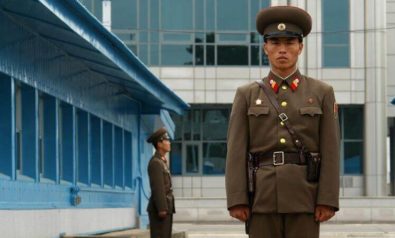
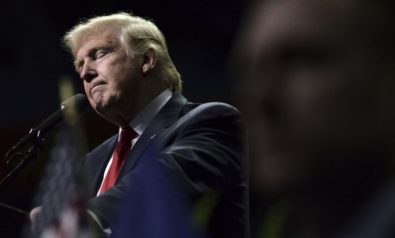
Finally, the only concern is the erratic, quick tempered and loudmouthed nature of Donald Trump. Any hasty or quick-tempered decision regarding wars or nuclear matters could be catastrophic. This might have serious consequences in dealing with countries like North Korea and Iran.
You can expect that the incoming US president will soon realize the meaning of the saying, “You campaign in prose, and govern in verse.” If Trump realizes the limitation of geopolitics and the modern, globalized and highly inter-connected world, he has the opportunity to present a rational and wise foreign policy capable of ushering in peace and harmony amidst the turmoil and violence of today.
Given the fact that Trump does not have the level of knowledge of geopolitics that a president is expected to have, his views on foreign policy need a nuanced analysis in terms of what he actually means rather than going by his campaign rhetoric. Academically speaking, Trump’s views on foreign policy veer around the realist school of international relations (IR). For example, when Trump expresses his displeasure over unnecessary wars, he comes close to Stephen M. Walt, an expert on IR from the realist school, who has categorically stated that the Iraq War and regime change in Libya were not necessary unlike the Afghanistan War.
In today’s world, a realistic take on geopolitics is the need of the hour. The universal and blind application of idealistic doctrines like humanitarian and democratic intervention without understanding the local context have led to the chaos that the international community witnesses today in the Middle East. President Trump has a real chance to hire the best realist experts on IR and chart out a course that could make the world a safer place to live.
The views expressed in this article are the author’s own and do not necessarily reflect Fair Observer’s editorial policy.
Photo Credit: Bastiaan Slabbers
Support Fair Observer
We rely on your support for our independence, diversity and quality.
For more than 10 years, Fair Observer has been free, fair and independent. No billionaire owns us, no advertisers control us. We are a reader-supported nonprofit. Unlike many other publications, we keep our content free for readers regardless of where they live or whether they can afford to pay. We have no paywalls and no ads.
In the post-truth era of fake news, echo chambers and filter bubbles, we publish a plurality of perspectives from around the world. Anyone can publish with us, but everyone goes through a rigorous editorial process. So, you get fact-checked, well-reasoned content instead of noise.
We publish 3,000+ voices from 90+ countries. We also conduct education and training programs
on subjects ranging from digital media and journalism to writing and critical thinking. This
doesn’t come cheap. Servers, editors, trainers and web developers cost
money.
Please consider supporting us on a regular basis as a recurring donor or a
sustaining member.
Will you support FO’s journalism?
We rely on your support for our independence, diversity and quality.





















Commenting Guidelines
Please read our commenting guidelines before commenting.
1. Be Respectful: Please be polite to the author. Avoid hostility. The whole point of Fair Observer is openness to different perspectives from perspectives from around the world.
2. Comment Thoughtfully: Please be relevant and constructive. We do not allow personal attacks, disinformation or trolling. We will remove hate speech or incitement.
3. Contribute Usefully: Add something of value — a point of view, an argument, a personal experience or a relevant link if you are citing statistics and key facts.
Please agree to the guidelines before proceeding.