





Fair Observer’s Video Producer Rohan Khattar Singh speaks with historian Daniel J. Fernández-Guevara about why Cuba, despite facing one of the gravest crises in its modern history, still has not collapsed. The island is enduring deep economic pain, constant blackouts, inflation, outmigration and institutional strain. Yet Fernández-Guevara argues that anyone trying to understand Cuba must look beyond the usual predictions of imminent regime change and pay attention to the forces that have long sustained the country: national sovereignty, historical memory and local resilience.
A crisis without a clear breaking point
Fernández-Guevara describes Cuba’s present condition as a “polycrisis,” borrowing the term as it applies to the island from scholar Mayra Espina. The country is confronting several overlapping emergencies at once: economic decline tied to Venezuela’s reduced support, structural adjustments to a harsher global market, severe demographic loss through migration and the corrosion of the solidarity networks that once helped people endure hardship.
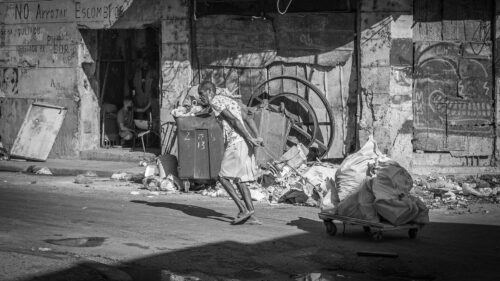
This has brought grave social consequences. Infant mortality has risen, life expectancy has fallen and the energy grid is in near collapse. Blackouts have become routine, disrupting hospitals, schools and daily life. Fernández-Guevara goes so far as to say the situation is in some respects worse than the crisis that followed the collapse of the Soviet Union.
Even so, he resists declaring that Cuba is on the verge of collapse. As he notes, “Everyone who has forecasted the change in government in Cuba has been wrong for 67 years.” That does not make the current situation any less severe. It means only that suffering alone has not translated neatly into regime change.
Why Cuba never fully embraced the China or Vietnam model
Khattar Singh presses Fernández-Guevara on why Cuba has not taken the same path as China or Vietnam, both of which incorporated major elements of capitalism while preserving one-party rule. Fernández-Guevara explains that Cuba has repeatedly opened parts of its economy, then pulled back once private wealth began to accumulate too visibly.
He recalls a remark from someone close to the Cuban government: “Cuba wants to have a country that makes millions and millions of dollars but without any millionaires.” That paradox lies at the heart of the Cuban system. The leadership wants growth, foreign exchange and investment, but remains wary of the inequalities that market reform can unleash.
This pattern has produced a stop-start cycle of reform and retrenchment. Tourism was opened. Small private restaurants, or paladares, emerged. Independent drivers and other small entrepreneurs found room to operate. But each time the private sector began to develop social and economic weight, the state moved to contain it.
Fernández-Guevara suggests that Cuba has not followed a long-term strategic reform plan so much as it has improvised under pressure. It has had to adapt not only to the global spread of capitalism, but also to shifting regional politics and the collapse of older support systems.
Sovereignty, memory and the rejection of foreign pressure
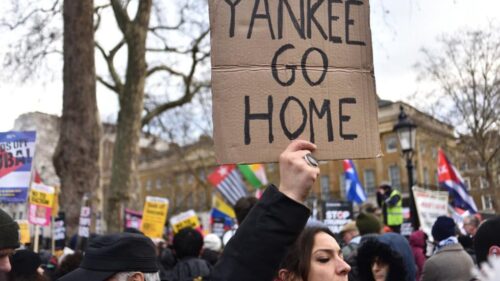
For Fernández-Guevara, the key to Cuba’s endurance lies not only in institutions, but in history. He believes many outside observers underestimate how central national sovereignty remains to Cuban political identity. Cubans may be deeply critical of their own government, but that does not mean they welcome external intervention.
He points to a long history of US involvement in Cuban affairs. After the war of 1898, the United States intervened directly and then imposed the Platt Amendment, which embedded US power in the island’s constitutional order. Washington later backed Batista, including after his 1952 coup against a constitutional government. That memory still shapes how many Cubans understand foreign pressure today.
As Fernández-Guevara puts it, “national sovereignty is a very important thing” in Cuba. The 1959 revolution, despite all its failures and contradictions, still carries symbolic weight because it is seen by many as the moment Cuba definitively resisted outside domination.
That helps explain why US pressure does not always produce the outcome Washington expects. Hardship can fuel anger, but it can also reinforce a siege mentality, strengthen nationalist sentiment and push people to rely more heavily on one another.
Trump, Rubio and the logic of maximum pressure
The conversation then turns to US President Donald Trump’s renewed focus on Cuba and the role of Secretary of State Marco Rubio in shaping policy. Fernández-Guevara argues that the Trump administration sees Cuba as unusually weak after the pandemic, the collapse of tourism, currency unification and the continuing deterioration of the energy system.
He contrasts this with the years of US President Barack Obama’s administration, when normalization created what he remembers as a mood of genuine optimism. Cubans repaired homes, opened businesses and believed the long freeze with Washington might finally end. Trump’s first term halted that opening, and US President Joe Biden largely continued the same restrictions. Then came Covid-19 and a disastrous currency reform, which compounded the damage.
From Fernández-Guevara’s perspective, the current administration appears to believe this is the best possible moment to force concessions. He describes that approach as “the bluster of the art of the deal,” with foreign policy treated as a coercive business negotiation.
Yet he is careful not to pretend that Washington’s aims are fully clear. Economic liberalization appears to be one goal. Tourism and foreign capital may be another. But whether the US wants a negotiated transition or a more confrontational outcome remains uncertain.
Why Cuba still endures
Khattar Singh closes by asking the most important question: If life in Cuba is so hard, why has the system not broken? Fernández-Guevara says that Cuba lacks a coordinated opposition of the kind seen in Venezuela, while still retaining a powerful state structure, especially through the military. Protest exists, but it remains fragmented and localized.
At the same time, ordinary Cubans have decades of experience surviving under pressure. Communities share resources. Families improvise. People leave when they can, adapt when they cannot and continue living inside a system that has taught them endurance.
This is what outsiders miss. Cuba is not simply a failing state waiting to tip over. It is a society marked by exhaustion, pain and uncertainty, but also by a long political memory and a stubborn resistance to external designs. That is why the country’s future remains so difficult to predict.
[Lee Thompson-Kolar edited this piece.]
The views expressed in this article/video are the author’s own and do not necessarily reflect Fair Observer’s editorial policy.




























Comment