


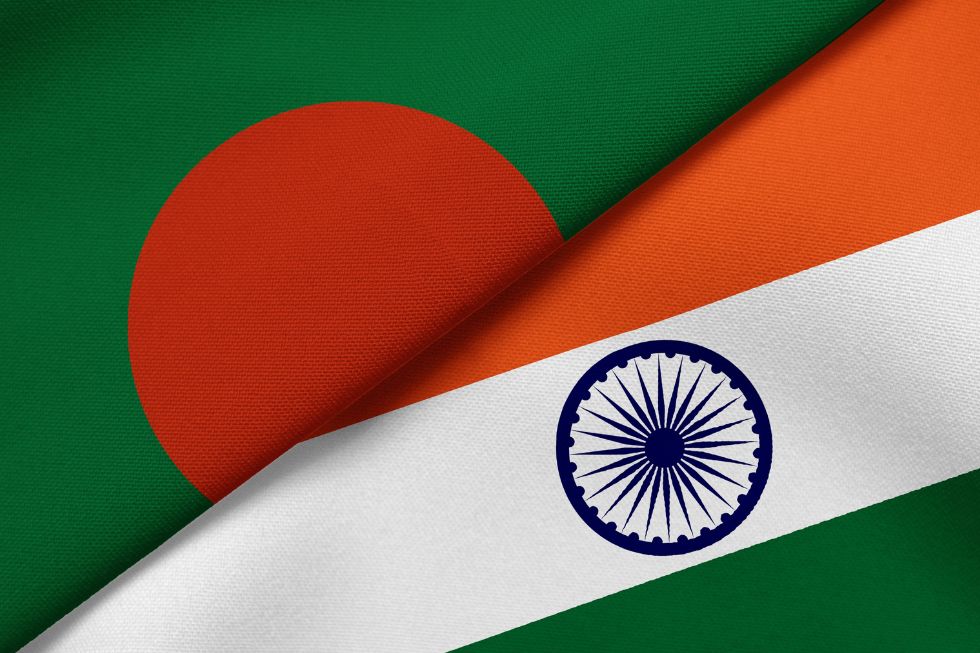



On February 24, the Agartala-Dhaka-Kolkata international bus service, linking the Indian states of Tripura and West Bengal via Bangladeshi territory, was resumed after an 18-month suspension. Four days prior to this, all Bangladeshi diplomatic missions in India resumed issuing visas of all categories to Indian citizens on a limited scale, with India reportedly contemplating doing the same. Meanwhile, some Indian media outlets are expressing cautiously optimistic views of a “reset” in ties with Bangladesh under the newly elected government in Dhaka, while others continue to push anti-Bangladeshi narratives.
For example, the Assam Tribune recently claimed that Bangladesh is involved in a conspiracy to send “illegal immigrants” to West Bengal ahead of the province’s Legislative Assembly elections. On February 26, Indian law enforcement agencies initiated a major crackdown on alleged Bangladeshi “illegal immigrants” in Bengaluru. This demonstrates that the Indo–Bangladeshi relations remain in flux after the recent parliamentary elections in Bangladesh.
Compartmentalization in foreign policy
In foreign policy, the concept of compartmentalization refers to a situation in which states compartmentalize the issues in their relations, leading to cooperation on some issues and disputes in others, while avoiding complete rupture.
In the 21st century, the relationship between Russia and Turkey best exemplifies the notion of compartmentalization in foreign policy. Since the 2010s, Russia and Turkey have engaged in competition for influence and in some instances, proxy wars in several theaters, including Syria, Libya and Transcaucasia. Simultaneously, Russia served as the principal source of natural gas for Turkey, built a nuclear power plant in Turkey and sold advanced air defense systems to it, while millions of Russian tourists continued to visit Turkey every year.
Even now, Turkey supports Ukraine’s territorial integrity, supplies it with weapons and seeks to undermine Russian influence in the South Caucasus and Central Asia, yet it continues to act as a mediator between Russia and Ukraine, buys large quantities of oil and gas from Russia, and acts as a hub of key EU-origin military goods for Russia. This is a classic example of compartmentalization of bilateral relations, in which Moscow and Ankara cooperate on several issues and compete in others, while avoiding outright conflict.
Partial compartmentalization: Indo–Bangladeshi relations after the July uprising
After the overthrow of the Bangladesh Awami League-led government, which was closely aligned with India, on August 5, 2024, an interim government took power in Bangladesh, and bilateral ties between Dhaka and New Delhi went downhill. Between August 5, 2024, and February 12, 2026, India undertook several hostile actions against Bangladesh. New Delhi suspended most visa services for Bangladeshi citizens, withdrew nonessential staff and their families from Indian diplomatic missions in Bangladesh, canceled transhipment facilities for Bangladesh, started forcibly pushing migrants over the border and refused to normalize ties with Dhaka pending additional elections.
Moreover, Indian media outlets waged a sustainable information warfare campaign against Bangladesh. Indian politicians accused Bangladesh of conducting a “genocide” against Hindus. The Bangladeshi High Commission in New Delhi and the Assistant High Commission in Agartala were attacked, and some Indian politicians and analysts indirectly called for genocide and ethnic cleansing of Bangladeshis.
In response, Bangladesh undertook some reciprocal actions against India, including the suspension of bus services to India, the cancellation of a $21 million defense deal and a refusal to sign an energy deal with India’s H-Energy. Moreover, Indian commentators viewed Bangladesh’s rapprochement with Pakistan, recalibration of ties with China and defense procurement negotiations with Turkey negatively.
Yet Dhaka sought to avoid a complete rupture in bilateral relations, leading to continued cooperation between the two countries in some sectors. For instance, Bangladesh held a joint naval exercise with India in the Bay of Bengal in March 2025, continued to import diesel from India and exchanged prisoners with its neighbor in January 2026. Also, Bangladesh refrains from formally joining any anti-Indian bloc or alliance.
Thus, under the interim government, Indo–Bangladeshi relations underwent a process of partial compartmentalization. This means that bilateral issues were dealt with separately instead of collectively, leading to disputes on some issues and cooperation in others.
Towards full compartmentalization?
After the formation of a government led by the Bangladesh Nationalist Party (BNP), both Indian and Bangladeshi officials have expressed optimism about the normalization of bilateral ties and some steps. These steps include the invitation sent to Indian Prime Minister Narendra Modi at the inauguration of the BNP-led government and the resumption of the India–Bangladesh bus service and visa services for Indians, which have already been taken in this regard.
Yet, the BNP’s political legitimacy is largely based on a narrative of “protecting Bangladesh’s sovereignty” vis-à-vis external actors, particularly India. It has repeatedly expressed strong stances on issues such as border killings and water-sharing. While the new government in Dhaka has extended an olive branch to New Delhi, Pakistan is likely to invite Prime Minister Tarique Rahman as the chief guest to the Pakistan Day parade next month, indicating continued rapprochement between Dhaka and Islamabad.
Moreover, if the BNP-led government is viewed as “too soft” on India by opposition parties, such as the Bangladesh Jamaat-e-Islami and the National Citizen Party (NCP), it is likely to face significant domestic political backlash. Similarly, the right-wing Bharatiya Janata Party-led (BJP) government would be hard-pressed to make any concessions to Bangladesh, especially as the BJP’s domestic political narrative uses a lot of anti-Bangladeshi rhetoric.
Hence, it is highly unlikely that the Indo–Bangladeshi partnership is going to reach the level it achieved under the Awami League government. Nonetheless, it would be in the interests of both Dhaka and New Delhi to cooperate on a range of issues, including water-sharing, transnational crime, migration, trade and connectivity. Such cooperation could prevent the outbreak of conflict.
The Ganges Water-Sharing Treaty is set to expire on December 12, 2026, and the two parties would need to negotiate to avert another crisis about the sharing of the waters of the transboundary Ganges River. On the other hand, issues such as Bangladesh’s growing strategic ties with China, Pakistan and Turkey, border killings, the potential denationalization of millions of Bengalis in Assam and the use of xenophobic rhetoric in domestic politics would continue to complicate bilateral ties and preclude full concord. Thus, under the BNP-led government, Indo–Bangladeshi relationship is likely to slide towards full compartmentalization.
[Patrick Bodovitz edited this piece]
The views expressed in this article are the author’s own and do not necessarily reflect Fair Observer’s editorial policy.
Bangladesh Post-Monsoon Uprising: A New Era of Political Change
Bangladesh’s 13th general elections marked a significant political shift, with the Bangladesh Nationalist Party winning amid moderate voter turnout and...
Can Bangladesh’s Nationalist Party Transform the Country’s Foreign Policy?
Dhaka’s incoming government won elections on a “Bangladesh First” foreign policy platform. To successfully lead the country, the Bangladesh Nationalist...

Defense Without Strategy: India’s Strategic Pretense
Swami Vivekananda, the great Yogi, said, “With every man, there is an idea; the external man is only the outward...

Support Fair Observer
We rely on your support for our independence, diversity and quality.
For more than 10 years, Fair Observer has been free, fair and independent. No billionaire owns us, no advertisers control us. We are a reader-supported nonprofit. Unlike many other publications, we keep our content free for readers regardless of where they live or whether they can afford to pay. We have no paywalls and no ads.
In the post-truth era of fake news, echo chambers and filter bubbles, we publish a plurality of perspectives from around the world. Anyone can publish with us, but everyone goes through a rigorous editorial process. So, you get fact-checked, well-reasoned content instead of noise.
We publish 3,000+ voices from 90+ countries. We also conduct education and training programs
on subjects ranging from digital media and journalism to writing and critical thinking. This
doesn’t come cheap. Servers, editors, trainers and web developers cost
money.
Please consider supporting us on a regular basis as a recurring donor or a
sustaining member.
Will you support FO’s journalism?
We rely on your support for our independence, diversity and quality.





Comment