





Editor-in-Chief Atul Singh and Cynthia Farahat, an Egyptian author and political activist, discuss the origins, ideology and evolution of the Muslim Brotherhood. Their discussion traces the movement from its founding in 1928 to its global reach today, while probing a central question: Is the Brotherhood a political organization that adapted over time, or a movement whose core ideology has remained constant? Singh tests widely held academic interpretations while Farahat offers a sharply critical reading that challenges distinctions between moderation and militancy within political Islam.
 Spotify
 Amazon Music
Origins and ideological foundations
Singh begins by explaining the Muslim Brotherhood’s historic context. Founded in 1928 by Egyptian schoolteacher Hassan al-Banna, the organization emerged during an era of imperial competition and political upheaval across the Middle East. Farahat argues that its roots extend further back, linking its formation to late 19th-century geopolitical strategies that sought to mobilize religious identity for political ends. She cites a German memorandum from 1882 that declared, “We will unleash Muslim fanaticism that borders on insanity.”
For Farahat, the Brotherhood is not simply a reformist or revivalist movement but a synthesis of ideological, political and militant strands aimed at establishing an Islamic caliphate. Singh introduces the conventional distinction between al-Banna’s gradualism and later radical thinkers such as Sayyid Qutb, often seen as the intellectual architect of modern Islamist militancy. Farahat rejects this divide, arguing that Qutb did not transform the Brotherhood’s ideology but rather systematized it. In her view, the movement’s foundational texts already contain the elements later associated with militancy.
Structure, strategy and global expansion
Singh and Farahat then turn to how the Brotherhood organized itself and expanded beyond Egypt. Farahat emphasizes the creation of the “Secret Apparatus,” an early paramilitary wing that she describes as central to the movement’s structure. She portrays the organization as combining hierarchical discipline with ideological cohesion, enabling it to operate across national boundaries.
Singh probes the extent to which the Brotherhood influenced or intersected with other Islamist movements. Farahat argues that many modern Sunni militant groups emerged from or were shaped by Brotherhood networks, pointing to historical overlaps in membership and ideology. This claim remains contested in broader scholarship, however.
Farahat also highlights the role of thinkers such as Syed Abul A’la Maududi, the South Asian Islamist intellectual who reframed Islamic political concepts in modern terms. She suggests that Maududi’s reinterpretation of governance and sovereignty helped make Islamist ideas more accessible, providing a vocabulary that later figures, including Qutb, could build upon.
Power, governance and the Morsi moment
Singh shifts the focus to the Brotherhood’s brief period in power following Egypt’s 2011 uprising. Former Egyptian President Mohamed Morsi’s administration marked the first time the movement governed through electoral legitimacy. Singh raises the key question: Was this an opportunity for the Brotherhood to evolve into a democratic political actor, or did it reveal deeper ideological constraints?
Farahat argues that the movement’s time in power exposed its underlying agenda. She dismisses its use of democratic language as tactical, describing it as “putting lipstick on a pig.” She feels the Brotherhood functions most effectively when operating outside formal power structures, where it can balance political participation with ideological mobilization.
Singh counters by noting structural constraints, including tensions with Egypt’s military, judiciary and entrenched state institutions. Did the Brotherhood fail because of its own ideological rigidity? Or because it could not successfully navigate Egypt’s political system?
International networks and contested narratives
The final part of the discussion explores the Brotherhood’s international presence. Singh raises reports of internal divisions, such as the alleged split between London- and Istanbul-based factions. Farahat dismisses these as largely superficial, arguing that the organization maintains centralized ideological control despite operating across different regions.
She also identifies countries such as Qatar and Turkey as key hubs, while noting that Western states have at times provided space for Brotherhood-linked networks to operate. Singh situates this within a broader geopolitical context, where states balance security concerns with strategic interests.
While the Brotherhood has, in some contexts, presented itself as a nonviolent political actor, Farahat insists that such claims are inconsistent with its internal discourse and historical trajectory. Her argument reflects one side of a deeply polarized debate about political Islam and the boundaries between activism, governance and militancy.
An unresolved legacy
Singh and Farahat close by reflecting on the Brotherhood’s future. For Singh, the key issue is whether movements rooted in ideological certainty can adapt to pluralistic political systems. Farahat remains skeptical; meaningful transformation, she says, is unlikely without fundamental change.
Nearly a century after its founding, the Muslim Brotherhood continues to shape political debates across the Middle East, not only as an organization but as an idea that remains contested, influential and unresolved.
[Lee Thompson-Kolar edited this piece.]
The views expressed in this article/podcast are the author’s own and do not necessarily reflect Fair Observer’s editorial policy.
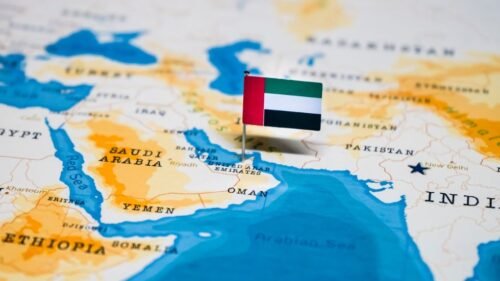
The UAE Fuels Moves to Ban the Muslim Brotherhood
United Arab Emirates (UAE) Foreign Minister Abdullah bin Zayed’s 2017 warning about Islamist extremism in Europe echoes today as Western...
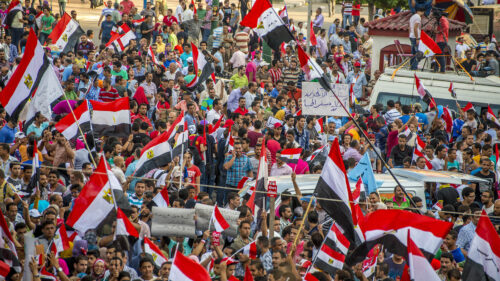
Fascistic Tendencies in the Muslim Brotherhood
Right from its beginnings in 1928, Egypt’s Muslim Brotherhood was inspired by fascism. Even today, its animating ideas, guiding principles,...


China–Taiwan Tensions — Civil War Legacies and Geopolitical Chess
Since President Xi Jinping came to power in 2012, China has been acting more aggressively towards Taiwan. Tensions go back...
The Dialectic: Narendra Modi’s Vegetarian Stalinism Has Ruined the Indian Economy
In this episode of The Dialectic, Atul Singh and Glenn Carle explain how India’s current leader has rolled back the...
FO° Podcasts: Maduro, the War on Drugs and Trump’s Revival of the Monroe Doctrine
In this episode of FO° Podcasts, Atul Singh and Benjamin Delille examine US President Donald Trump’s confrontation with Venezuela, questioning...
FO° Podcasts: Myanmar Votes During a Civil War: Why This Election Could Tear the Country Apart
In this episode of FO° Podcasts, Rohan Khattar Singh and Asanga Abeyagoonasekera examine Myanmar’s December 28 elections against the backdrop...

FO° Podcasts: The Forbidden C-word, Class in America
In this episode of FO° Podcasts, Atul Singh and Kent Jenkins Jr. discuss how class shapes US identity and political...

The Dialectic: France: The Eternal Crisis Strikes Again. What Now?
In this episode of The Dialectic, Atul Singh and Glenn Carle examine France’s deepening polycrisis. Rising debt, political paralysis and...
The Dialectic: Can Germany Outgrow Its Postwar American Model?
In this episode of The Dialectic, Atul Singh and Glenn Carle explore how Germany faces acute economic, political and social...

FO° Podcasts: The Right to Play: How Women Fought and Won the Battle for Equality in Sports
In this episode of FO° Podcasts, Atul Singh and Lauren Greenberg explore how Title IX reshaped women’s sports and personal...

FO° Podcasts: Enemy of the Sun — How Palestinian Poetry Became a Weapon of Resistance
In this episode of FO° Podcasts, Atul Singh and Edmund Ghareeb trace the unlikely journey of the Palestinian poetry anthology...

FO° Podcasts: Why is the US Deporting Illegal Migrants to a Tiny African Nation Called Eswatini?
In this episode of FO° Podcasts, Rohan Khattar Singh and Zweli Martin Dlamini examine the secret deportation deal between the...

The Dialectic: Can Germany and France Make Europe Great Again?
In this episode of The Dialectic, Atul Singh and Glenn Carle examine Europe’s rise from Renaissance brilliance to post-World War...
Project 2025 and Donald Trump’s Dangerous Dismantling of the US Federal Government
In this episode of The Dialectic, Atul Singh and Glenn Carle dissect US President Donald Trump’s destruction of federal institutions....




Comment