

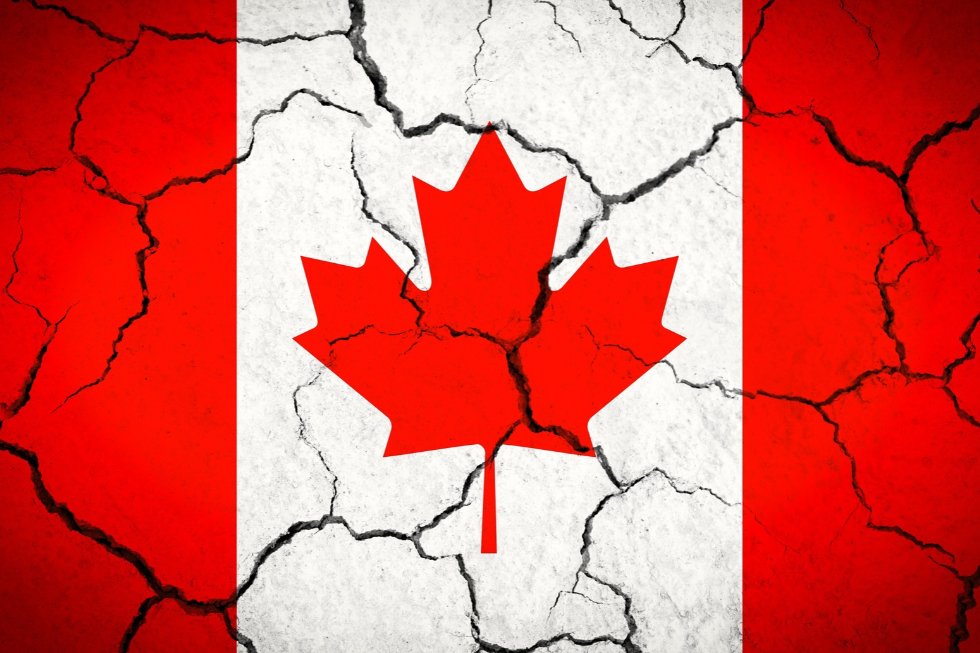



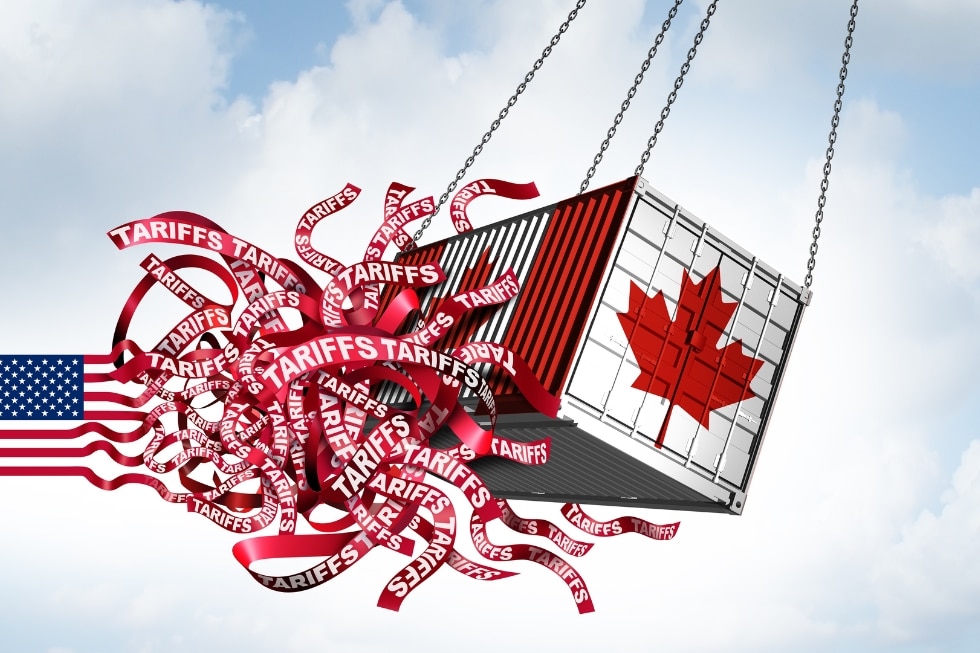
As a writer and editor, I’ve always been attracted to alliterations — whether true or stereotypical or just fun. When applied to nationalities, one can come up with terms like “the boisterous Brazilians,” “the fashionable French,” “the stoic Swedes,” “the spirited Spaniards” or “the amiable Australians.” But when I turn my gaze on Canadians today — in the face of continuing threats from the US of making Canada its 51st state, a trade impasse with the US and an upcoming referendum on the separation of the province of Alberta (likely followed by a speedy absorption into the US) — I get three terms strung across the spectrum and indeed three distinct groups of people: those who are committed, those who are conflicted and those who are complacent.
The committed
Committed Canadians see Canada as different and distinct from America. They are patriotic and committed to Canada standing strong as a sovereign nation. Politicians such as Prime Minister Mark Carney, Ontario Premier Doug Ford and Manitoba Premier Wab Kinew, along with public advocacy movements such as Allies for a Strong Canada, United for Canada, Forever Canadian and Vote to Stay, lead them.
These are Canadians who, as soon as they heard threats of the US annexing and tariffing Canada wafting across the border, started to avoid travel to the US. From 2024 to 2025, Canadians spent $3.3 billion less on travel to the US and made 7.4 million fewer trips across the border. The more affluent who used to annually winter in the US (often in the warmer climes of Arizona, California or Florida) have sold their American homes and plan to either winter elsewhere or brave the cold with the rest of their fellow Canadians.
According to a recent poll, 55% of Canadians report that they have stopped buying American brands, while 69% say they are choosing Canadian products despite higher prices. They have developed websites (such as Made in CA, The Canada List and Made by Canadians) that list Canadian products as substitutes for American ones. They have also urged their beloved Loblaw (a national grocery chain) to clearly label the origin of the products on its shelves so they can avoid American products.
The conflicted
Conflicted Canadians have been uneasy about the threats of annexation and the trade war, but they still value good relations with the US, even if it means Canada has to compromise. One of their leaders is Alberta Premier Danielle Smith, who regularly visits American leaders and claims she is holding a referendum on Alberta separation solely for the sake of her people.
These Canadians often have friends and family across the border. Some 390,000 Canadians are dual citizens, holding both Canadian and American passports. Some 1.7 million Canadians work for US-owned multinational companies. Many Canadians may own a business that sells many of their products to the US; Canada exports some $400 billion in goods to the US each year. Or they may own a business that imports products from the US to sell to Canadians. Or the Canadian company may have a US-based subsidiary. Whatever the reason, it’s understandable that their loyalties are split.
Even our neighborhood grocery store, boldly named “Real Canadian Superstore,” is ambiguous. They make purchasing difficult for committed Canadians — by either not clearly labeling where some fruits and vegetables are from, or mixing American apples with apples from other countries, or offering US potatoes individually while offering Canadian potatoes only in five- and ten-kilo bags.
The complacent
Then there are the complacent Canadians who are not sure what all the fuss is about. Being complacent, they haven’t bothered to identify a leader. “Hey, chillax, we’re Canada! What can go wrong? Sure, the US administration is making some nasty remarks, but they jest. Boys will be boys; hegemons will be hegemons. But at the end of the day, we’re all just one big family. We look similar. We speak the same language. We watch the same TV shows and movies. We listen to the same music. We eat the same foods. We play the same sports and even share leagues.”
These Canadians may still retain their winter home across the border. And if they don’t, they go to the US whenever an occasion arises or even just for holidays. How nice to see the fall colors from Vermont — as opposed to seeing it from Ontario or Quebec. Or to trade two weeks of the cold Canadian winter for the balmy Florida one. They may be aware that they are spending their hard-earned money in the US (a country that is threatening Canada’s existence) and supporting the American economy — but they don’t mind. To them, there is no “them” vs. “us”; we are one.
Apart from individuals, even some Canadian institutions fall into this bracket. Take the Canadian Broadcasting Corporation (CBC). Similar to the BBC in the UK, the CBC is Canada’s national public broadcaster, and partly funded by the Canadian government. Its flagship nightly newscast, called The National, always closes with a heart-warming human-interest story. As often as not, this story is situated in the US. Ironically…or perhaps tellingly, this segment is called “Our Moment.” We are one.
The Canadians??
Maybe Canadians have always been divided: some committed, some conflicted, and some … well, whatever. But in the past, when the world seemed a kinder and gentler place, at least to Canadians, it didn’t matter so much. In fact, it was seen as a strength. We were open-minded, free to choose and diverse; we were a cultural mosaic. But now — when we are under threat, both economically and in terms of security — those same diverse perspectives become a source of instability and weakness, and therefore, manipulation.
This is no longer just an exercise in alliteration. It’s no longer just a topic of friendly debate over a glass of ice wine or Molson beer. It’s no longer just fun. At this juncture, how we see ourselves is critical. We need to come together and choose one adjective — keeping in mind that our choice could determine our existence.
[Kaitlyn Diana edited this piece.]
The views expressed in this article are the author’s own and do not necessarily reflect Fair Observer’s editorial policy.






Join the conversation
Share your perspective
Log in to share your thoughts and take part in the discussion.