


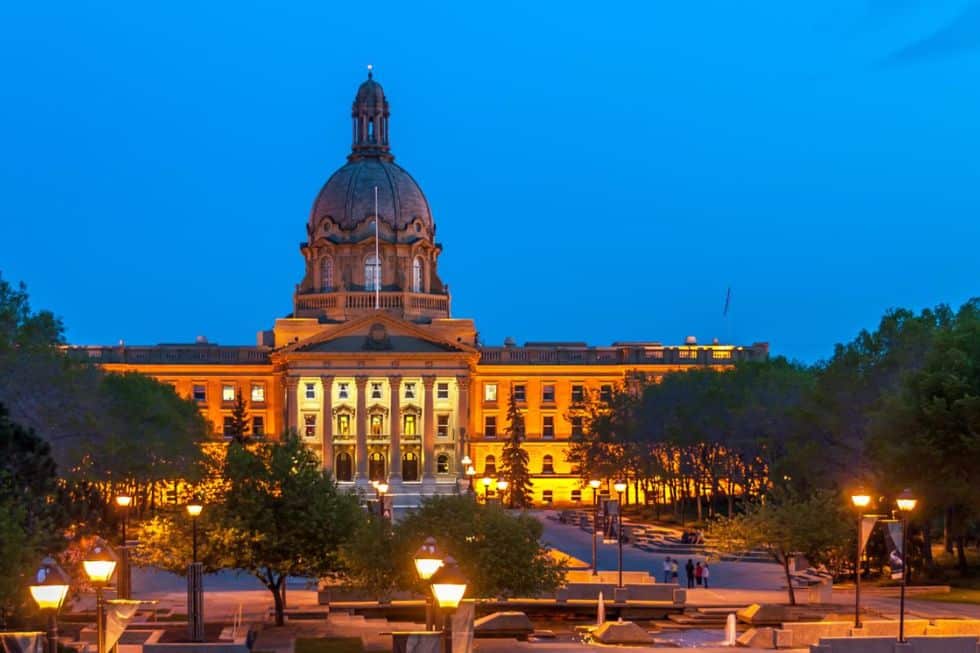



Only a few months remain before residents of Alberta — a province in Western Canada — go to the polls to vote on whether its constituents wish to leave the Canadian federation. Well, not really. In truth, the logistics of a province separating from Canada are more complicated than even most Canadians understand. In reality, this referendum is a vote on whether they will vote on separation in the future, only possible after an arduous, bureaucratic process.
These logistical factors make for less sensational reporting than the imagery of rupture that gripped global news outlets in the first half of the year. Admittedly, it would be costly to many global stakeholders if a major world power dismembered itself, but months of minimal change reveal that no one can dissect the federation so abruptly. Nevertheless, Canadians consumed and shared the dramatized content, which contributed to a climate of heightened concern.
Alongside international interest in Canada and Alberta’s conflicting desires, the Canadian Broadcasting Corporation (CBC) investigated online narratives around Alberta’s separation movement. In it, they point to foreign actors amplifying some pro-separation videos online.
In addition to this investigation, most commentary centers the story around split Conservative opinions, comparisons to Québec’s 1995 referendum and federal legislation that validates secession. As polls suggest around 74% of Albertans will vote to stay, it is unlikely that Alberta will separate from Canada. Still, it may be beneficial for Canadians to recognize the logistical challenges that make separation even less realistic.
Content farming fuels our dystopian future
CBC News determined that content creation farms have had a large part in driving the wave of pro-secession videos on YouTube. Content farms are sites that mass-produce material to appear higher in search engine results. To generate profit, these channels often dramatize sensational political events, like the possible fragmentation of a major country, even if they do not hold an opinion on the topic. Each video garnered hundreds of thousands of views.
These channels likely intend to emotionally manipulate viewers in target regions. Popular topics accumulate views from both supporters and “hate watchers.” Ironically, the hate watchers give the videos more views by commenting to refute false or deceptive claims.
In its article, the CBC researchers say that Dutch-based accounts solicited individuals on Fiverr and Upwork for footage, posted the auditions without the actors’ “knowledge or permission,” and have not paid them for the work. The researchers recounted the testimony of an American hired to read scripts, who said they “don’t know anything about Canadian politics” and will not continue making videos.
The investigators found that email addresses of writers based in Pakistan were used to share documents to solicit work from another actor. Most of these content farming accounts are no longer on YouTube, though new ones have likely taken their place. However, the situation in the province differs from the online picture, and a majority of Albertans consistently demonstrate through surveys that they will vote against separation.
Federal and provincial acts affirm pro-secession rights
Though there are a large number of people in Alberta who intend to remain Canadians, federal and provincial legislation are no barrier to the pro-separatists. In fact, legislators clearly highlight the roadmap to separation.
Canada is a federation in which all provincial governments are authorities within their jurisdictions, equal to the federal government. All provinces and the federal government must approve amendments to the Canadian Constitution before a province can separate. They must also meet certain requirements, such as fulfilling their duty to consult with Indigenous groups and upholding the law throughout the separation process.
The Clarity Act, passed into federal law in 1998, validates the right to secede. It also clarifies the conditions for separation, asserting that a province cannot separate from Canada unilaterally and that it must negotiate with the rest of the federation. The Act makes clear that constitutional compliance, as well as legally accepted amendments to the Constitution, are necessary for all parties to reach an agreement.
In addition to these federal clarifications, provincial laws may also reduce impediments to pro-secession movements. Alberta’s government passed the Alberta Sovereignty within a United Canada Act, which provides a legal framework for challenging federal laws. This law enables members of Alberta’s Legislative Assembly to recommend measurable actions to the Lieutenant Governor in Council for the suspension or modification of existing regulations. Although the Act cannot violate the Constitution of Canada, federal laws or treaty rights, many believe it can set a precedent that allows Alberta to challenge any federal decision it considers harmful.
Citizen initiative petition gains ground
Another example of areas where pro-separation advocates can gain credibility is through a citizen initiative petition. Civilian petitions for a province to separate normally have little legal standing, as it would start the secession process while bypassing the duty to consult First Nations groups. For the petition question to be legally acceptable, the wording should not violate treaty rights.
Anyone can file a civilian petition, but that does not mean the law empowers citizens to initiate a referendum. The responsibility is on the provincial government to account for judicial rulings on the wording of petitions, relevant legislation and the will of the people — that is, until Bill 14: Justice Statutes Amendment Act, 2025 (JSAA). The bill passed in December 2025 and amended Alberta’s Citizen Initiative Act (which allows petitions to be proposed and defines which ones are legally valid). The amendments withdrew previous obligations for petition proposals to follow the Constitution. This allowed pro-secession groups to collect signatures for their petition directly.
This brings us to Mitch Sylvestre, Leader of Stayfree Alberta, who led the citizen petition with the question: “Do you agree that the Province of Alberta shall become a sovereign country and cease to be a province of Canada?” Sylvestre had previously co-created the 2025 Alberta Prosperity Project — a plan for the province to secede from Canada — and hoped to take the matter further by presenting a vote to Albertans himself. Despite divided views among others in the province, as in this speech by longstanding Member of the Legislative Assembly (MLA) David Shepard, the separatist leader persistently advocates for a referendum.
In May, Justice Shania Leonard ruled that Elections officials should not have approved Sylvestre’s petition to separate. After the judge’s ruling stalled the petition, the claim that Stayfree Alberta collected over 300,000 signatures remained unverified for months. As of July, officials began counting the ballots, and reports confirm at least 222,000 signatures were deemed valid by the non-partisan Elections office.
Alberta’s Lieutenant Governor in Council, who is also apolitical, appointed the chief electoral officer who first approved Sylvestre’s petition. There should be no doubt that the vote will remain impartial, yet historical precedent in Quebec’s high-federalist regions during the 1995 referendum shows higher rates of ballot rejections than pro-separation regions despite the vote taking place through non-partisan agencies.
Both federal and provincial acts have presented a basis for separatist groups to gather signatures for a petition. Danielle Smith, the Premier of Alberta and head of the United Conservative Party (UCP), said Justice Leonard’s ruling is anti-democratic and that she would file an appeal. She also announced that there will be a ten-question referendum, including a question on whether Albertans want a secession referendum.
What is in the referendum?
The referendum questions in October are about separation, immigration and the Constitution. The phrasing of the questions is confusing and “unconstitutional,” according to Naheed Nenshi, leader of the opposition in Alberta. One convoluted question asks whether the province should pass a law barring certain immigrants from using social services such as healthcare or education. The immigration questions posed by the UCP are particularly notable, as they parallel the Alberta Prosperity Project agendas led by separatists.
The second half of the questions proposes amending parts of the Canadian Constitution to abolish the Senate, change the appointment of court justices and protect the province from federal interference. These adjustments would require conferring with other provinces and the Canadian government to permit the directive.
The separation question the premier will put on the ballot asks, “Should Alberta remain a province in Canada, or should the Government of Alberta commence the legal process required under the Canadian Constitution to hold a binding provincial referendum on whether or not Alberta should separate from Canada?”
The questions are nonbinding, so many argue that the referendum is meaningless because the government will have no obligation to abide by the results. The UCP premier has promised to abide by the referendum results if the remain side wins, and that her party supports Alberta staying in Canada. Some argue that this statement shows the Premier is toeing the line to maintain support from both sides of the fragmented UCP.
An Angus Reid poll found that 64% of UCP voters would choose to leave Canada, revealing a split within the party. Many in Alberta are expressing their distrust for the UCP and the premier, and the party dropped 2% in the polls since November 2025. Regardless of these factors, it may be valuable to inspect what it would actually take for Alberta to separate from Canada.
What Alberta might face if they separate
Canadian economics professor Trevor Tombe analyzed what fiscal consequences the province might face in a paper for the Macdonald-Laurier Institute (MLI). He says the numbers crunched by the Alberta Prosperity Project are unrealistic. Their plan to cut taxes conveniently ignores the crater this puts in the budget, creating a disjointed monetary argument. Also, canceling social programs to fill the government’s revenue shortfall will diminish Albertans’ quality of life and will only reintroduce a fraction of the revenue from cutting taxes into the budget.
To realistically consider separation, the Alberta government announced it would pay experts at the University of Calgary to conduct an independent analysis of the economic costs of secession. The report is set to be released in late summer 2026. Investigating what Albertans will really face may cause a sobering examination of priorities from those considering secession, especially since polls show UCP voters’ biggest concern is the rising cost of living.
Albertans have also expressed concern about the monetary expense of holding the referendum itself. It will cost an estimated 130 million Canadian dollars (~$93 million). The previous general election cost the province 37 million Canadian dollars (~$26 million) after hiring 16,000 workers. The October 2026 referendum will require 60,000 to 90,000 election workers because Elections Alberta must print up to ten separate ballots per person.
Additionally, separation will require the continuation of treaty rights. Without lengthy consultation and agreement with the 46 First Nations groups in Alberta, the referendum will face legal challenge, as the Crown has pledged treaty land to Indigenous groups.
Indigenous people are not a monolith, but an overwhelming majority seek to honor treaty rights in Alberta. Though unlikely, if the Albertan First Nations groups agree to the referendum after the provincial government abides by its duty to consult, the secession may face a vote.
If the separation abides by the law, gains support from a clear majority in the province and gains approval in parliament, Alberta would have to seek international recognition to resume trade. Post-separation reconstruction may require foreign assistance or trade, but this cannot begin during federal and provincial talks, which might take years. If negotiations with the Canadian government are ongoing, foreign nations may hold off on recognizing Albertan independence. Countries do not recognize regions that unilaterally secede, so Alberta’s only option is to come to an agreement in federal negotiations.
Alberta’s government would need to revise contracts with companies, develop its own currency, secure a military or police force, and protect itself from potential interference during such a vulnerable time. Businesses may choose to relocate during these destabilizing talks, a reflection of companies fleeing Québec during its 1995 referendum, as Tombe pointed out. Negotiations for new economic and political agreements between Canada and the province can not happen instantly, and there is no certainty that a new partnership will meet all their needs.
On that note, focusing on the provinces’ structural needs is also significant. Canadian provinces are largely independent from federal oversight in jurisdictions like regional economic development, taxes, hospitals, natural resources, public education, property and civil rights. They abide by broader interprovincial laws, such as immigration, healthcare policy, energy and human rights. Alberta’s government must adopt federal jurisdictions into provincial services to meet the population’s needs.
The federal government currently has jurisdiction over 28 areas of concern while provinces have jurisdiction over less than half that number. The province must continuously fund and sustain the areas of concern that were once federal responsibility. Alberta would require a reworking of its provincial infrastructure to meet these needs and expand its service capabilities.
Aside from volatile economic plans, the legislative and physical structures currently in place will take considerable time to reformat for a switch to a province-country model. Gaining consensus on remodeling these structures will be more difficult than many assume. Conservatives in power are deeply divided within the party, and other right-leaning groups, particularly those under separatist leaders, openly resent the premier. Canadian politics have long seen ideological discord, and the situation in Alberta — both past and present — is no different.
Ideological split in Canada
In August 2021, the Alberta UCP, under the previous party leader, Jason Kenny, chose to advertise in other provinces to encourage people to move to Alberta to meet corporate demand for workers. They did not put their billboards in rural areas or in places that often vote Conservative, but they did advertise in Liberal-voting cities. From 2021 to the end of 2025, approximately 630,000 people moved to Alberta, bringing the population to 5 million. Compelling people from Liberal majority cities to move to Alberta is just another factor that makes the case for separation less likely. It was also a policy choice the current premier disagrees with.
Additionally, federal Conservative actors and party members from other provinces do not support the Alberta secession movement, as a large part of their support base will leave. Without Alberta, they will probably lose the chance for a majority Conservative federal government in Canada. These fragmented opinions prove a serious ideological disconnect is taking place within Conservative parties.
Alberta’s popular party and Conservatives have, at times, been reactionary toward the federal government. Federal opposition Conservatives supported a protest on the CBC, for example, labeling them a government mouthpiece and pushing to defund the national news organization. Others argue that the CBC also has right-wing representation. Many believe the outlet is necessary to combat billionaire-funded multinational news conglomerates and reach rural areas.
This is just one example of contrarianism overtaking politics, and this is an interparty problem. It happens concurrently in the Liberal, New Democratic Party and Conservative caucuses. Ignoring the public’s desire for the parties to work towards their respective policies, each party attacks one another, leading to stagnation in Parliament.
Conservatives had once pushed to wholly dismantle a publicly funded outlet rather than suggest reforms and a transformation to improve it, and the faction of Conservatives that began the secession movement in Alberta shared this sentiment. They believe starting all over will solve their problems, but research shows this can leave the government with an unstable financial and social foundation.
While many Canadians believe there is much to contest in the federal government’s policies, the practice of arguing against an entity and engaging in contrarianism, without examining its ideas individually, leaves the population open to emotional manipulation by internal groups and foreign actors.
Regardless of party inclination, it is essential for all Albertans to understand their responsibility to engage in rigorous debate, seek out non-partisan analyses and determine the true cost of what they are voting for. In this, they require the Alberta government to disclose the constitutional and economic implications of the October 2026 referendum and to provide a prompt cost-benefit assessment of separation. Contrarianism and passivity are no longer viable, as the results of separation movements remain for generations.
[Kaitlyn Diana edited this piece.]
The views expressed in this article are the author’s own and do not necessarily reflect Fair Observer’s editorial policy.
Danielle Smith’s Voice of Reason and Other Fairy Tales
Claiming to be listening to the voices of Albertans, Premier Danielle Smith is pushing for a referendum on separation from...
The American Canadian Broadcasting Corporation
The Canadian Broadcasting Corporation (CBC) gives disproportionate attention to American news, while putting Canadian and global stories on the back...
Separatism Remains A Challenge From Western To Eastern Europe
Founded on the nationalism of the 19th century, European states struggle to manage separatist movements in their peripheral regions. In...

Support Fair Observer
We rely on your support for our independence, diversity and quality.
For more than 10 years, Fair Observer has been free, fair and independent. No billionaire owns us, no advertisers control us. We are a reader-supported nonprofit. Unlike many other publications, we keep our content free for readers regardless of where they live or whether they can afford to pay. We have no paywalls and no ads.
In the post-truth era of fake news, echo chambers and filter bubbles, we publish a plurality of perspectives from around the world. Anyone can publish with us, but everyone goes through a rigorous editorial process. So, you get fact-checked, well-reasoned content instead of noise.
We publish 3,000+ voices from 90+ countries. We also conduct education and training programs
on subjects ranging from digital media and journalism to writing and critical thinking. This
doesn’t come cheap. Servers, editors, trainers and web developers cost
money.
Please consider supporting us on a regular basis as a recurring donor or a
sustaining member.
Will you support FO’s journalism?
We rely on your support for our independence, diversity and quality.





Comment