




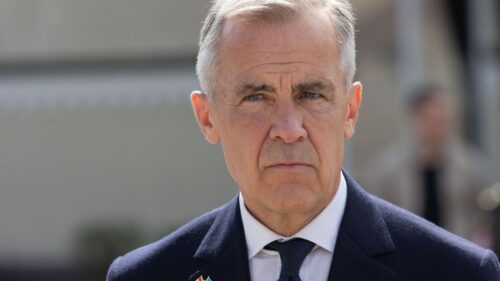
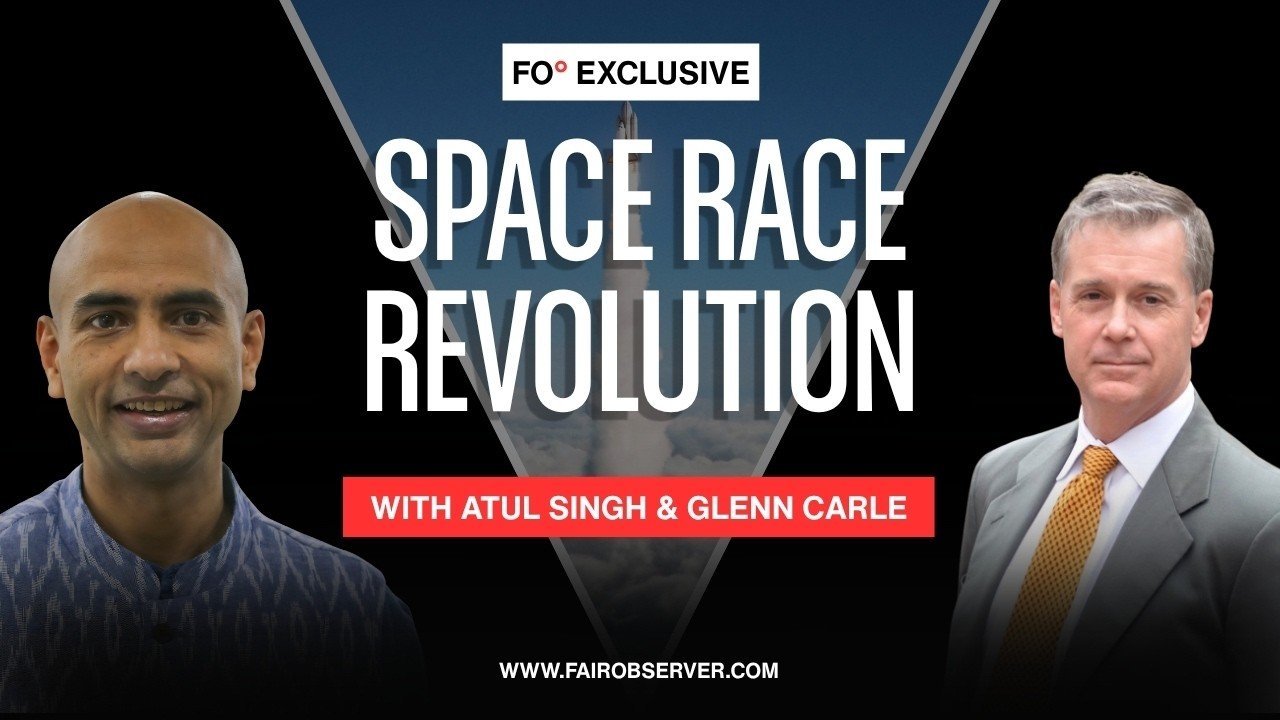
Fair Observer’s Video Producer Rohan Khattar Singh speaks with Christopher Coates, a former Royal Canadian Air Force lieutenant general and former North American Aerospace Defense Command (NORAD) deputy commander, about Canadian Prime Minister Mark Carney’s viral speech at the World Economic Forum in Davos, Switzerland. Is the post-World War II rules-based global order finished? Or is the world entering a harder phase of strategic realism in which middle powers like Canada must adapt quickly to survive?
The rules-based order: over or outdated?
Khattar Singh opens with Carney’s claim that the postwar rules-based order is over. Coates disagrees. “I don’t agree that the rules-based order is over,” he says, arguing instead that it has become less effective over time.
Drawing on his experience in Bosnia, Coates explains how the mismatch between international mandates and realities on the ground can erode institutional credibility. The United Nations mission initially operated under Chapter 6 of the UN Charter, which required consent from all parties. That consent did not exist, and the mission struggled. When it shifted to Chapter 7 peace enforcement, the operational environment changed dramatically. For Coates, the lesson is clear: Rules fail when they no longer match reality.
The broader international order faces a similar problem. States followed the rules because it served their interests. As global power dynamics shifted, some rules were ignored and others proved insufficient. That does not mean the order has vanished; rather, it has not kept pace with geopolitical change.
Rupture or intensified competition?
Carney’s reference to a “major rupture” in the global order prompts skepticism from Coates. He questions whether the term has been properly defined, suggesting it risks becoming a political catchphrase rather than an analytical tool.
The more substantive question, Khattar Singh believes, is whether the world is entering a new Cold War. Coates distinguishes sharply between the 20th-century Cold War and today’s environment. The earlier era was marked by a clear division between East and West. Today’s great powers are deeply entangled economically and technologically.
Hybrid warfare, gray-zone operations and cyber conflict complicate the picture. While there is no clear bipolar split, Coates acknowledges that strategic competition has intensified to levels unseen in decades. Russia, China and the United States are all engaged in overlapping contests, with additional tensions involving regional actors such as Iran. The structure is not Cold War 2.0; it is a more complex and diffuse struggle.
Canada as a lesser power
Where does Canada fit? Coates offers a blunt assessment: “I think Canada is a lesser power.” Though a G7 economy with considerable natural resources, Canada lacks the military weight to shape great-power outcomes independently. Many of its key indicators are trending downward.
If global divisions harden, Coates sees little room for neutrality. Economically, 74% of Canada’s external trade is with the US. Militarily, the two countries are bound through NORAD. Geographically, they share the world’s longest undefended border. For Canada to detach itself from Washington would be unfeasible.
That reality persists despite growing friction between the Canadian capital of Ottawa and US President Donald Trump. Coates describes the relationship as increasingly transactional. Canada must strengthen its defense and security posture in order to negotiate from a position of credibility rather than vulnerability.
F-35s, China and strategic coherence
The debate over replacing Canada’s aging McDonnell Douglas F/A-18 Hornet aircraft fleet illustrates the tension between emotion and strategy. Social media enthusiasm for Sweden’s Saab JAS 39 Gripen jets reflects political frustration with Washington. Coates is unmoved. “There is no viable option,” he insists, arguing that the F-35 is operationally and economically superior. Even the Gripen relies heavily on US-controlled components, meaning it would not insulate Canada from American leverage.
On China, Coates adopts a cautious tone. Trade with Beijing represents roughly 4% of Canada’s external commerce, far below US levels. Recent outreach signals a partial normalization after years of strained relations. Yet Coates worries about renewed coercive vulnerabilities, noting that Carney previously described China as Canada’s greatest geopolitical threat. Engagement must be bound by clearly defined guardrails that protect national security.
Regarding Ukraine, Coates underscores Canada’s strong per capita support for the capital of Kyiv. However, he observes that Canadian threat perceptions differ from those in Eastern Europe. While Canadians condemn Russia’s 2022 invasion, they do not feel the same immediacy of danger as Baltic or Scandinavian states. Canada’s contribution, he argues, should focus on deterrence in the North Atlantic and Arctic arcs, hardening defenses against hybrid and gray-zone threats.
Is great-power war inevitable?
In closing, Khattar Singh asks whether escalating tensions make a larger war among the US, Russia and China inevitable. Coates believes it is avoidable, provided Western nations refocus on deterrence.
He anticipates a gradual rebalancing rather than a dramatic new conference or treaty. A new, steady state may emerge, though it will not resemble the old Cold War alignment or the original rules-based order. The key variable is whether rational actors continue to prevail.
For Canada, survival in this harsher era demands clarity: acknowledge its limits, strengthen its defenses and align its values with credible power. The rules may not have disappeared, but the margin for complacency has.
[Lee Thompson-Kolar edited this piece.]

























Join the conversation
Share your perspective
Log in to share your thoughts and take part in the discussion.