





Fair Observer Video Producer & Social Media Manager Rohan Khattar Singh speaks with Sam Raus, a political analyst and David Boaz Resident Writing Fellow at Young Voices, about America’s evolving energy strategy. They contrast the subsidies of former US President Joe Biden’s administration with the market-driven approach of current US President Donald Trump’s administration, and discuss the future of American energy.
Raus opens by critiquing the former president’s Inflation Reduction Act, calling it a misnamed policy that lavished billions of dollars in subsidies on solar and wind industries — what he labels “corporate handouts.” He argues these subsidies distorted the energy market by pre-selecting winners rather than letting innovation and consumer demand determine the most effective energy sources.
Raus says solar and wind were favored not because of their reliability or affordability, but because of ideological preferences. Simultaneously, more promising sectors like geothermal and nuclear were sidelined. He sees this as a prejudiced approach that inflated US debt and ignored real technological limitations, such as the poor performance of solar batteries.
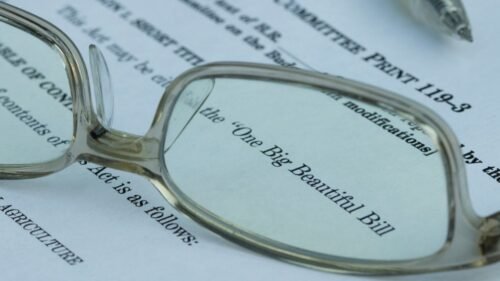
The One Big Beautiful Bill Act levels the playing field
By contrast, Raus praises the Trump administration’s One Big Beautiful Bill Act for eliminating corporate tax credits for solar and wind. He believes this shift allows for a more level playing field, enabling all energy sources to compete based on merit rather than political support.
While state-level subsidies may persist, Raus emphasizes that the federal rollback signals a broader return to consumer-driven energy development — one focused on safety, reliability and affordability. He views the new policy as a correction to what he sees as the prior administration’s ideological overreach, putting economic concerns at the forefront amid ongoing inflation and post-pandemic recovery.
Reframing environmentalism: innovation vs. degrowth
Singh challenges Raus on environmental risks, mentioning that scientists fear Trump’s policy could “cook the planet.” Raus argues that both green and traditional energy projects are stifled by excessive environmental regulation under laws like the National Environmental Policy Act. He advocates for a “pro-growth, pro-innovation” mindset, suggesting that the reform and acceleration of development are key to resolving environmental challenges — not halting progress.
Raus opposes what he calls the “degrowth” movement, claiming it is incompatible with how market economies function. He maintains that removing subsidies doesn’t tilt the scales toward fossil fuels but rather ends government favoritism, allowing the most viable technologies to emerge organically.
Nuclear and geothermal are the next frontier
Raus sees promise in both nuclear and geothermal energy. Geothermal, he states, is finally nearing scalability. Nuclear is regaining public support after years of fear-driven opposition. With growing energy needs from emerging technologies like AI, he believes nuclear energy offers a viable, scalable solution. He notes openness to nuclear energy even among environmentalists and tech giants like Google and Meta, who are investing in that space.
However, Raus cautions that public opinion and geographic siting issues could still pose challenges. He urges broader participation and compromise to avoid turning energy policy into a cultural battle, expressing optimism about bipartisan acceptance of nuclear as a major player in the future energy mix.
The US vs. global energy strategies
Singh points out that the world is moving away from this idea, instead prioritizing green energy. Raus defends the United States’s more market-based approach. He contrasts it with the top-down, state-controlled strategies of the European Union and China — these produce inefficiencies like regulatory overreach, ghost cities and a lack of innovation.
The American system fosters dynamic competition, allowing diverse energy sources to fill specific roles — from residential solar to nuclear-powered AI infrastructure. Raus believes the US has stronger natural resources, international supply chains and modern infrastructure, giving it an edge in both energy and AI. He envisions the US leading by example with a balanced, decentralized approach that other nations may eventually adopt.
Singh and Raus agree that the future of US energy is not about picking one source but embracing a diverse mix. Traditional sources will remain important as newer technologies mature. Raus supports this pragmatic vision and sees it as a reflection of sound policy that prioritizes competition, innovation and consumer needs over government mandates.
[Lee Thompson-Kolar edited this piece.]
The views expressed in this article/video are the author’s own and do not necessarily reflect Fair Observer’s editorial policy.

































Comment