



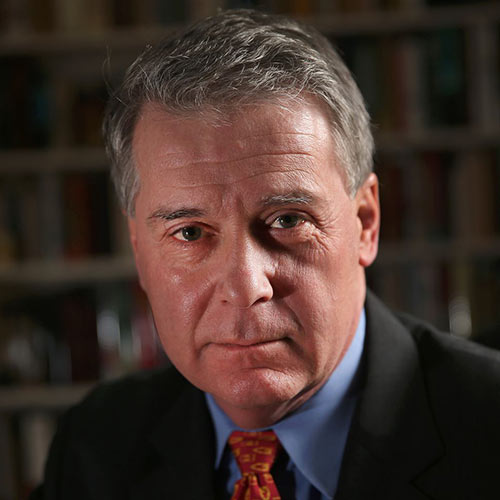
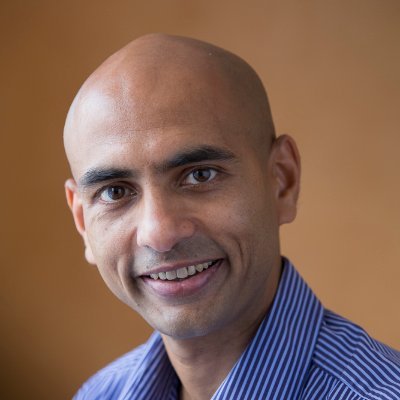
Editor-in-Chief Atul Singh and FOI Senior Partner Glenn Carle, a retired CIA officer who now advises companies, governments and organizations on geopolitical risk, reflect on a remarkable month. From America’s 250th birthday celebrations and leadership changes in the UK to market volatility and conflicts across Africa and Eastern Europe, they examine the developments that shaped the world. They also examine the longer-term trends emerging beneath the headlines.
America: freedom at 250 and ugly politics
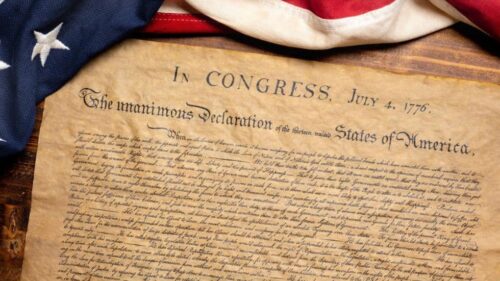
America turned 250 on July 4. Atul, who had been in Vienna and London, hurried back from Europe to be in Washington, DC, for the celebrations. He had a good reason: This was Atul’s first Fourth of July as an American citizen. In his words, “the flypast was impressive, the fireworks spectacular, but US President Donald Trump’s speech was a damp squib.” Trump’s rhetoric is not quite at the same level as past presidents like Thomas Jefferson, Abraham Lincoln and Theodore Roosevelt.
Despite the bright fireworks, American 250 was overshadowed by the US/Israel–Iran War and an increasingly troubled US economy. While milling with the crowds gathered from around the country, Atul found that even Republicans were lamenting about America’s most recent foreign foray. Some said that the president had broken his vow of keeping the US out of foreign military misadventures.
Misgivings about Trump and his family profiting from high office are also deepening. On July 1, Trump’s latest financial disclosure shows his various businesses generated more than $2 billion in income in 2025, his first year back in the White House. That is more than triple his reported income from the year before. The biggest gains came from the Trump family's cryptocurrency ventures.
Not only Republicans but also Democrats were complaining. The Democratic candidate in Maine’s Senate race, Marine Corps veteran Graham Platner, suspended his campaign after a woman he had dated, Jenny Racicot, claimed he had raped her. At 250, there is an ugliness to American politics that infects both parties.
This month, American politics changed because of the unexpected death of Lindsey Graham. He was the senior senator from South Carolina who died unexpectedly at the age of 71. Graham had just returned from Ukraine and was pushing a bill to widen sanctions against Russia. He was a strong supporter of Ukraine and Israel. Both these countries have now lost a friend on Capitol Hill.
In another unsurprising development, Trump announced new tariffs. The Supreme Court had struck down his earlier tariffs and the new ones rely on different legislation. Trump has threatened Canada with duties of 50% from August 19, in retaliation for what he claims are unfair practices by Canadian provinces that don’t buy American products. Trump was also ready to impose a new round of levies on countries after his 10%-regime expires. He is also planning to impose tariffs of 100% on generic drugs from August 2028.
Meanwhile, American and Mexican negotiators held another session of bilateral trade talks. Trump has refused to extend the US-Mexico-Canada Agreement that Trump himself negotiated. The US is negotiating with Canada and Mexico separately to seek changes to the pact.
Politics beyond America
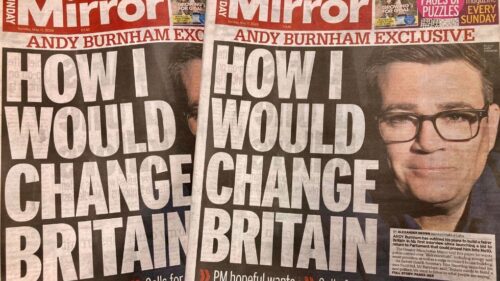
July was an eventful month for the UK. Great Britain now has a new prime minister: Andy Burnham. Until recently, he was mayor of Greater Manchester and known as “King of the North.” So far, Burnham has made a good debut at 10 Downing Street. Unlike other recent prime ministers who went to Oxford, the King of the North is a Cambridge alumnus and a Catholic. A fun fact that most people do not realize is that Catholics now outnumber Anglicans in the land of King Charles.
Even as Andy rose to power, another British Catholic lost her life. Ann Widdecombe was murdered in her idyllic English village this month. She was a former MP and also a former minister in an earlier Conservative government. Recently, Widdecombe had switched to the populist-right Reform UK and was its justice spokeswoman. Like Tony Blair, she had converted to Catholicism. Widdecombe was also one of Britain’s fiercest critics of the transgender movement.
In July, Reform UK leader Nigel Farage resigned from the House of Commons. Apparently, he had taken some cash from a cryptobillionaire. Notably, Farage had stated he didn’t intend to be a prospective MP. Within weeks of receiving the $6.7 million (£5 million) gift, he abruptly changed his mind and became an MP. After his resignation, Farage has triggered a by-election in which he is running again.
Moving east, centrists in the Hungarian parliament passed a constitutional amendment that removed Tamás Sulyok, President of Hungary, and Péter Polt, the president of Hungary’s Constitutional Court. Prime Minister Peter Magyar, who won the elections in April, said both men had put their loyalty to Viktor Orbán, the controversial previous prime minister, above the interests of the nation.
From Europe, the focus then shifts to Africa. In Zimbabwe, President Emmerson Mnangagwa signed into law constitutional amendments to extend and cement his hold on power. The amendments abolish direct presidential elections and postpone the next vote. He is emulating Robert Mugabe who ruled Zimbabwe for decades. Atul calls Mnangagwa the new Mugabe.
Neighboring South Africa is also in the news. Anti-immigrant sentiment has been rising in this country where jobs are few and the economy is in the doldrums. The anti-immigrant sentiment has soured relations with other countries and Ghana asked South African President Cyril Ramaphosa to postpone his visit.
News in many other African countries is also grim. Fighting continues in Mali and Sudan. On July 18 in the Gao region of Mali, the Azawad Liberation Front (FLA) and the Group for the Support of Islam and Muslims (GSIM), two non-state armed groups, carried out an ambush on a military convoy. In Sudan, the Rapid Support Forces and the Sudanese Armed Forces continue to clash.
In South America, Keiko Fujimori won Peru’s presidential election. She is of Japanese descent and her father Alberto Fujimori was president. Keiko Fujimori is another victory for the right in Latin America. Rising crime and a quest for security has led to the rise of right-wing parties in this part of the world.
Frothy markets and growing risks to the global economy
In April, May and June, stock markets recorded their best quarter in six years. The S&P 500 rose by 15%, the NASDAQ Composite by 21% and the pan-European STOXX 600 by 10%. Japan’s Nikkei 225 had its best three months ever, rising by 37%. South Korea’s KOSPI increased by 68%. Even so, the share prices of some big tech giants did not fare so well in June, with Apple, Meta and Nvidia all down. Microsoft’s stock fell by 17%, making June its worst month since December 2000. Note that the markets have cooled a bit in July.
The real economy did not do as well as financial markets. The German economy has long been in trouble. So, German Chancellor Friedrich Merz unveiled a package of economic reforms on July 1. These include $11.4 billion (€10 billion) in annual income tax relief.
Japan is not doing well either. Yields on Japan’s ten-year government bonds reached 2.9% in July, the highest since 1996. Higher yields push up the costs of borrowing, leaving less for guns and butter. Japan’s gross public debt is well over 200% of GDP. As well as being concerned about the weak yen, investors are worried about how the government is going to fund its recently announced $2.3 trillion, 14-year investment plan.
American stock markets might have done alright but bond markets are signalling trouble. The 30-year US Treasury yield closed above 5% for 14 straight sessions, its longest run above that level since July 2007. This yield has finished above the 5% level 29 times this year, already the most in any calendar year since 2007. The danger lights are flashing red.
Society, sport and changing norms
America, Canada and Mexico hosted a spectacular FIFA World Cup. Spain deservedly won against an ugly Argentina. In 1966, then-British manager Alf Ramsey had called the Argentines “animals,” and that comment would hold for the behavior of the Argentine team during and after the final.
The French parliament banned children under the age of 15 from using social media. France follows Australia as the second country to prohibit social media for youngsters by law. Atul and Glenn expect this trend to gather strength in developed countries in the months ahead. Social media and cellphones are changing our brains. In the case of children, they are destroying attention spans, damaging cognitive abilities and harming learning. Societies are struggling to follow suit and politics will have to respond to this challenge, much as it once did to smoking.
Finally, July was a month of unkind climate. More than half of England is in drought because hot, dry weather has taken a toll on the country’s water supplies. Forest fires in Spain and France have been highly destructive. Japan’s south-western Kyushu region has had more than 100 aftershocks after it was struck by a powerful earthquake on July 28, that has left at least 13 dead already.
[Lee Thompson-Kolar edited this piece.]
The views expressed in this article/video are the author’s own and do not necessarily reflect Fair Observer’s editorial policy.
































Comment