



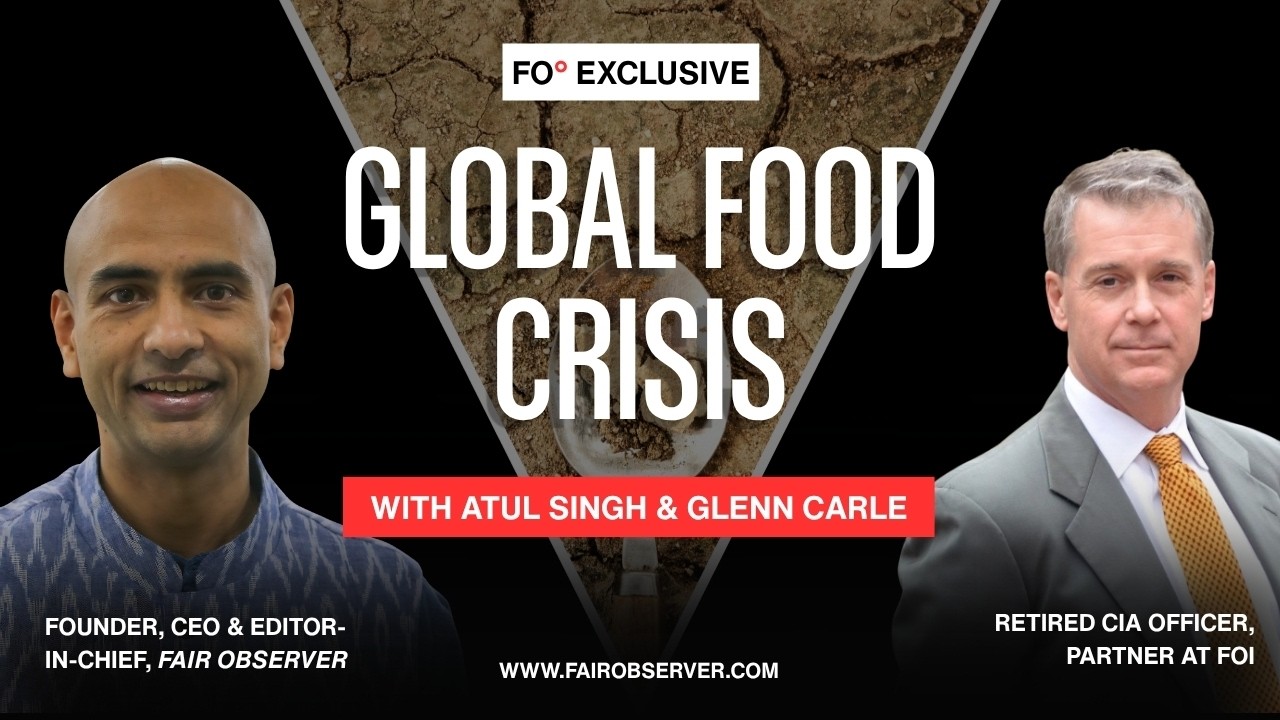
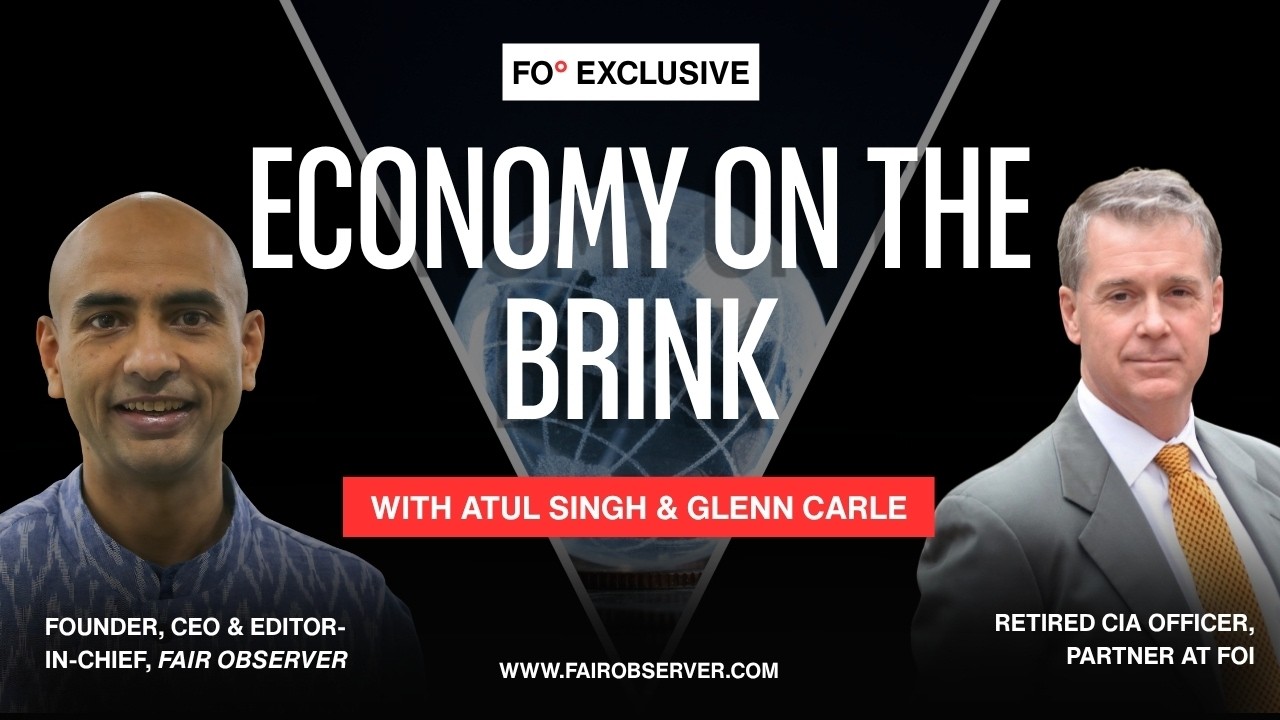
Editor-in-Chief Atul Singh and FOI Senior Partner Glenn Carle, a retired CIA officer who now advises companies, governments and organizations on geopolitical risk, recap the most important developments of the month.
Threat of epidemic and the Pope’s view on AI
In Africa, the World Health Organization (WHO) declared an outbreak of Ebola to be a public-health emergency of international concern. The virus kills up to half of those who contract it, with such symptoms as severe diarrhea, vomiting, hemorrhaging and bleeding. Experts believe the epidemic in eastern Democratic Republic of the Congo (DRC) has killed hundreds and infected thousands.
Glenn, who worked in eastern DRC many years ago, recalls it as a place almost beyond the imagination of people living in developed societies. He describes seeing people living with virtually nothing amid a landscape dominated by armed groups, lawlessness and extreme poverty. The only silver lining, he says grimly, is that Ebola’s lethality can limit its spread because infected people often die before transmitting it widely.
Dr. Tedros Adhanom Ghebreyesus, the Director-General of the WHO, said the east of DRC was at the center of a “catastrophic collision of disease and conflict,” with the outbreak in the northeastern Ituri province outpacing the response.
According to Atul, the region’s instability complicates Ebola treatment, preventive vaccination campaigns and other public-health measures. Population displacement and refugee movements further impede efforts to contain the disease.
In Europe, Pope Leo XIV has called for AI to be disarmed in his first encyclical, Magnifica Humanitas (Magnificent Humanity). This has caught attention around the world, including from Silicon Valley in the US. Christopher Olah, cofounder of American AI giant Anthropic, was present when the pope released this encyclical. The encyclical warns that AI poses immense risks in both warfare and politics and argues that the technology must be restrained before it causes broader social harm.
Pope Leo XIV also included one of the strongest, most comprehensive apologies from the Vatican for the Catholic Church’s role in slavery. Many Africans have welcomed the apology. Notably, the pope drew parallels between the historical tragedy of traditional slavery and the emerging threats of “new digital slaveries.”
Atul notes that Pope Francis's climate encyclical Laudato si’ book generated significant attention but was followed by widespread inaction. Whether Leo's intervention on AI produces concrete results remains uncertain, Atul points out that the debate has now moved beyond the technological sphere into the religious realm.
Musk and Starmer
In the US, Tesla CEO Elon Musk was in the news for four reasons. First, his facial expressions in Beijing where he went as part of US President Donald Trump’s entourage were captured on camera and caught public attention. Second, Musk lost his courtroom battle with OpenAI and its CEO, Sam Altman. Musk had sought damages from OpenAI for allegedly reneging on a contract with him as a cofounder to run the firm as a non-profit instead of for-profit entity. The jury took just two hours to reject the case. Third, SpaceX’s blockbuster Initial Public Offering has taken off like one of Musk’s rockets. It could raise over $50 billion and value SpaceX at over $1.25 trillion once the company goes public.
Fourth and finally, the 12th test launch of SpaceX’s Starship V3 rocket was largely successful, moving the rocket closer to an operational performance level. It will instantaneously revolutionize space flight and the space industry. It will increase payload capabilities five-fold, while dropping the price to launch a kilogram by two orders of magnitude. What costs $3,000 per kilogram for industry-leading Falcon 9, will cost $100–$500 per kilogram on initial Starship launches, and could drop to as low as $10–20 per kilogram. Furthermore, the craft is designed to be fully-reusable after return flights. Operational use is now perhaps two years away, and when it comes, the V3 could play a key role in returning humans to the Moon and eventually sending them to Mars.
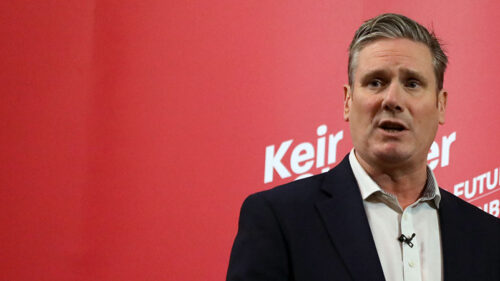
In the UK, British Prime Minister Sir Keir Starmer finds himself in a tricky situation. His center-left Labour Party suffered a heavy defeat in elections in Scotland and Wales and council elections in England. The populist far-right Reform UK party led by Nigel Farage emerged triumphant. Reform UK is on course to be the biggest party in the next general elections in 2029.
Sensing blood in the water, political sharks are circling Starmer. He won a landslide majority in 2024 but this was misleading. Starmer’s Labour Party won fewer votes than it did in the last two elections. Low turnout, Conservative infighting, the rise of Reform UK and the Liberal Democrats’ impressive showing helped Labour in the first-past-the-post system.
Since his 2024 victory, Starmer has failed to ignite the imagination of the party or the country. Cabinet ministers have resigned and a leadership challenge is imminent. His potential rivals now include Manchester Mayor Andy Burnham, known as the King of the North, Angela Rayner, a popular working-class politician, and Wes Streeting, the former health secretary.
Political instability in the UK goes back to the 2016 Brexit vote. Atul mentions that the country, once regarded as one of the world’s most stable parliamentary democracies, now appears fundamentally unsettled.
US–German conflict
The US announced it would be withdrawing 5,000 of the 36,000 American troops stationed in Germany. This came in the aftermath of a comment German Chancellor Friedrich Merz made in front of schoolchildren in April. He remarked, “An entire nation is being humiliated by the Iranian leadership.” Naturally, Trump did not appreciate the remark.
In addition to withdrawing troops, the Trump administration has announced that the US will not be stationing Tomahawks and other mid-range missile systems in Germany, despite a 2024 agreement. The US also imposed a 25% tariff on European carmakers. That hits Germany, famous for its automotive industry, particularly hard.
It is clear that US–Germany ties are deteriorating dramatically. The decisions of the Trump administration also demonstrate that contracts, agreements, treaties and even international law are now increasingly fragile.
Many are calling this fraying of ties a historic rupture. German politicians increasingly believe their country must reduce its dependence on the US and pursue greater strategic autonomy. Merz’s calls for European unity when he won the election in 2025 — “My absolute priority will be to strengthen Europe as quickly as possible so that, step by step, we can really achieve independence from the USA” — ring true today.
Bizarrely, given what appeared to be Trump’s consistent hostility to US troop deployment in Europe, the US president then announced the deployment of 5,000 additional troops to Poland. The shift effectively moves additional American forces closer to the Russian border, raising further questions about NATO’s future direction.
Alberta to leave Canada?
In Canada, the province of Alberta will be conducting a referendum in October on whether to stay with or secede from the country. This western state, east of British Columbia, is Canada’s fourth-largest province. It is roughly the size of Texas, has a population of five million and is abundant in oil and natural gas. Politically, it leans right.
Albertan Premier Danielle Smith announced the referendum on May 21 and supports a unified Canada. However, support for independence has been rising. Canadian Prime Minister Mark Carney, who was the Governor of the Bank of England and observed Brexit closely, has called the referendum “a very dangerous bluff.”
Many Albertans find themselves frustrated with environmental policies that they believe stand in the way of building pipelines and unlocking resources from the oil-rich province. In fact, some Albertans feel they have more in common with the US than Canada.
They also believe Alberta contributes far more to the country than it receives, and that the capital of Ottawa has a disproportionate say in its internal matters. Many analysts use the term “western alienation” to describe the political alienation in western Canadian states. Voters here often feel overlooked and underrepresented by federal politicians in Ottawa.
Atul compares these grievances to feelings of neglect that can emerge in large federal systems elsewhere. Some Americans in states far from Washington, DC, may feel similarly disconnected from national decision-making.
Fossil fuel feuds
Back in Europe, the Netherlands’s leftwing GreenLeft-Labour party, as well as progressive leftists who dominate Amsterdam’s city council, banned the advertising of meat and fossil fuels. This is part of a broader movement in Europe and, to a lesser extent, in the US and Canada.
Supporters of the Amsterdam policy argue that reducing meat consumption, particularly beef, could lower methane emissions and help mitigate humanity's environmental footprint. This ban could influence other countries. Amsterdam has a long history of pioneering trends, which the rest of the world has later adopted. So, Amsterdam’s new policy could be a bellwether for other parts of the world.
Meanwhile, across the Atlantic, the Trump administration has hit Cuba with an oil blockade, sanctions and now an unprecedented murder indictment against former Cuban President Raúl Castro. Brother of former Cuban President Fidel Castro, the nearly 95-year-old Raúl (his birthday is June 3) served from 2008 to 2018 and holds the title, “Leader of the Cuban Revolution.”
Cuba has been suffering from extensive blackouts for months, caused by chronic fuel shortage. Popular discontent is running high. US Secretary of State Marco Rubio has called Cuba a “national security threat” and said the likelihood of a peaceful agreement is “not high.”
Cuban Foreign Minister Bruno Rodríguez has accused Rubio of trying to “instigate a military aggression” and the Trump administration of “ruthlessly and systematically” attacking Cuba. Cuba’s Communist Party leaders view themselves as the inheritors and continuers of Fidel Castro’s 1959 Cuban Revolution that ousted the pro-US strongman Fulgencio Batista and established “anti-imperialism” as a hallmark of the island’s government in successive decades.
Over the decades, thousands of Cubans have fled to the US. Most oppose the communist regime bitterly. Rubio himself is a Cuban American and is driving the American policy on Cuba.
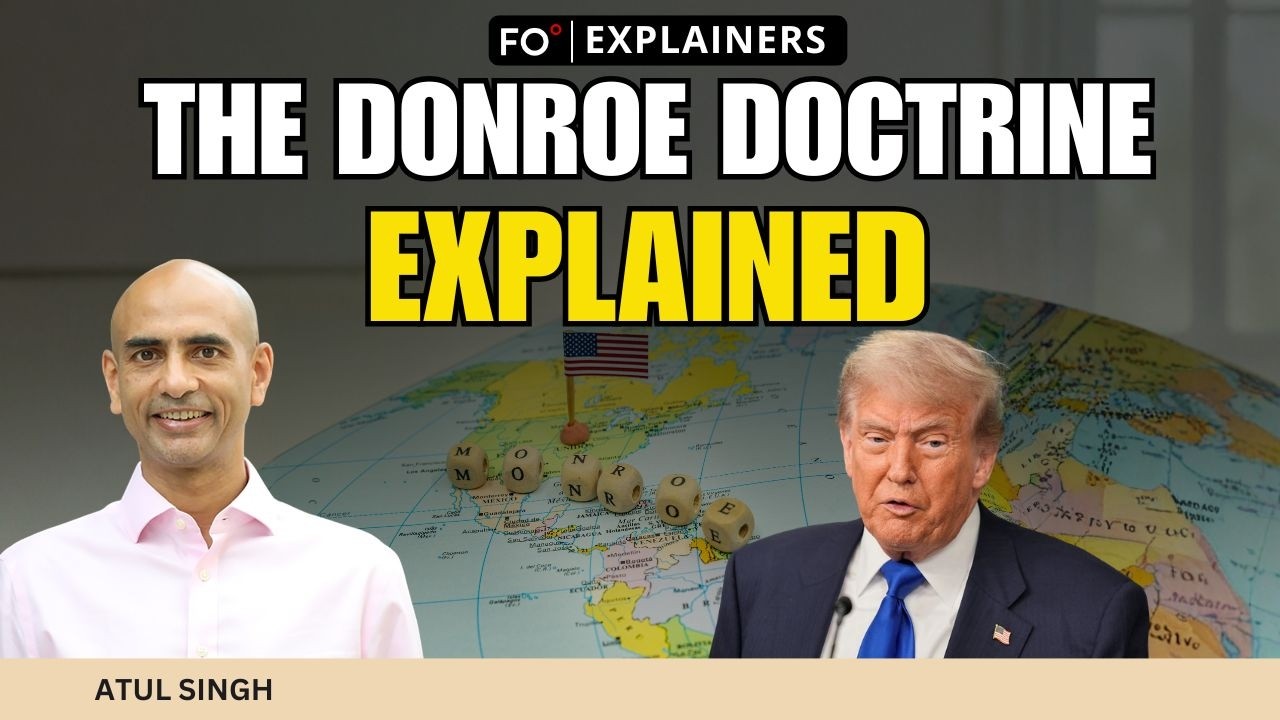
Some officials within the Trump administration openly hope to remove Cuba’s current leadership and bring the island firmly into Pax Americana. This objective is part of a broader effort to reassert US dominance throughout the Western Hemisphere. This was defined in the 2025 National Security Strategy as the Trump Corollary to the Monroe Doctrine, which has also come to be known as the Donroe Doctrine.
[Lee Thompson-Kolar edited this piece.]
The views expressed in this article/video are the author’s own and do not necessarily reflect Fair Observer’s editorial policy.




























Comment