




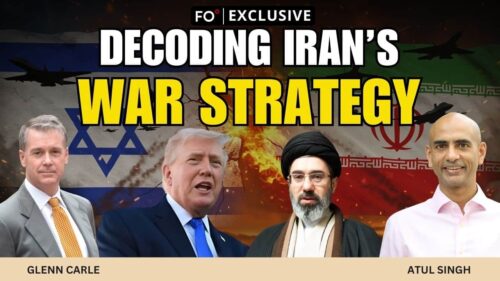
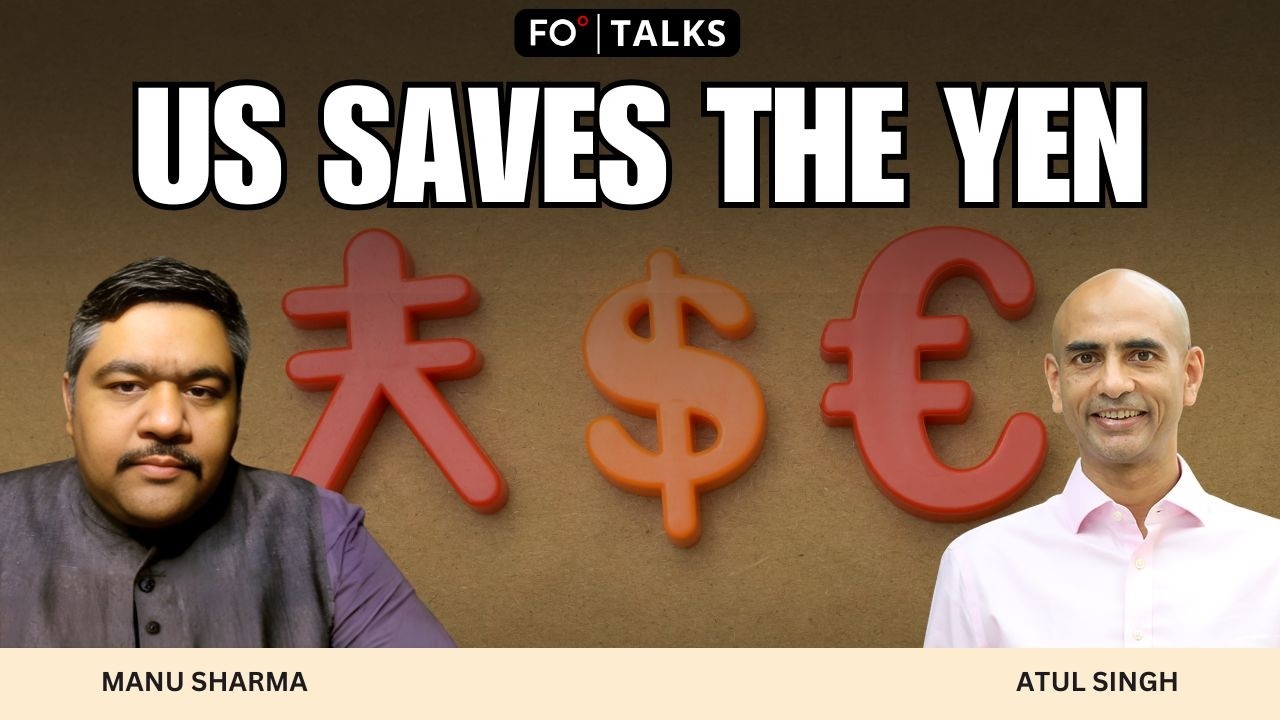
Editor-in-Chief Atul Singh and FOI Partner and geopolitical analyst Manu Sharma discuss how the Iran war reaches far beyond the battlefield into everyday economic life. What began as a military conflict in the Gulf has quickly spread through shipping lanes to fuel markets, agriculture, finance and trade. The war will raise the cost of fuel, travel, transport, fertilizers, food, medicine, industrial inputs and borrowing across much of the world.
A regional war with global consequences
Atul opens by asking Manu to map the immediate, medium-term and long-term implications of the conflict, along with its effects across different regions. Manu frames the crisis along both time and space, noting that what started as a regional war is already becoming something much larger. As he puts it, “we are seeing this grand convergence” as military disruption in one part of the world begins to reshape economic life in other parts of the world.
The most immediate shock comes through the Strait of Hormuz, one of the world’s most important energy chokepoints. Before the conflict, roughly 140 ships passed through the strait each day. Now traffic has almost completely stopped. That matters for crude oil, gasoline, jet fuel, petrochemicals and industrial inputs that move through the chokepoint.
The closed chokepoint has led to major consequencees. Air travel becomes more expensive as jet fuel supplies tighten. Hydrocarbon byproducts such as sulfur, lubricants, asphalt, plastics and chemical derivatives also grow scarcer. Since modern medicine depends heavily on these inputs, a prolonged conflict could drive up medical costs and disrupt pharmaceutical production. The first phase of the crisis hits energy, transport and the basic materials that support modern economies.
From fuel shock to food shock
As the discussion moves into the medium term, Manu explains how shortages in energy and industrial inputs begin to spread downstream. If fertilizer supplies remain constrained during the spring planting season, the effects will show themselves months later in weaker harvests and rising food prices. Modern agriculture, Atul notes, depends on both fuel and fertilizers. When both come under pressure at once, food shortages are inevitable.
The closed chokepoint also makes the Gulf monarchies especially vulnerable because they import almost all of their food. They also depend on steady flows of revenue from hydrocarbons to maintain social stability. If food becomes scarce and welfare systems come under strain, governments may have to sell their assets to stay in power.
The Iran war has made the investment climate highly uncertain. A “flight to safety” into hard assets such as precious metals and agricultural land is likely. This flight will be caused by the decline in normal economic activity because of the supply shock. It will also be exacerbated by declining confidence in institutions. Equities represent confidence in future growth. If that confidence weakens, capital retreats toward harder assets that appear more direct and less dependent on intermediaries. The result is a lower-trust global economy, marked by caution, volatility and a reordering of trade and investment patterns.
Stagflation and the strain on the dollar system
Looking further ahead, Atul asks what the world might look like five years from now if the conflict continues and critical infrastructure across the Gulf suffers sustained destruction. Manu sketches a grim scenario in which energy production capacity is damaged on a large scale, leading to long-lasting shortages and high input costs. That, in turn, creates the classic ingredients of stagflation: slower growth combined with persistent inflation.
Atul reminds viewers that the world experienced similar inflationary shocks after the 1973 Arab oil embargo and again after the 1979 Iranian Revolution. Manu sees the current war as a possible third Iran-linked stagflationary episode, one that could once again shake the foundations of the global economy.
This also raises deeper questions about the petrodollar system. Atul explains the historical bargain at its core: US security guarantees in exchange for a dollar-based oil order. Manu replies that if the United States cannot protect infrastructure in the Persian Gulf and keep shipping going through the Strait of Hormuz, then Gulf states may begin rethinking the currency architecture tied to that security relationship. Manu does not predict the end of the dollar, but he does suggest that its position could come under greater strain if the war exposes the limits of American protection.
Asia and Africa are exposed
The regional discussion begins with East and Southeast Asia, which Manu describes as the industrial engine of the world. The economies in this region depend heavily on Gulf energy and raw materials. If those flows are disrupted, output falls, finished goods become scarcer and inflation rises globally. Cheap electronics, clothes and household goods no longer remain so cheap. Western consumers feel the loss through a lower standard of living, but the effect within Asia may be even more politically significant.
Manu notes that many East Asian states built social stability on a promise of rising incomes and steady growth. If that growth model falters, long-suppressed political volatility could return. He stresses that these societies have a history of rapid and dramatic political change, a reality many outside observers underestimate.
South Asia appears even more vulnerable. Countries across the region depend heavily on remittances from Gulf workers and on imported energy. The Iran war has hit South Asia with a double whammy: rising import costs and falling external income. Manu is particularly pessimistic about pressure on the Indian rupee. India is stronger than it was during the 1991 balance-of-payments crisis, thanks to its services sector and wider diaspora, but will face increasing strains. Manu also warns that the region could face a mix of inflation, capital outflows and political strain.
In contrast to Asia, Africa is a continent rich in resources. Political structures are weak though. Manu sees intensifying competition for African resources with outside powers, private military actors and regional players jockeying to gain a greater share of the pie. Resource politics, proxy conflict and coercive competition all become more likely.
Europe’s bind and America’s test
For Europe, the war compounds an already difficult situation. After reducing reliance on Russian gas, many European economies now face further energy stress, inflationary pressure and rising borrowing costs. Manu believes Europe is also spending political capital by being associated with the US in a broader Western bloc whose credibility has weakened in the eyes of much of the world.
Atul closes by turning to the US. If Washington prevails decisively, its strategic and financial position may hold. If it fails to control the Strait of Hormuz or the war ends in stalemate, much larger questions emerge about the dollar, American power and the future of the global order. Should the US fail to prevail, the economic system that has shaped daily life across the world for decades will crumble.
[Lee Thompson-Kolar edited this piece.]
The views expressed in this article/video are the author’s own and do not necessarily reflect Fair Observer’s editorial policy.





















Comment